Welcome to Dental Avenue
Main menu
Shop
- Shop
-
Aesthetics Dentistry
-
Impression Materials
-
More Categories
Your cart
Get Additional 5% Off on your First Order
Choose your Location
-
Store branch
Free
Dental Avenue India Pvt Ltd
28 - B, Udyog Vihar Phase V, Gurgaon, Harayana, India - 122016
Expodent Delhi Sale 2024 – Best offers on Dental Products
109 products
109 products
Sort by:
- Featured
- Most relevant
- Best selling
- Alphabetically, A-Z
- Alphabetically, Z-A
- Price, low to high
- Price, high to low
- Date, old to new
- Date, new to old
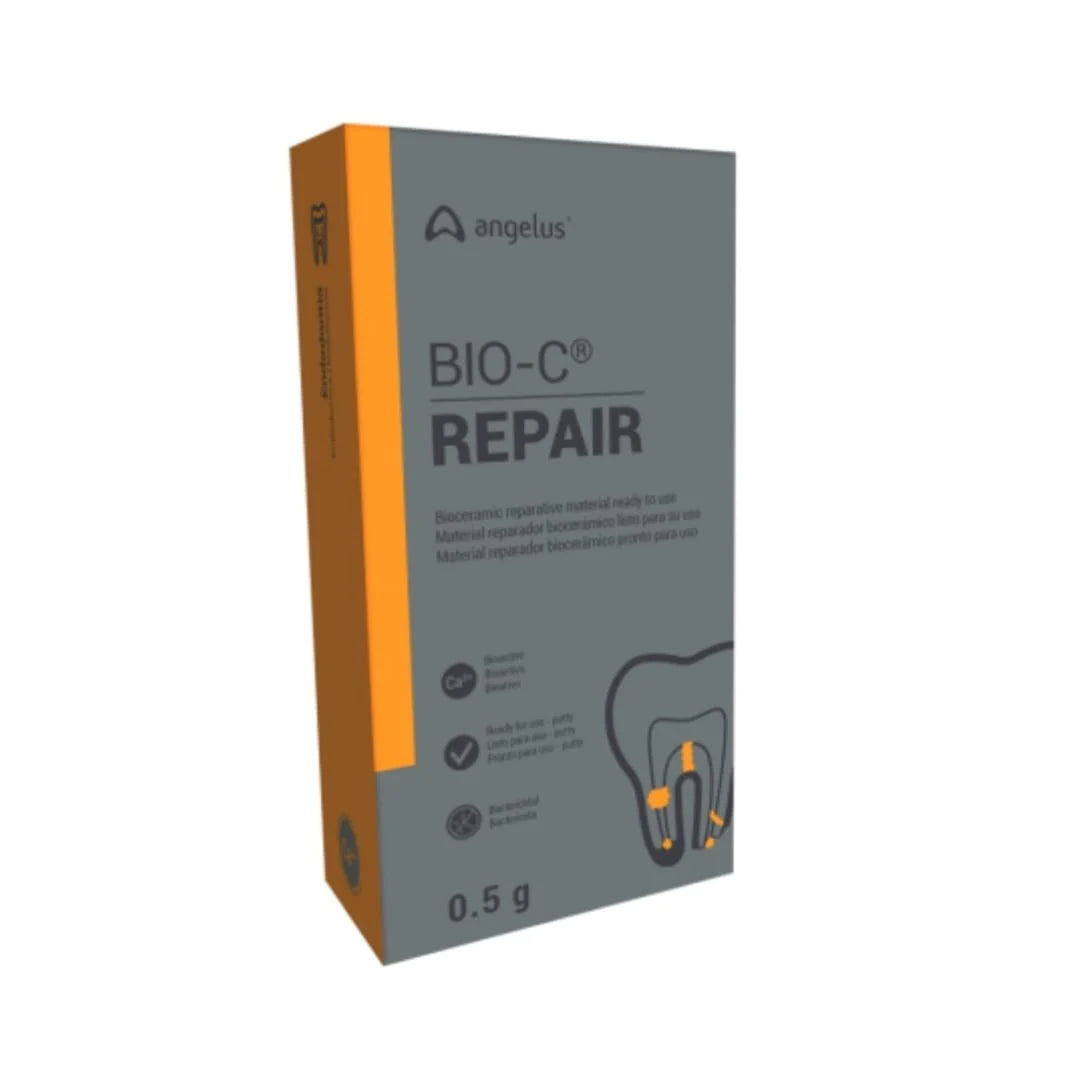
Angelus Bio-C REPAIR - Bio Ceramic reparative material
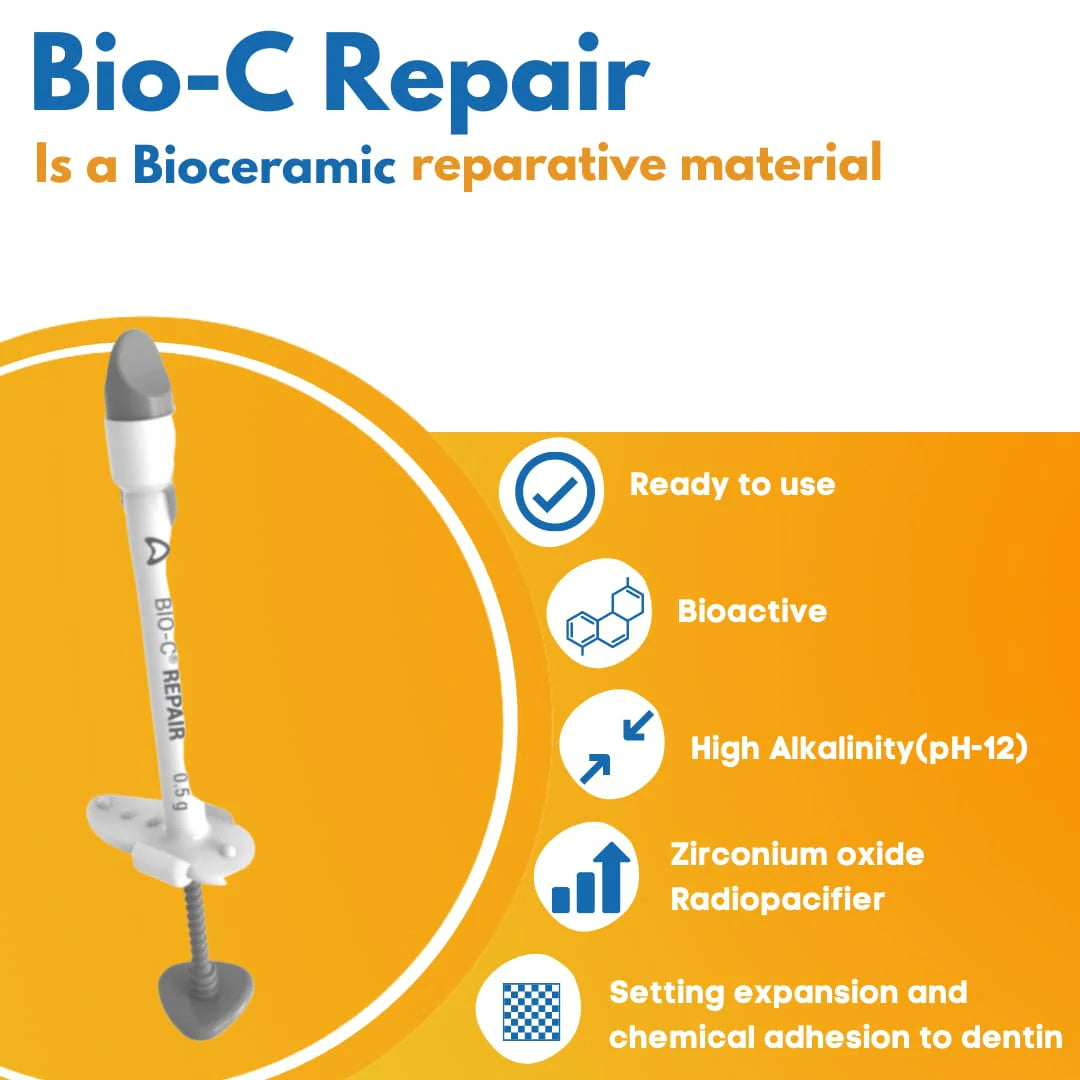
BIO-C® REPAIR is a ready-to-use bioceramic repair cement (putty).
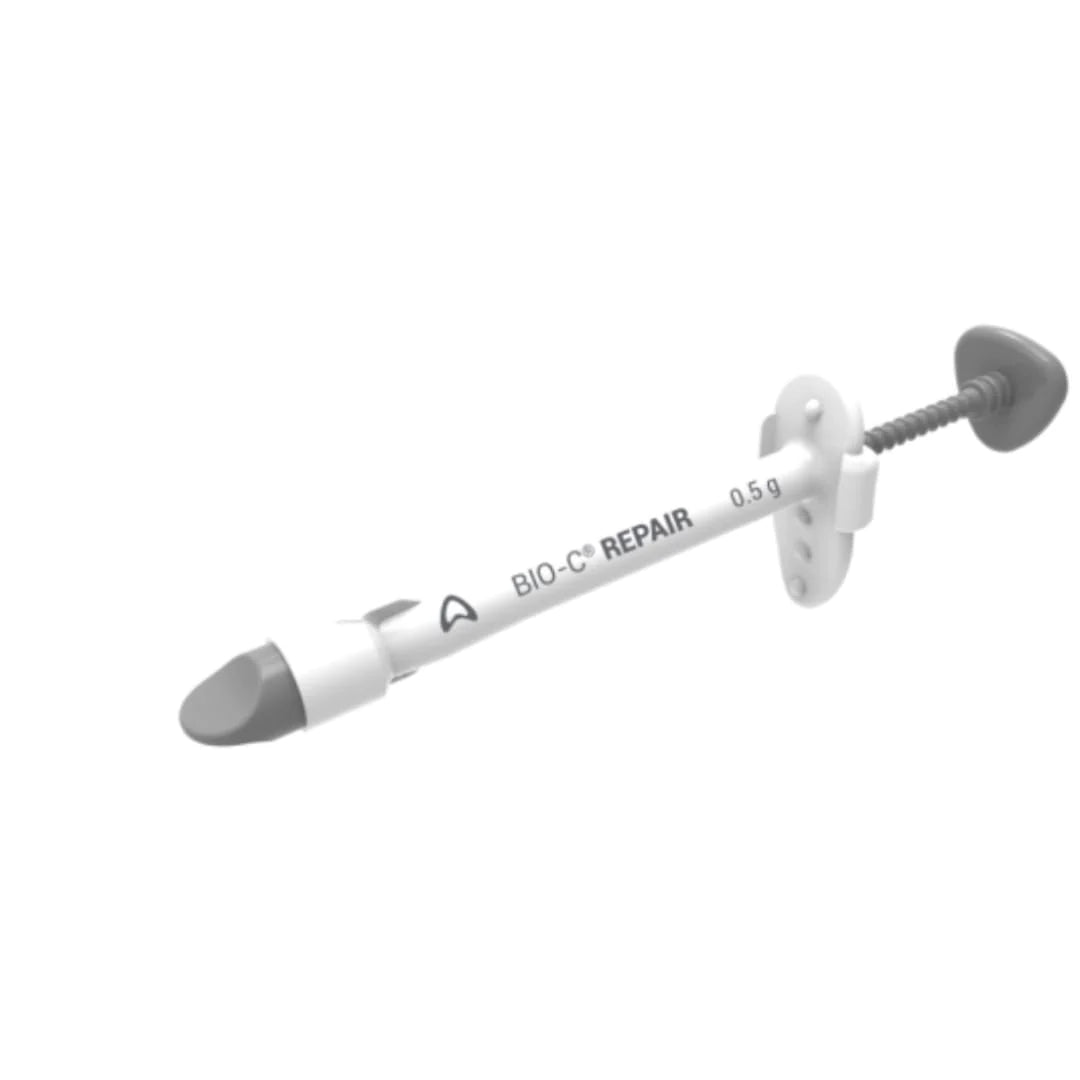
The ready-to-use presentation in a screw-in syringe facilitates the removal of the product for application at the preparation site, simplifying this procedure with great time savings.
In addition to its ease of use, it offers all the benefits of bioceramic formulation: induction of tissue regeneration through the release of Ca2+ ions resulting in the formation of mineralized tissue, bactericidal action due to its high pH, inhibition of bacterial infiltration by setting expansion and chemical adhesion to dentin.
As a result, safety and high rates of success in endodontic treatment are obtained.
Key Features & Benefits
1. Ready-to-use (putty)
2. Bioactivity/Release of Ca2+ ions
3. Bactericidal (pH ~ 12) - Promotes local decontamination
4. Setting Expansion (0.092 ± 0.05%) - Prevents bacterial infiltration
5. High Radiopacity - Promotes biomineralization by providing rapid tissue regeneration.
6. Does not stain tooth structure - Zirconium oxide as a radio pacifier that does not stain the dental structure.
7. Non-resinous composition - It allows use in humid environments without loss of properties, especially in surgeries where humidity control of the operative field is a challenge in the procedure.
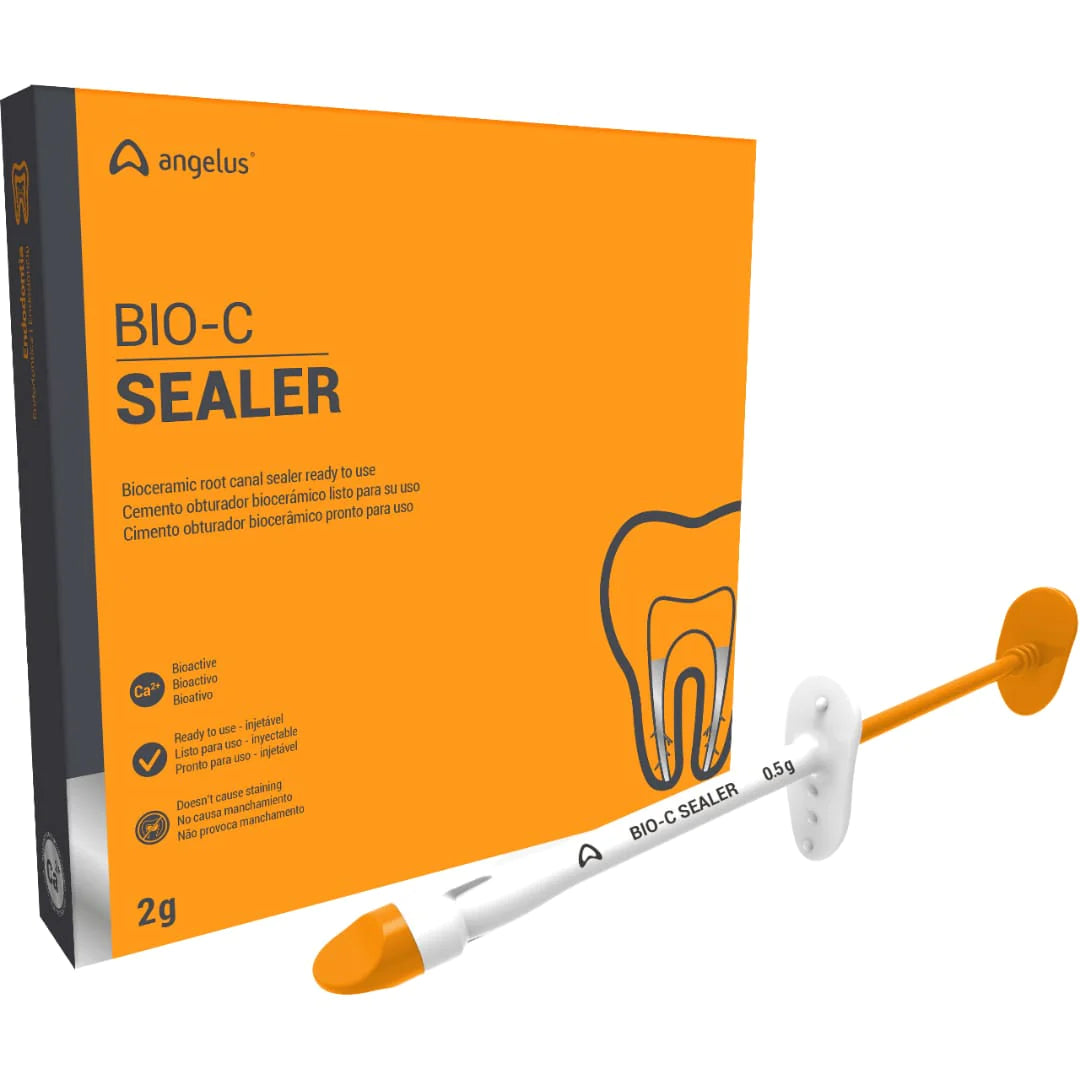
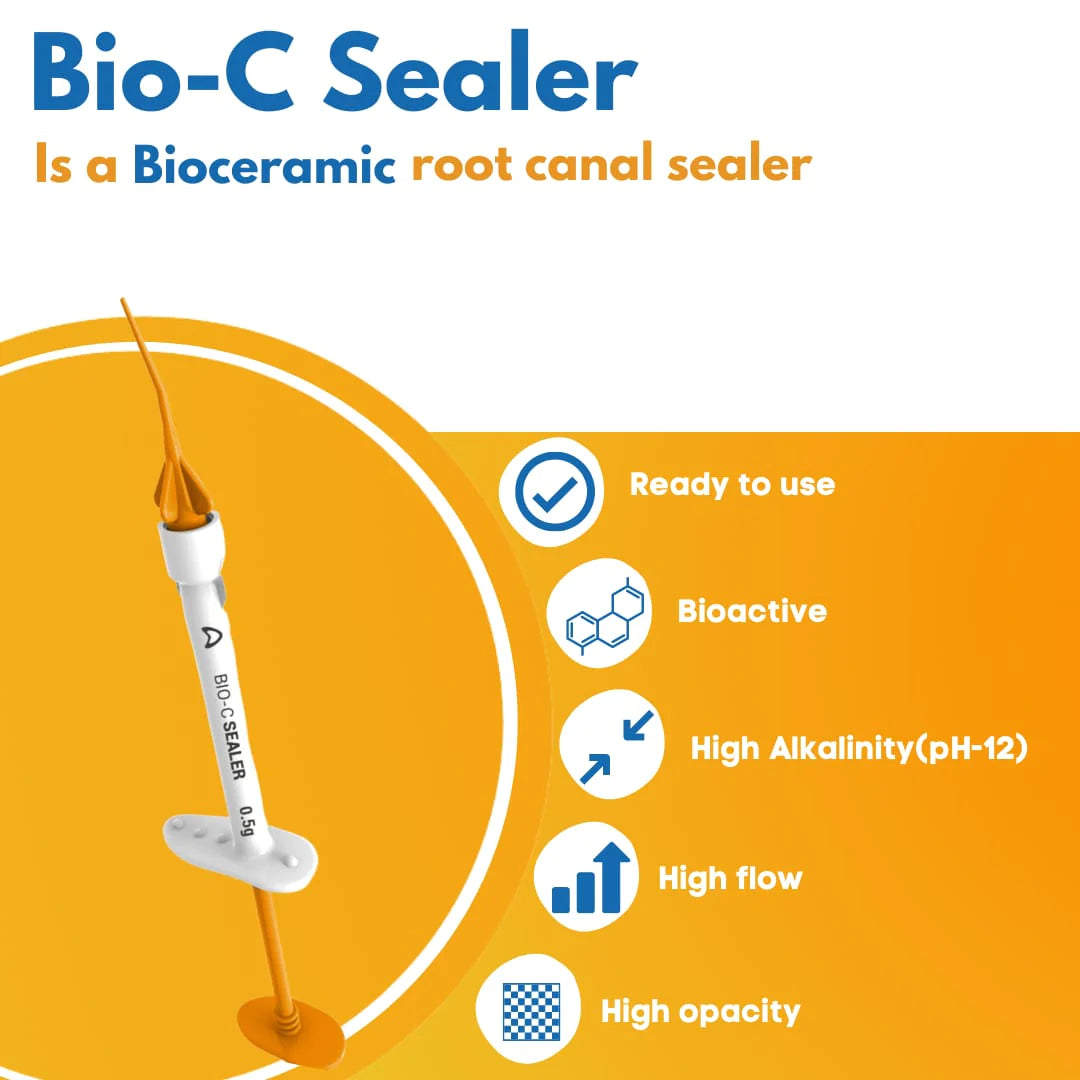
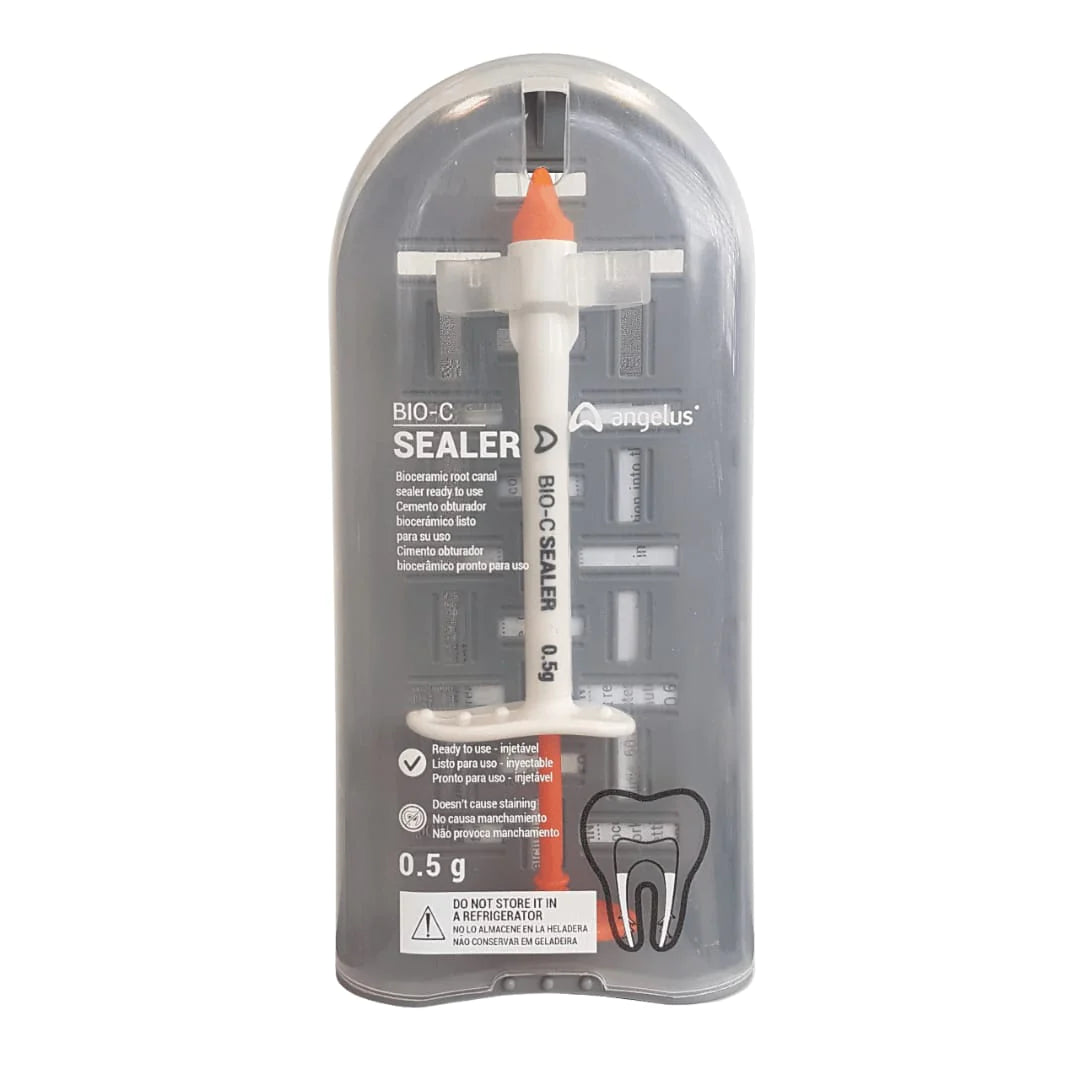
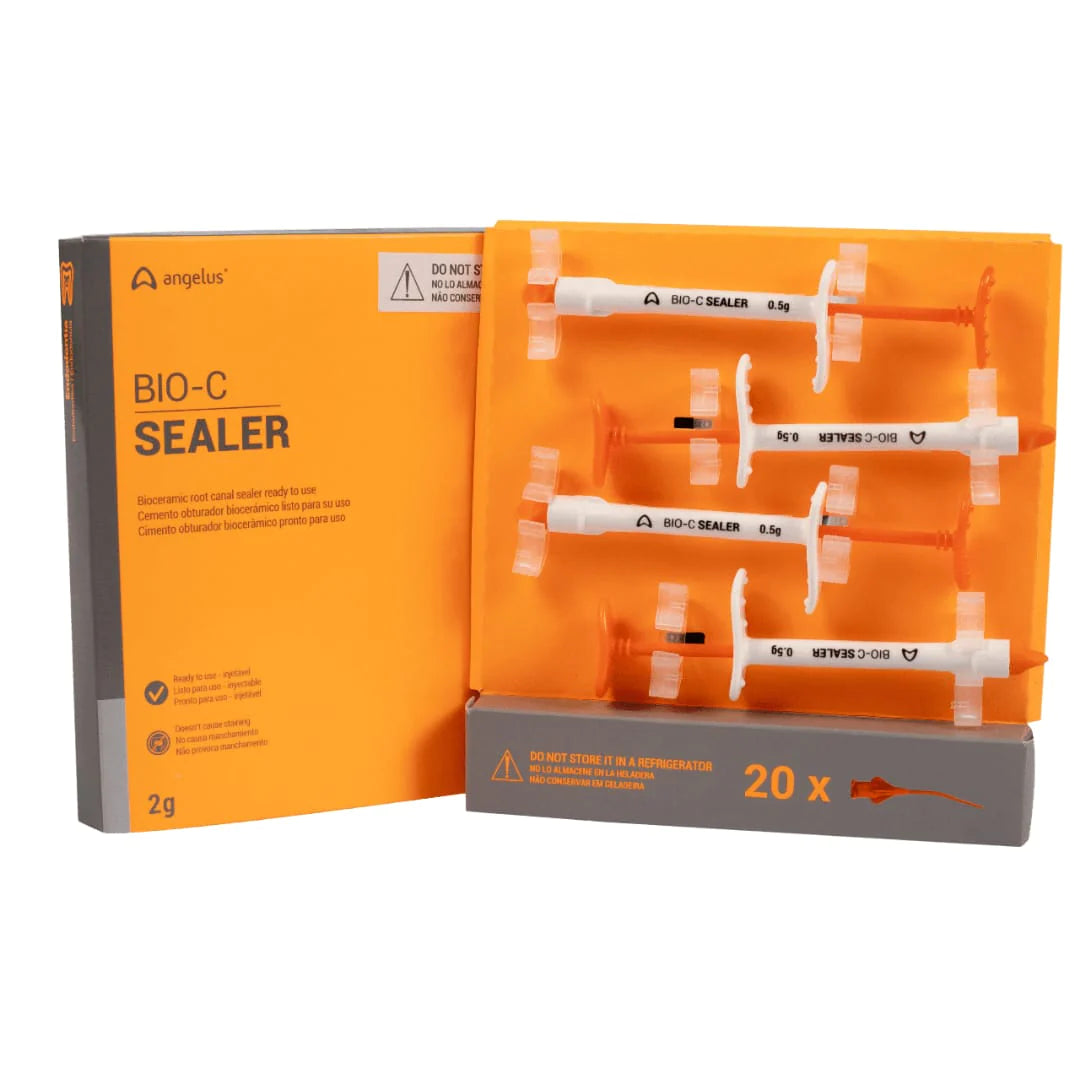
Angelus Bio C Sealer - Bioceramic root canal sealer
Introduction
- Bio-C Sealer is a ready-to-use bioceramic sealer for root canal filling.
- The bioceramic composition allows the release of calcium ions, which stimulates the formation of mineralized tissue.
- Its mechanical and physical properties make it easy to manipulate and seal the canals, and its biological properties and high pH confer safety and treatment success
Flow
- High flowability allows the filling of the main and accessory canal easily.
- The smooth flow ensures that the filling are complete and sturdy
Radiopacity
- BIO-C® SEALER presents high opacity ( ≥ 7 mm of the Aluminium step-wedge), providing an excellent radiographic view.
Setting time
- Bio-C Sealer setting reaction occurs through the contact with the moisture from dentinal canaliculi and periapical tissues, as it is a product with hydraulic characteristics.
- Setting occurs between 60 and 120 minutes.
- The setting time ensures that it is accurate, and provides a longer lasting restoration
Film thickness
- Particle size of less than 2 μm provides thin (> 50 μm) thickness.
- The thinness allows the complete settling of gutta-percha, as well as cement penetration into the dentinal tubules.
Particle size
- Particle size (less than 2 μm) provides Bio-C Sealer with excellent flow, thin film thickness and diffusion to tissues, leading to a faster regeneration.
Release of calcium ions
- The release of Calcium ions is fundamental for the biological and chemical action of a filling cement.
- Bio-C Sealer presents constant release of Calcium to the tissues
- Our product helps in promoting biomineralization and stimulation of the tissues for their fast regeneration
Antibacterial action
- The high pH (12.5) gives Bio-C Sealer an antibacterial action, desirable for endodontic cements,
- The results and treatment prognosis thus provided are favorable and a step in the right direction.
Characteristics and benefits
- Pre-mixed: Ready for use/injectable;
- With Zirconia Oxide: Does not cause staining;
- Bioceramic formulation: High biocompatibility;
- Release of Calcium ions: Bioactivity;
- Alkaline: Antibacterial action;
- Interaction with dentin: High adhesion
- Bio-C Sealer is a non-resin cement that, in addition to its improved biocompatibility properties, also provides an easy pulp chamber cleaning after endodontic obturation.
- EUGENOL FREE: Bio-C Sealer is free of Eugenol and therefore has lower cytotoxicity, does not cause staining and does not interfere with the polymerization of resinous materials (resin cements and composite resins)
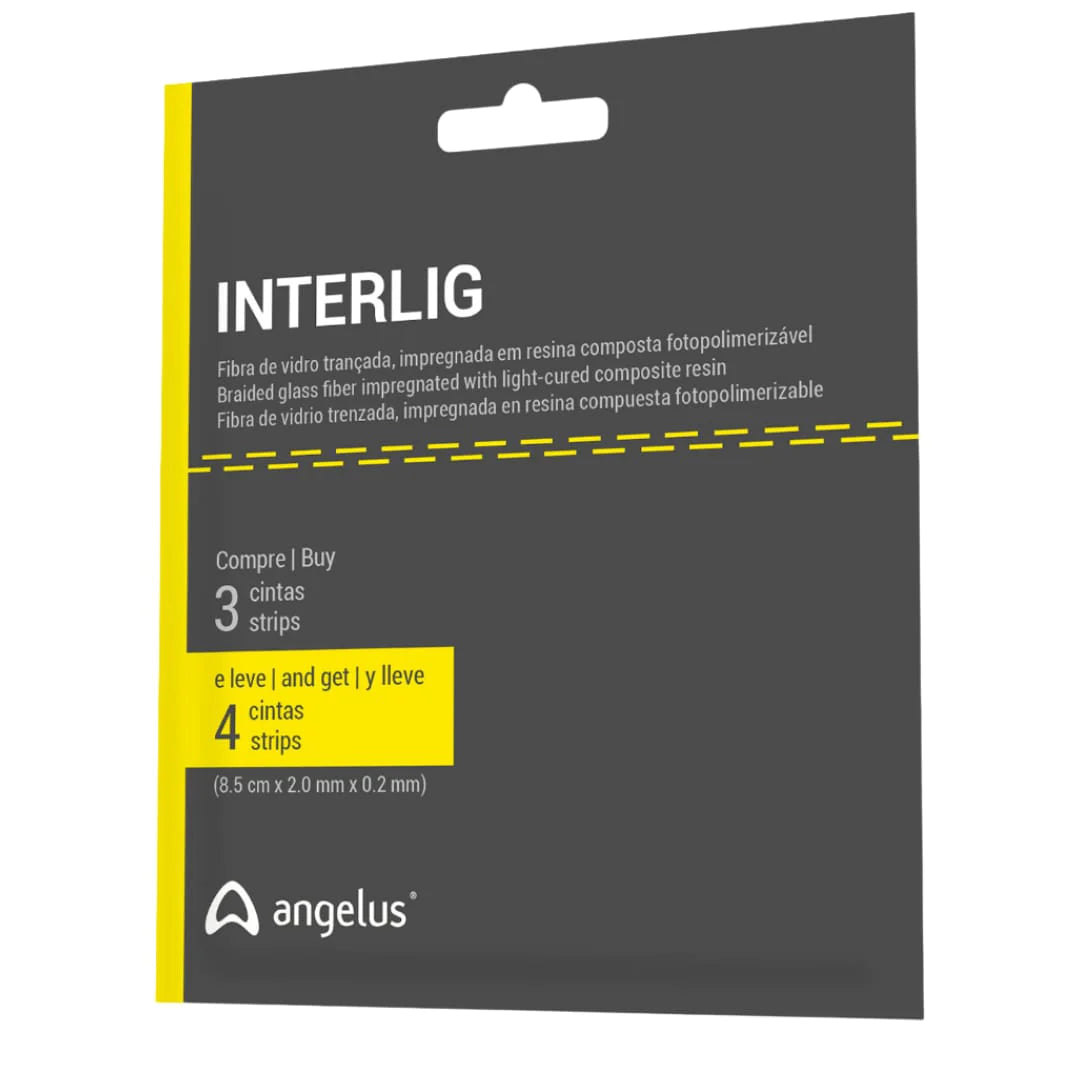
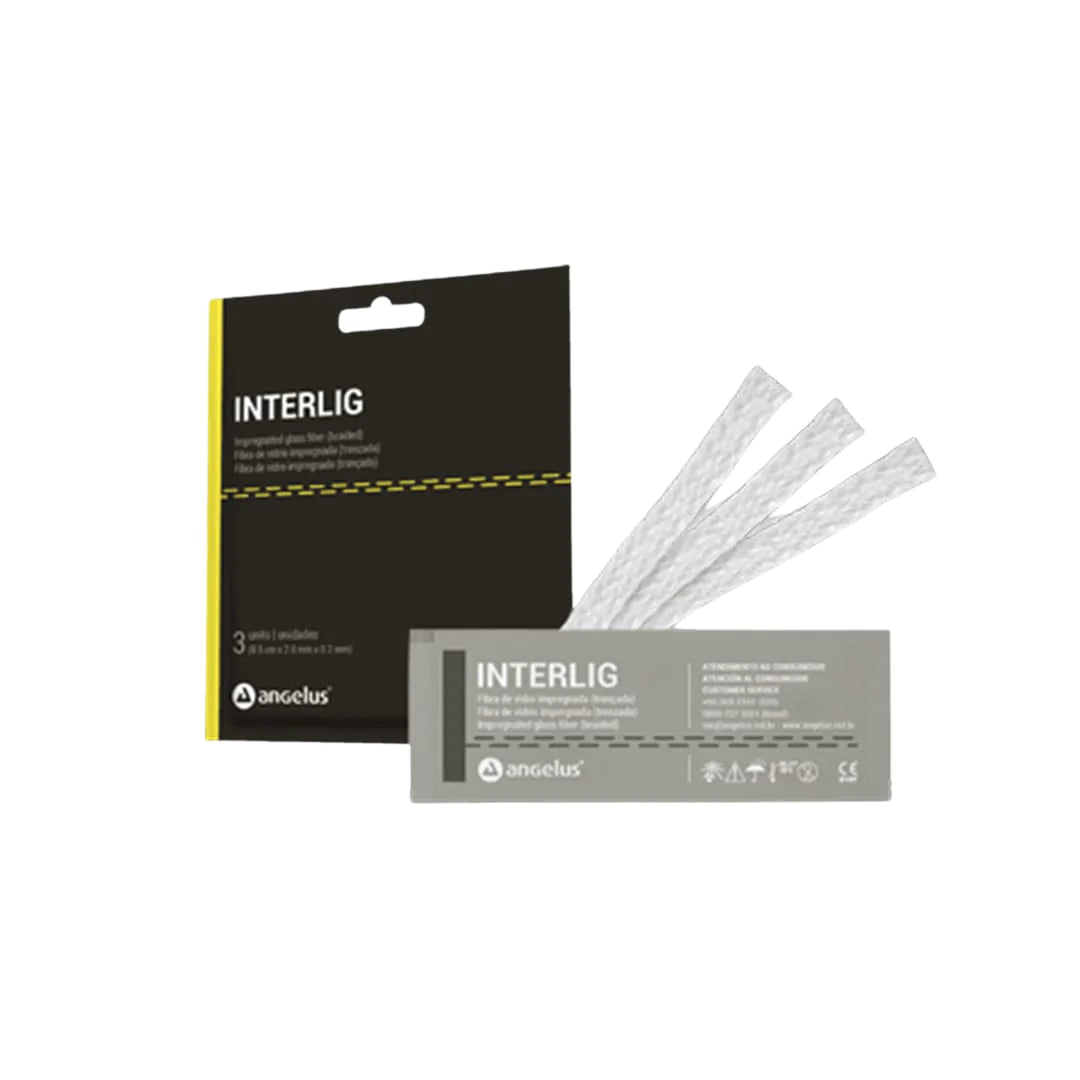
Angelus Interlig - Braided glass fiber
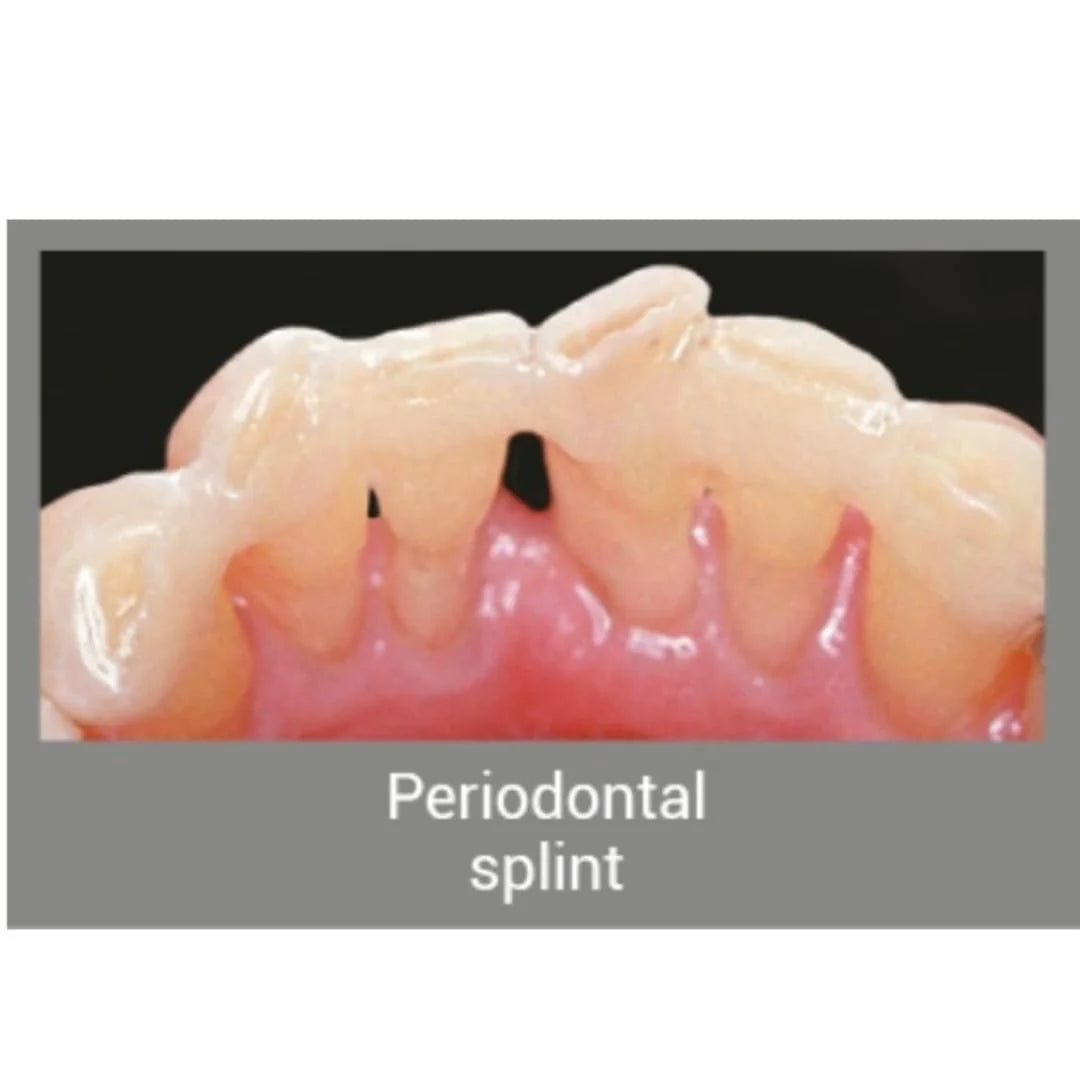
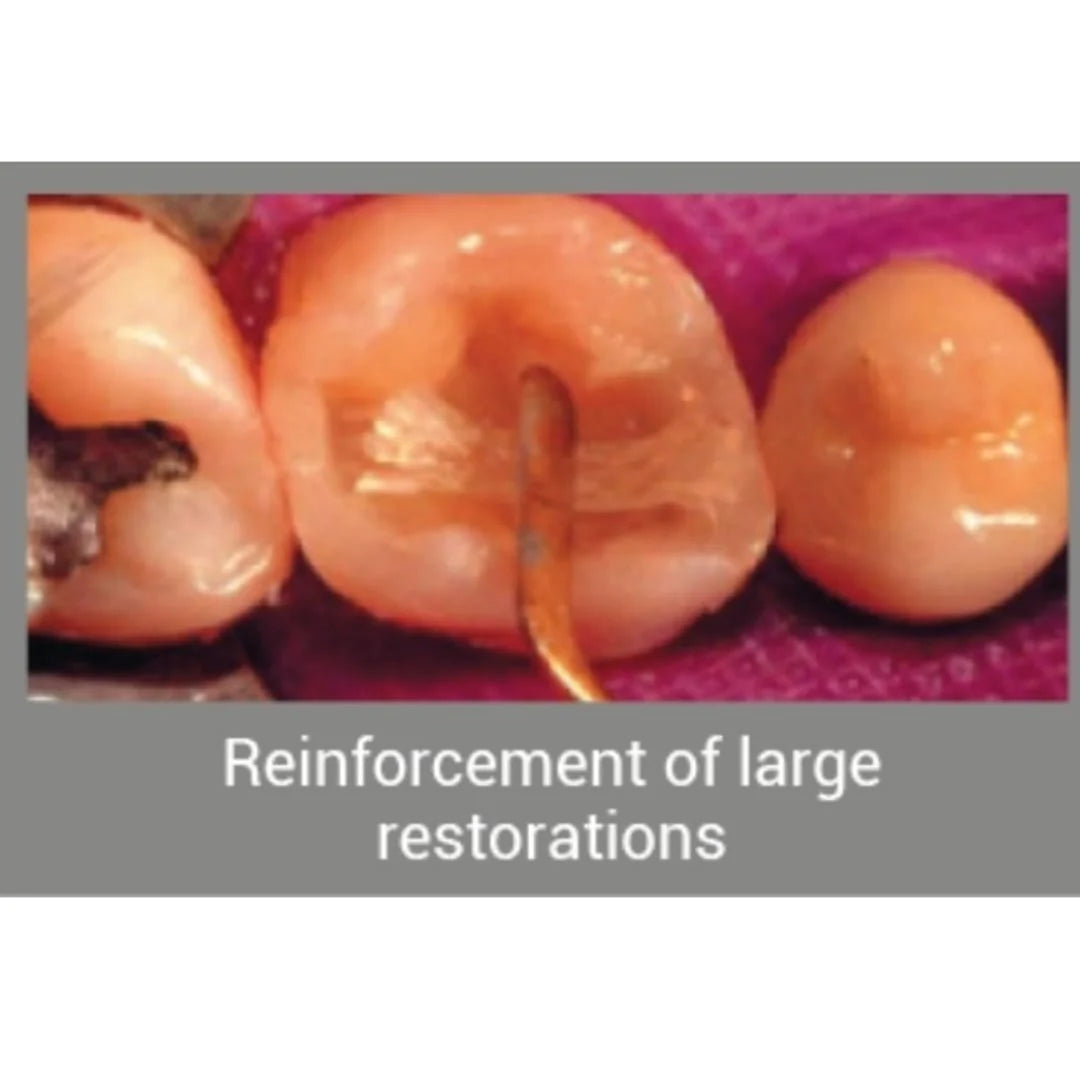
Braided glass fiber impregnated with light-cured composite resin used in Splinting in periodontics, Splinting of traumatized teeth, Fabrication of adhesive direct temporary prostheses. Reinforcement of large restorations.
Interlig is a reinforced composite material with glass fibers, for use in the clinic, with a range of applications: temporary periodontal or orthodontic immobilization, for emergency treatment of teeth lost due to periodontitis, pre-surgical splinting, for the reinforcement structure of fixed prosthesis, either mediate or immediate, for making intraradicular cores, for space retaining in primary or permanent dentition, for reinforcement of acrylic structure (provisional, total prostheses), for reinforcement of large restorations of composite resin. Interlig glass fibers are intertwined, which facilitates the use by the dentist. Their maleability is superior than that of the polyethylene fibers.
Interlig can be cut with any cutting instrument, and does not require special equipment. The glass fibers are impregnated with light-cured composite resin, and for this reason, no other type of adhesive or resin is needed to impregnate them.
Pre-impregnation facilitates handling and improves bonding between the glass fibers and the composite resin. The fibers are pre-impregnated with an unfilled resin matrix, using an immersion process with controlled time and temperature, in order to guarantee complete absorption and, consequently, guaranteeing the better mechanical performance of the product.
Aesthetics
The translucency of Interlig fibers and of the resin matrix provides high aesthetic resolution
Strength
The structural composition of Interlig® fibers and their preparation for dental use ensure their high resistance to bending, ensuring their indication for a wide range of clinical situations
Versatility of use
Interlig width can be adapted for use in various clinical activities
Excellent bonding to composite resin
The pretreatment of the Interlig fibers allows for perfect adhesion to resins in use in the clinic
Convenience of use
does not require special tools for cutting and comes already impregnated with resin
Reversible and minimally invasive technique
due to its adhesion to the adhesive and resin systems, work done with Interlig does not require invasion of the tooth structure
Time-saving
work with Interlig can be performed directly in the mouth, allowing for its completion in one session
Low cost
Compared to traditional techniques, using Interlig® allows you to perform more attractive and durable work, with a better cost-benefit ratio
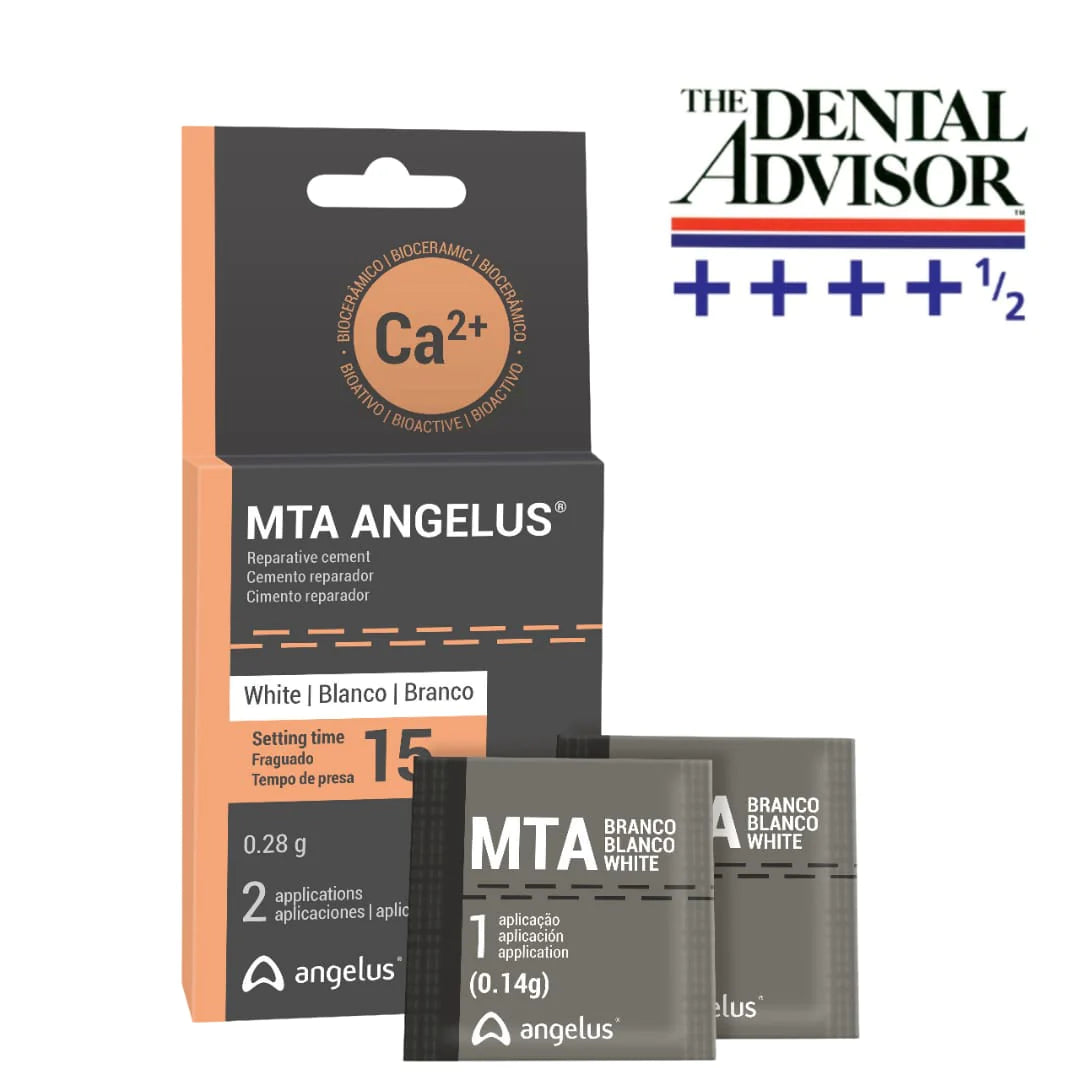
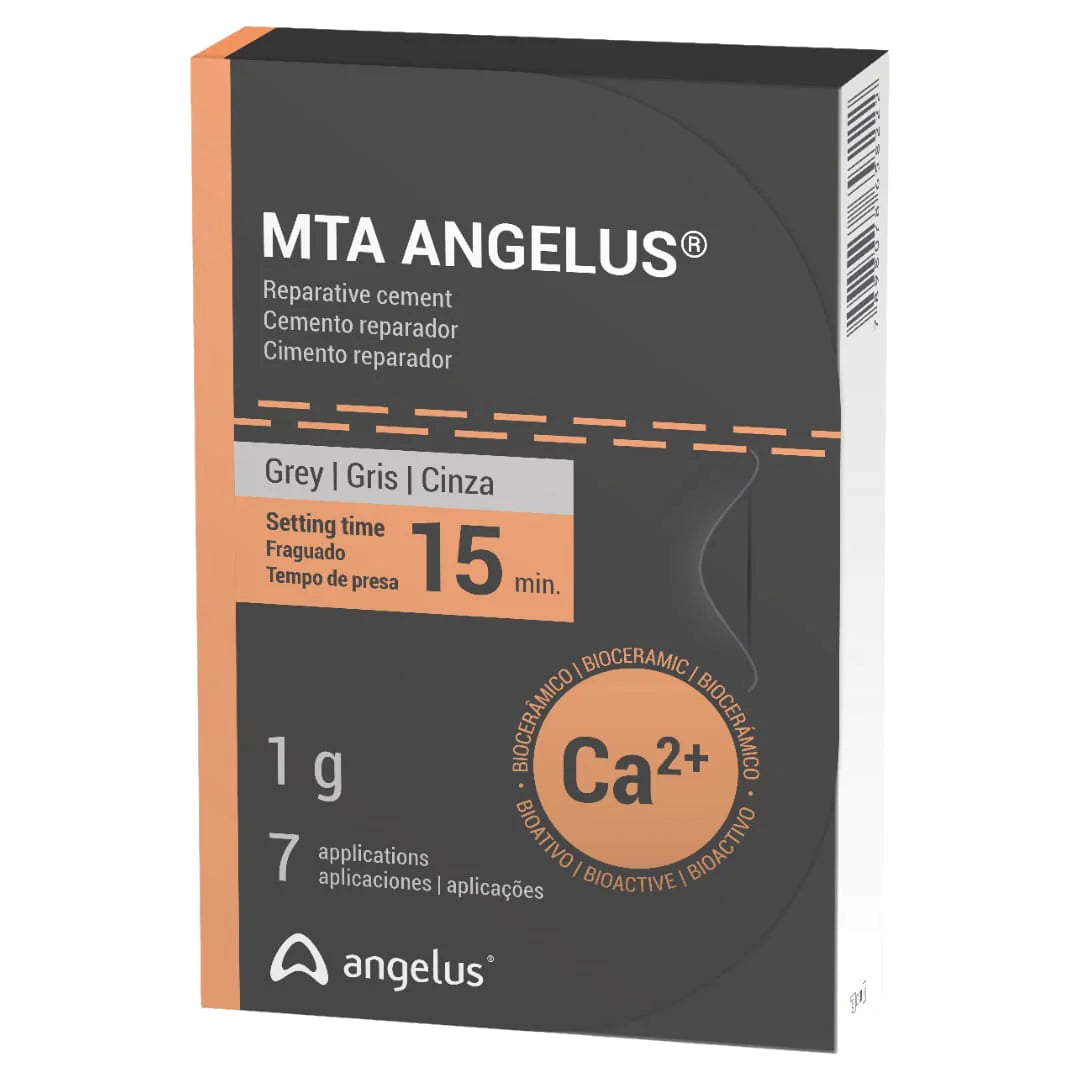
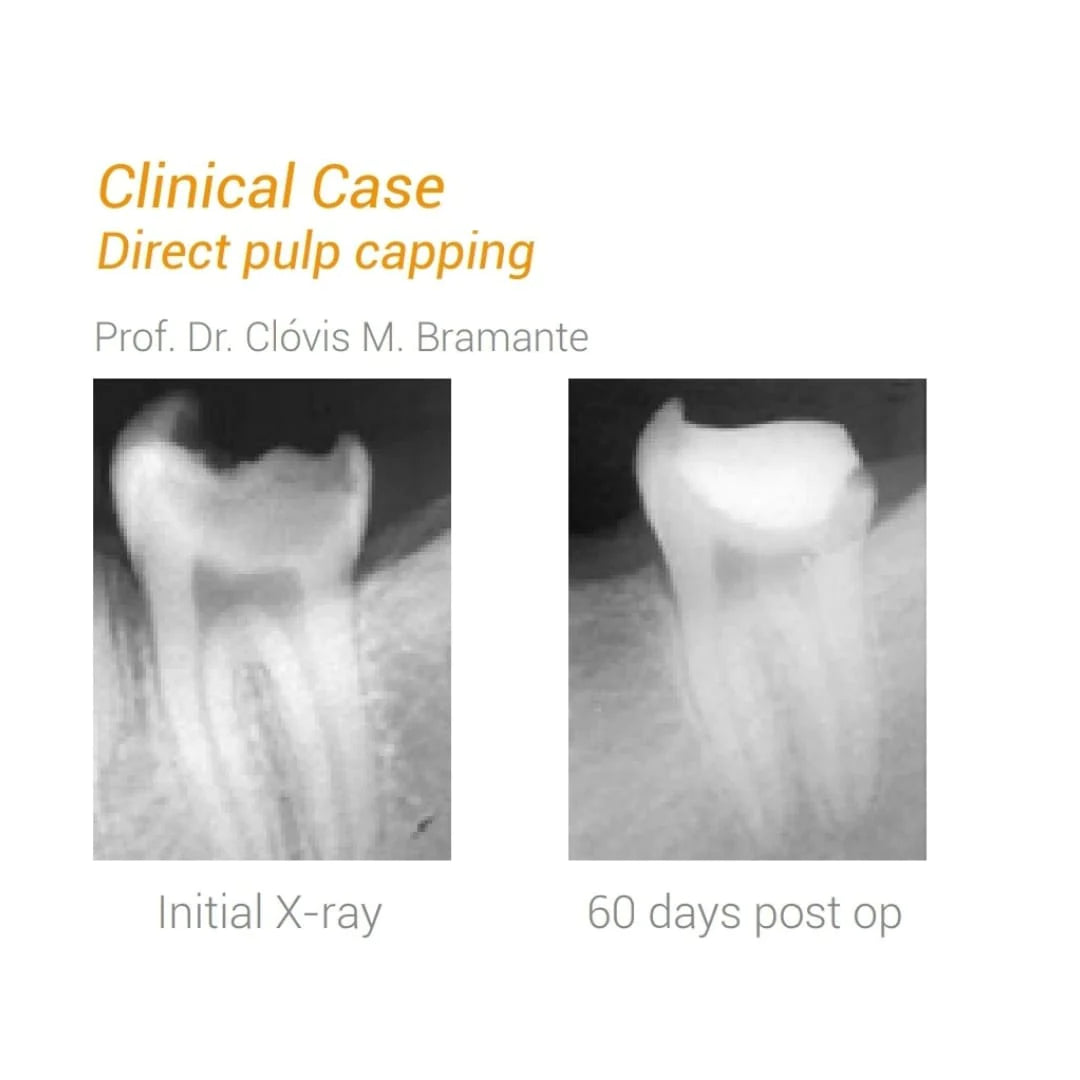
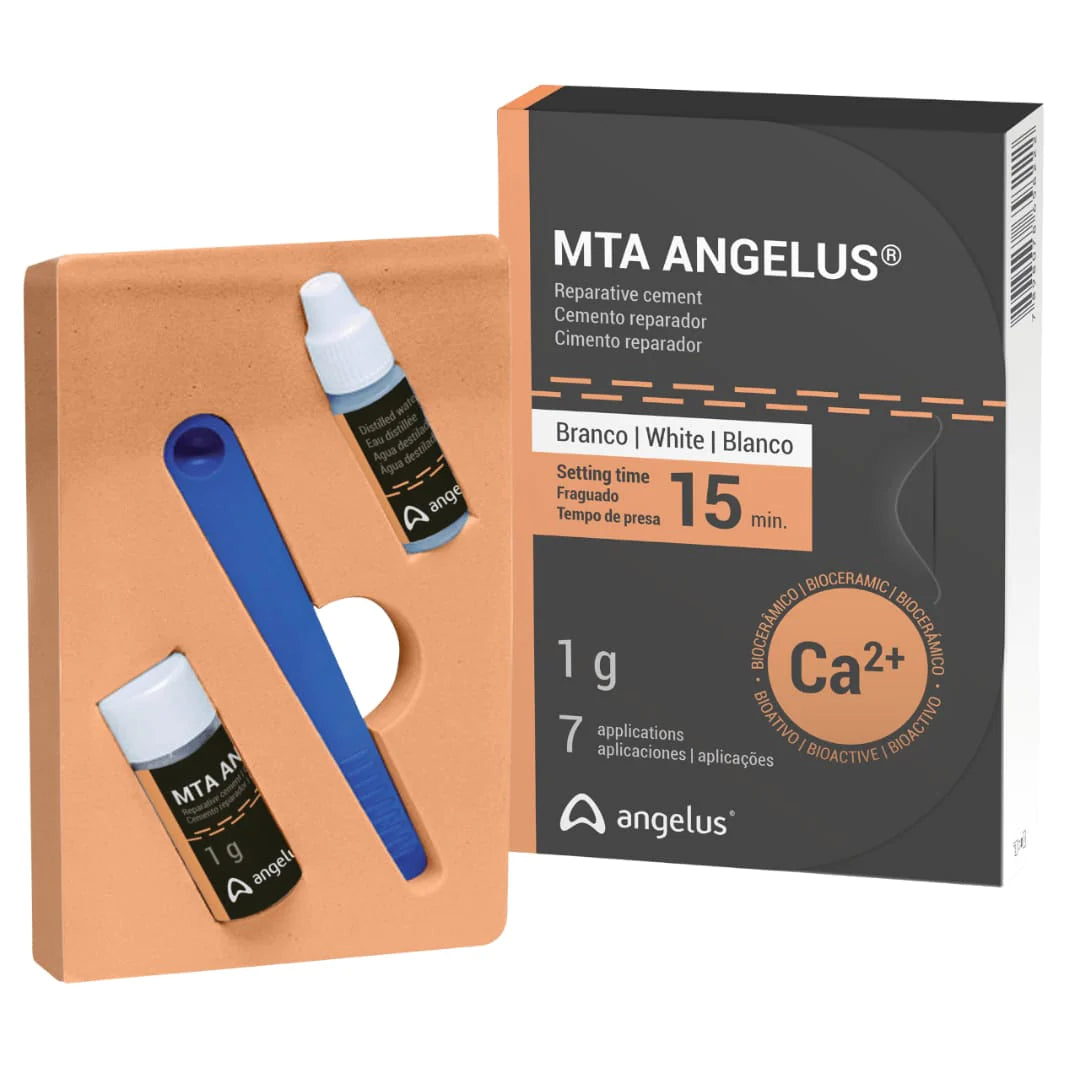
Angelus MTA - A super treatment for accidents and endodontic complications
Properties of MTA
Chemical
- Release of calcium ions: allows formation of mineralized tissues.
- Highly alkaline: prevents bacterial growth.
Physical
- Low solubility: may be used directly on pulp and periapical tissues.
- Compressive strength: 44.2 MPa – may be used as base for restorations.
- Expansion after hydration: seals cavities completely.
- Setting time (15 minutes): may be used in single appointment.
- Radiopaque: allows radiographic control.
Biological
- Biocompatibility: may be used directly on living tissues.
- New formation of cement: only dental material with this capacity.
- Remineralization of dentin: allows formation of biologic barrier.
- Biologic sealing of perforations: complete healing of periapical tissues.
Ions Calcium Release
Enhances formation of mineralized tissues and provides biological seal of perforations and total repair of damaged periradicular tissues
Hydrophilic
Can be used in humid areas without losing properties
High alkalinity
Antibacterial properties
Low solubility
Does not allow leakage
Calcium oxide
Promotes tissue biocompatibility
Aggregated oxides
Great compressive strength
High radiopacity
Higher radiopacity than that of dentin, allowing excellent radiographic visualization
Setting time of 15 minutes
Shorter setting time than similar cements
Benefits
- Enhances formation of mineralized tissues; provides biological seal of perforations and total repair of damaged periradicular tissues
- Capable of inducing periradicular cementum
- Can be used in humid areas without losing properties
- Antibacterial properties
- Does not allow leakage
- Promotes tissue biocompatibility
- Great compressive strength
- Higher radiopacity than that of dentin, allowing excellent radiographic visualization
- Shorter setting time than similar cements
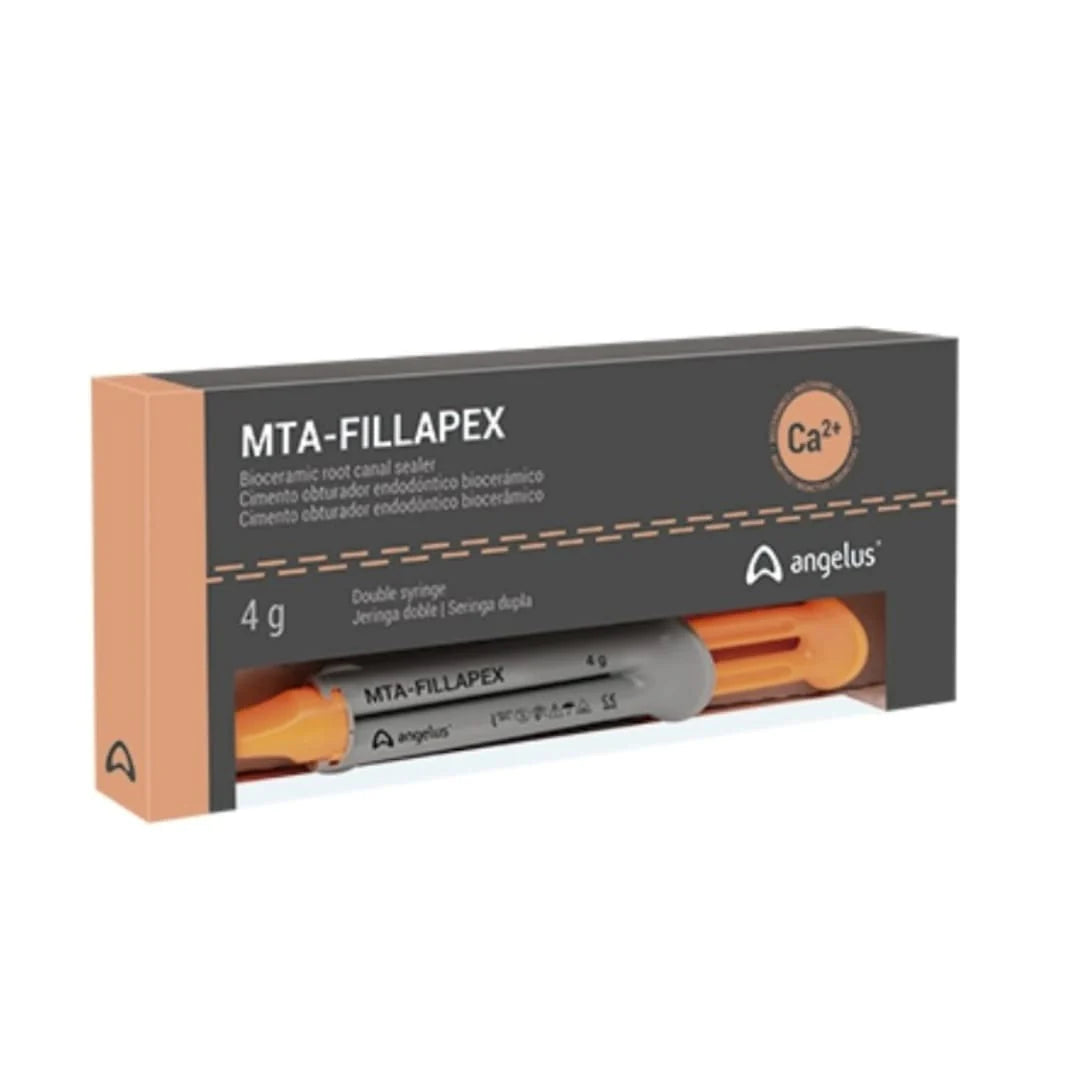
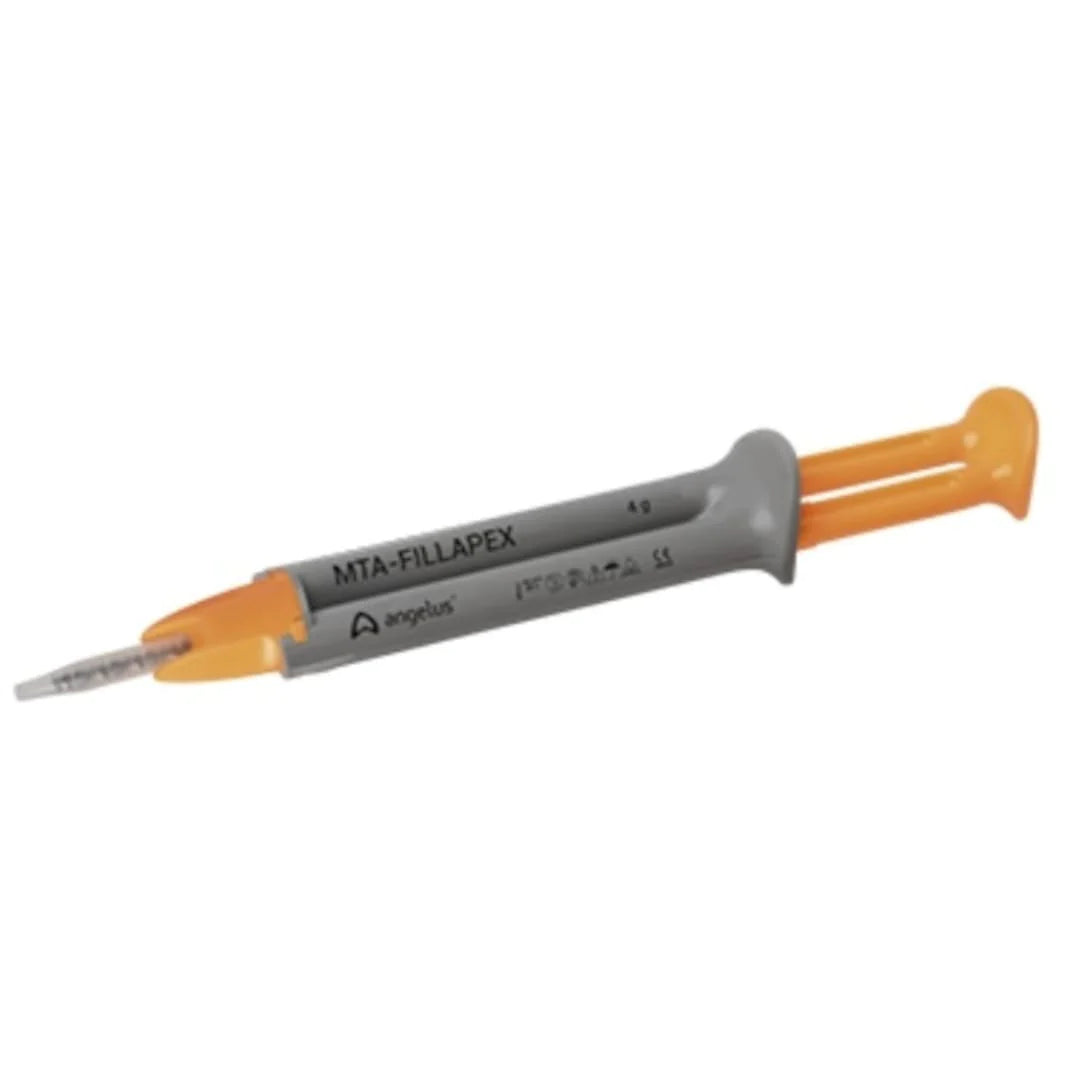
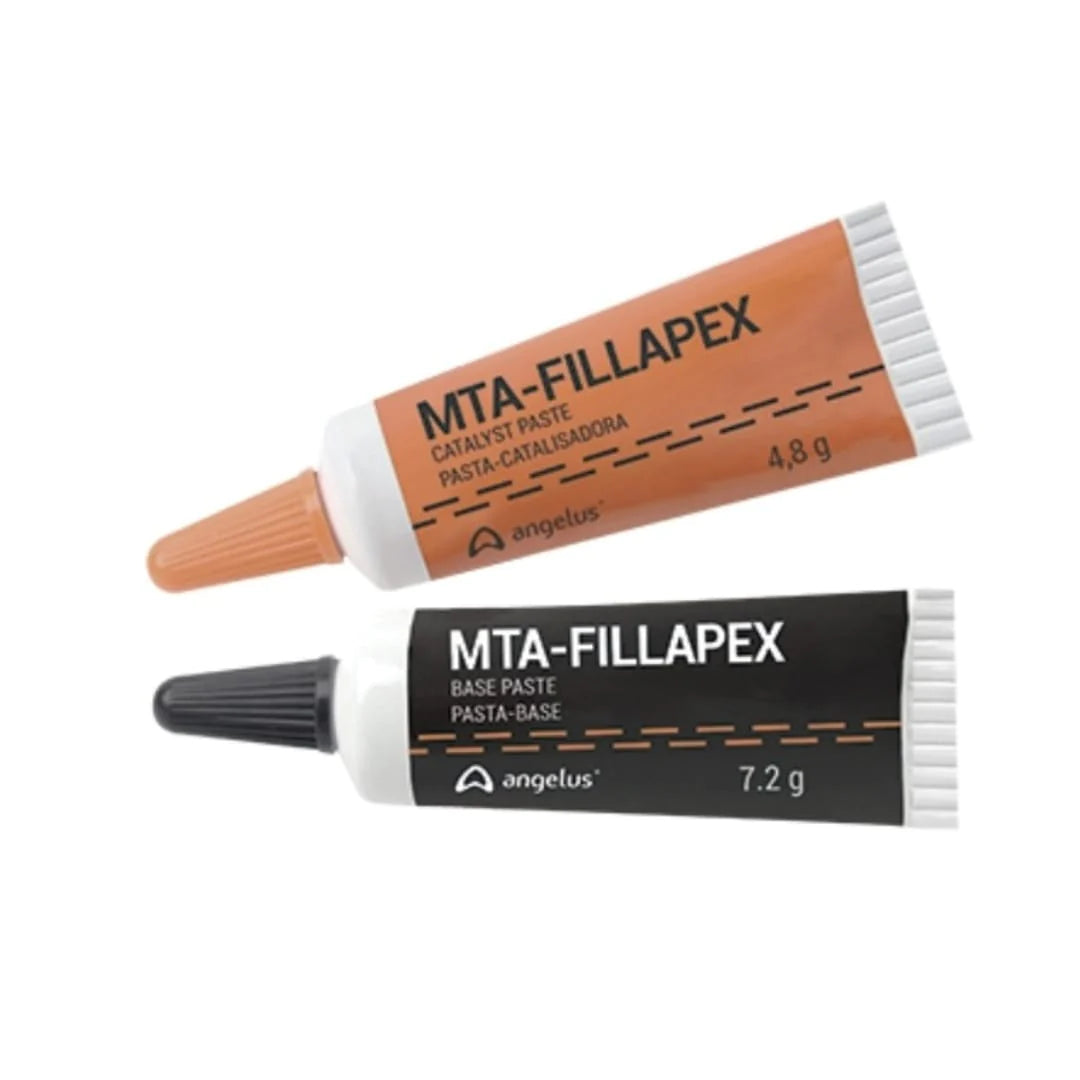
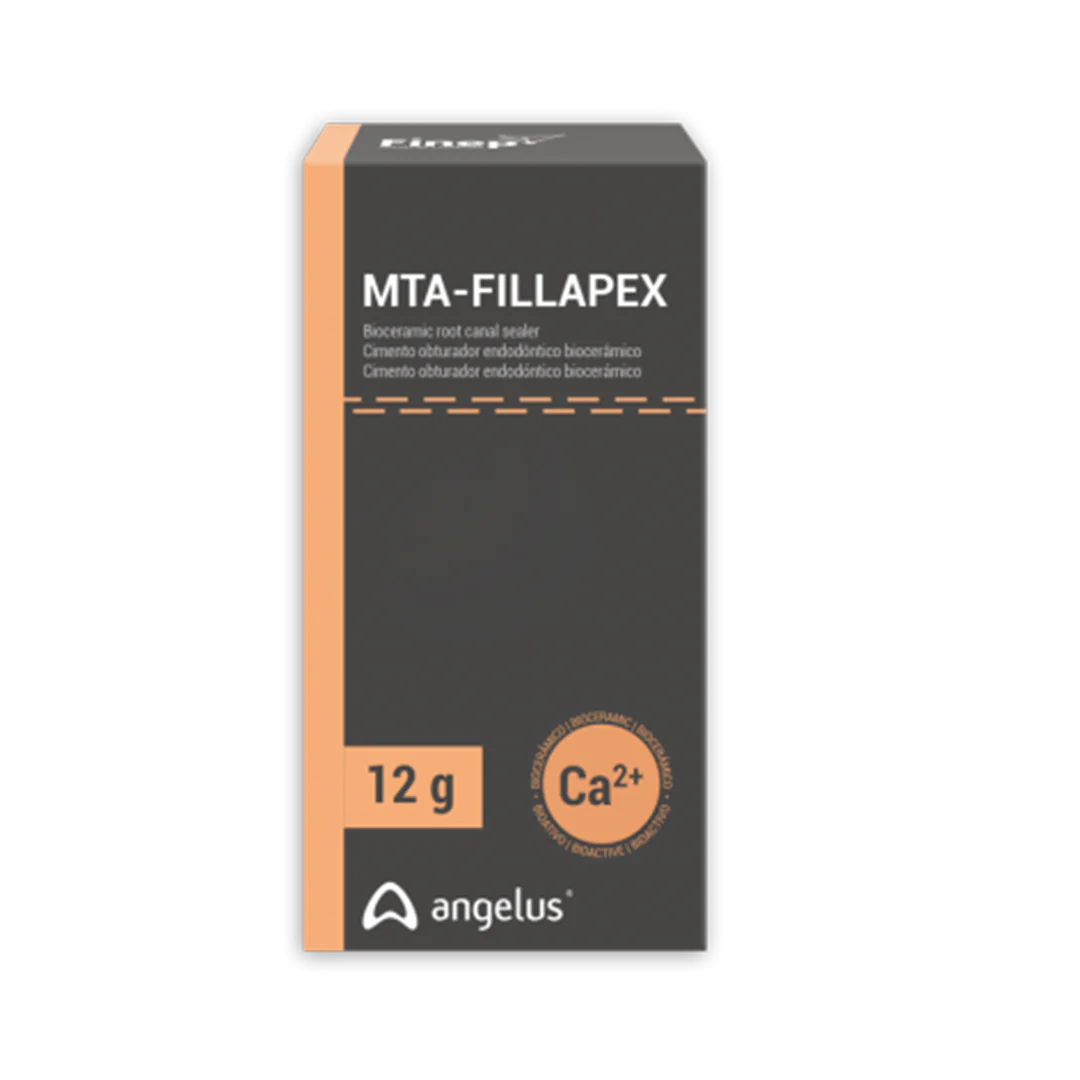
Angelus MTA Fillapex - Bioceramic root canal sealer
Properties of MTA Fillapex
Chemical
A. Setting Time
MTA-Fillapex showed average setting time of 130 minutes (2 hours and 10 minutes) with a variation of ±10 minutes.
B. Solubility
The material showed a variation of 0.1%, after submission to the phenomenon of solubility, a value lower than the maximal variation accepted by ISO which is 3%.
C. Setting Expansion
The setting expansion of the material decreases apical leakage
Physical
A. Flow
MTA fillapex has optimized flow and a low film thickness for easy penetration into lateral & accessory canals
B. Radiopacity
The optical density of the sealer must be equal or superior to the area of the aluminum scale that corresponds to a thickness of 3 mm. Software Image J was used to calculate the optical density in pixels. MTA-Fillapex presented a value 146% superior to the 3 mm of the aluminum
C. Film Thickness
Proves its high filling capacity, even in secondary and accessory canals.
D. Dimensional Change
ISO sets that the average dimensional change of the material should not exceed 1.0% shrinkage or 0.1% expansion.
The material fulfilled the requirements standardized by ISO, with an average dimensional change = 0.088% expansion.
Biological
A. Sealing of root canals
MTA-Fillapex shows an optimized flow due to the nanoparticles. It provides excellent filling and sealing of the main and lateral canals.
Benefits
- Fast tissue recovery without causing inflammatory reactions
- Great radiographic visualization
- Allows filling of accessory canals
- Perfect sealing
- Helps in the quickly recovery of bone and cementum formation
- Faster recovery from lesions
- Easy to manipulate
- Easy to remove with gutta-percha solvents
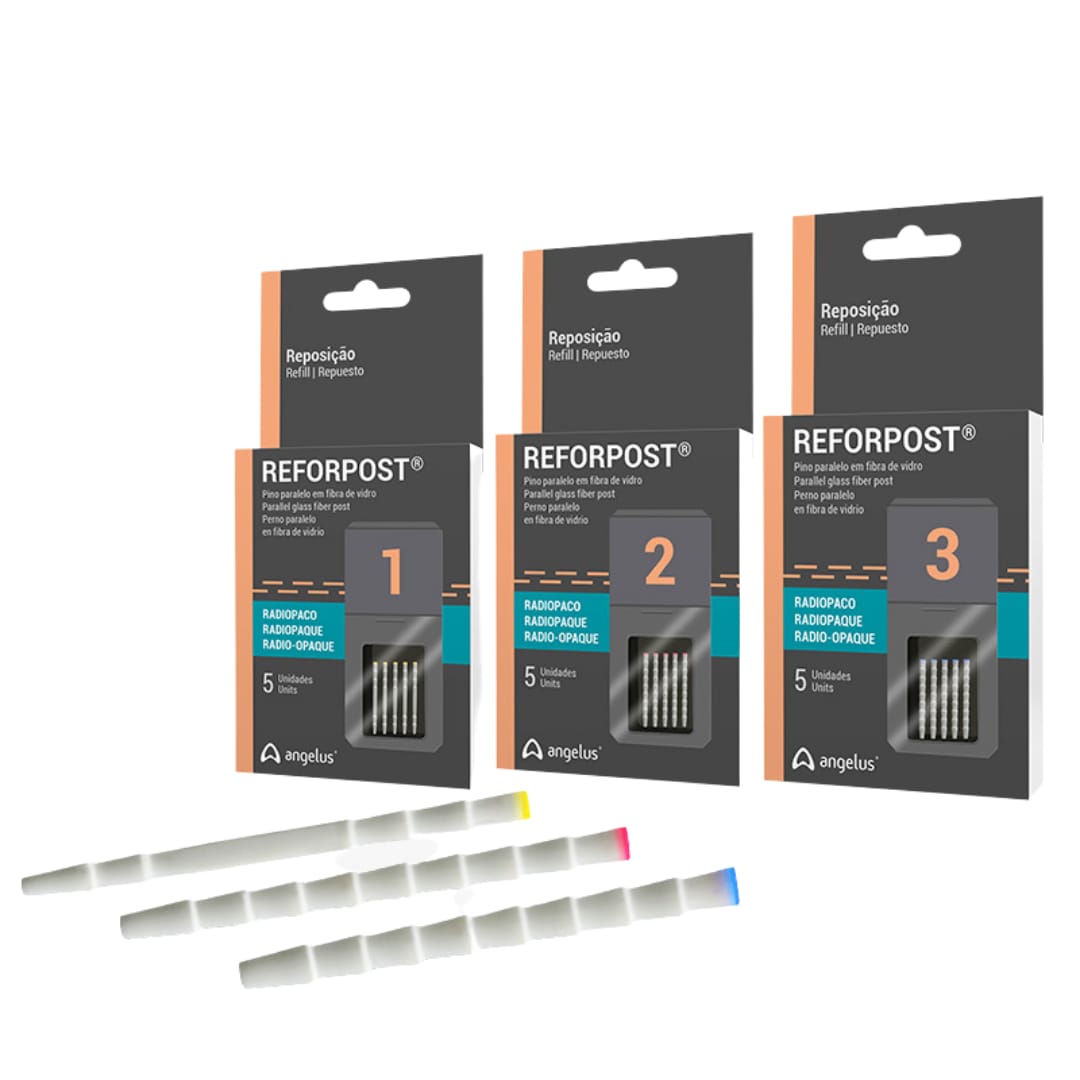
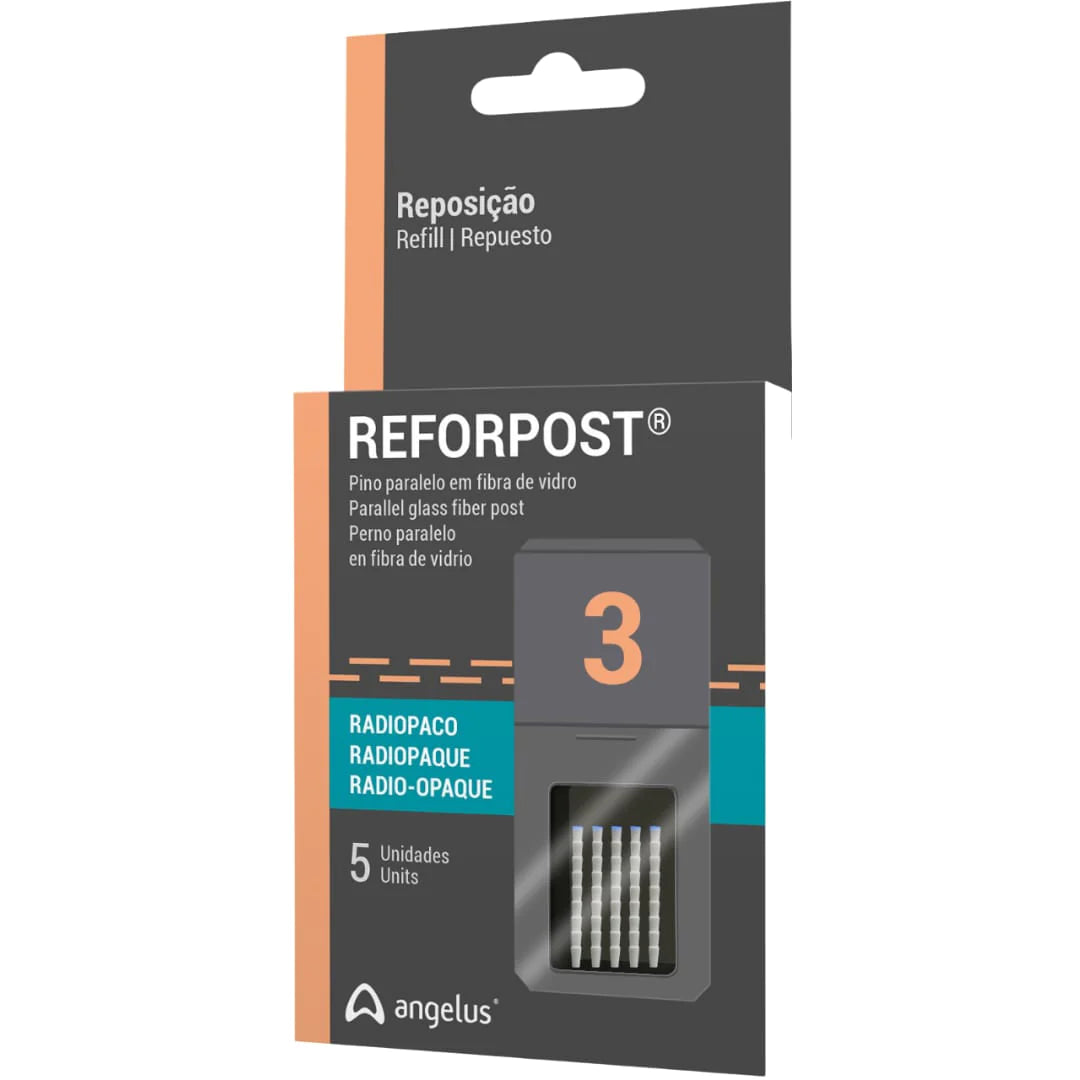
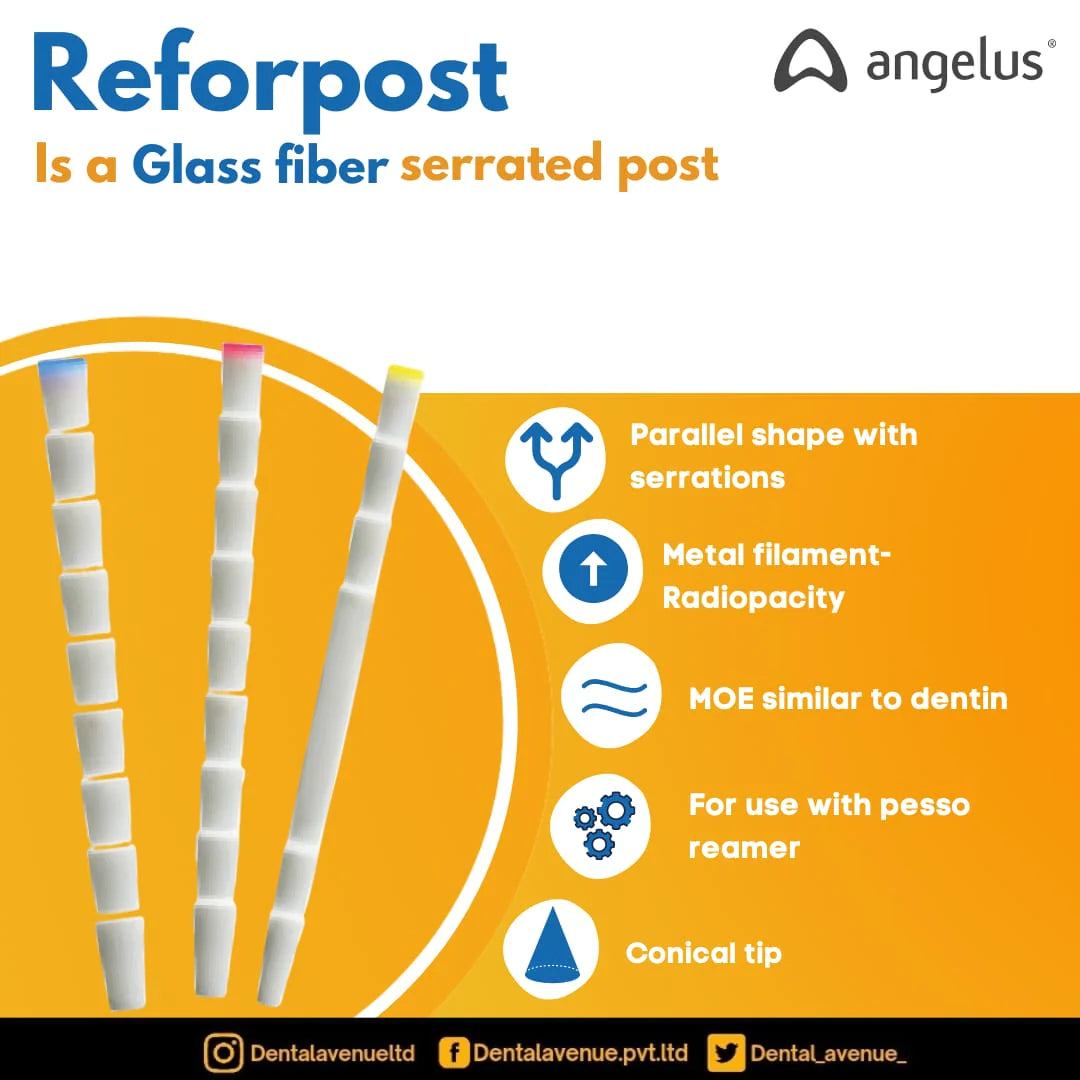
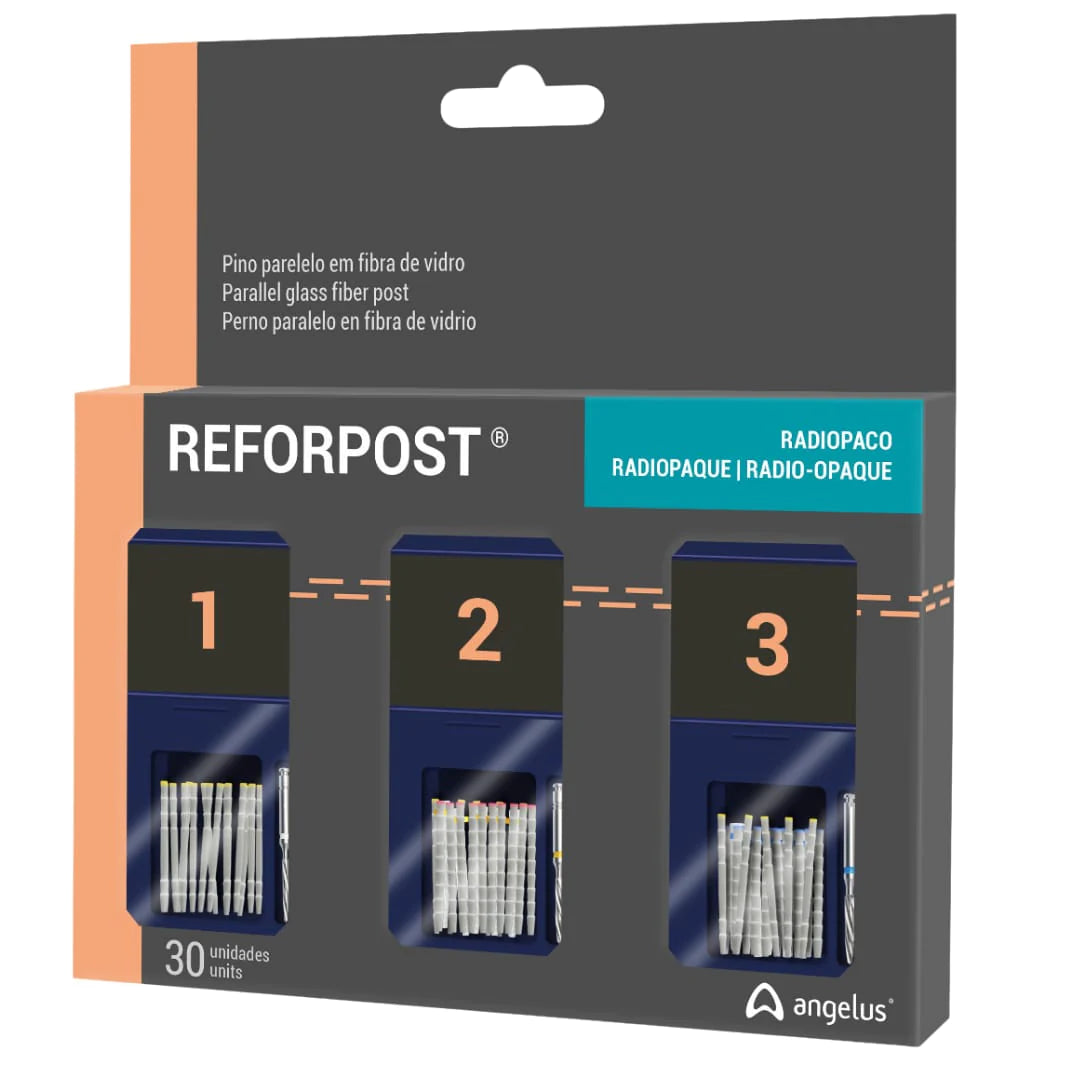
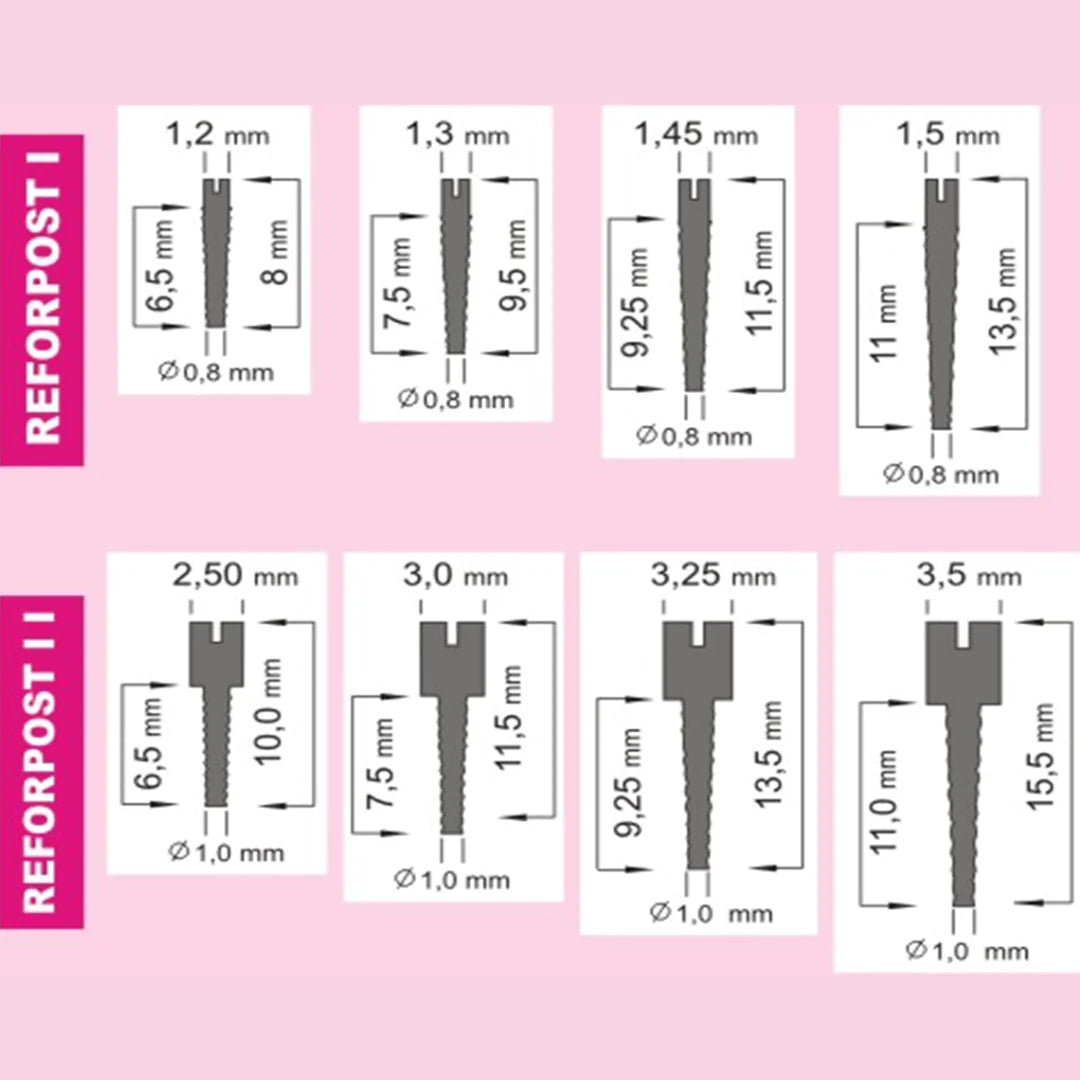
Angelus Reforpost fiber glass - Retentive shape, parallel intraradicular post with conical tip.
High retentiveness
The cylindrical, parallel shape and tapered apex of the Glass Fiber Reforpost make them very retentive. The additional circumferential mechanical retentions of the posts increase the area for adhesion of the cement.
Less wear on the tooth structure
The use of Glass Fiber Reforpost in combination with the techniques of adhesive cementation allows for a smaller removal of dental structure, without the need for removal of intraradicular or coronal retentive areas. The tapered apical portion of the post also provides for less wear of dentin in the apical region.
Identification colors
Better identification and agility in the work
Standardized for Largo burs
Benefits
- Great retention
- Allows radiographic visualization
- Easy removal
- Easy to adapt
- Great mechanical properties
- Lower risk of root fracture
- less tissue removal in apical third of root canal
- Saves clinical time and decreases lab costs
Time and cost saving
The technique of making prosthesis with pre-fabricated Fiber/Metal posts allows for creation of the post/core in a single session, eliminating steps and laboratory costs
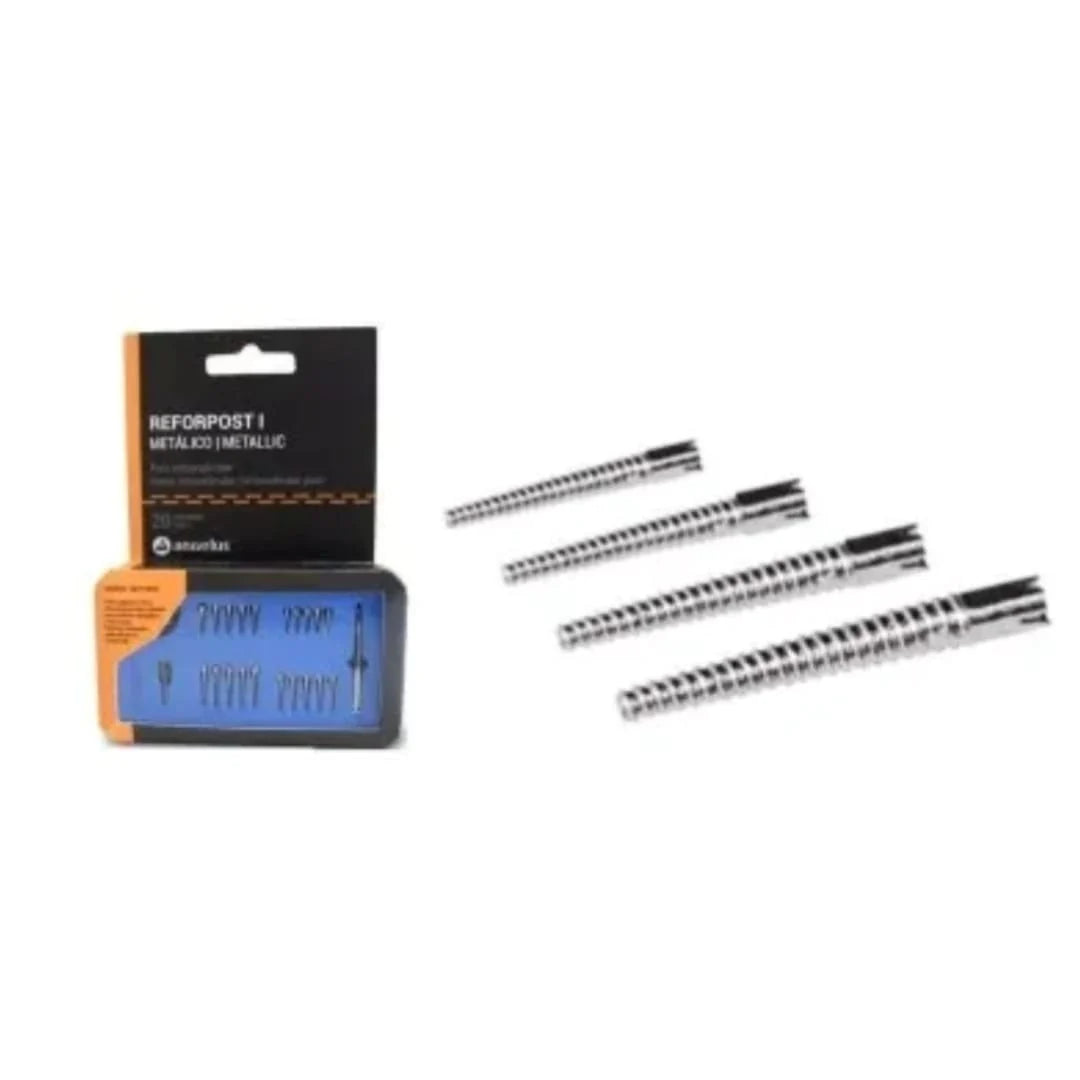
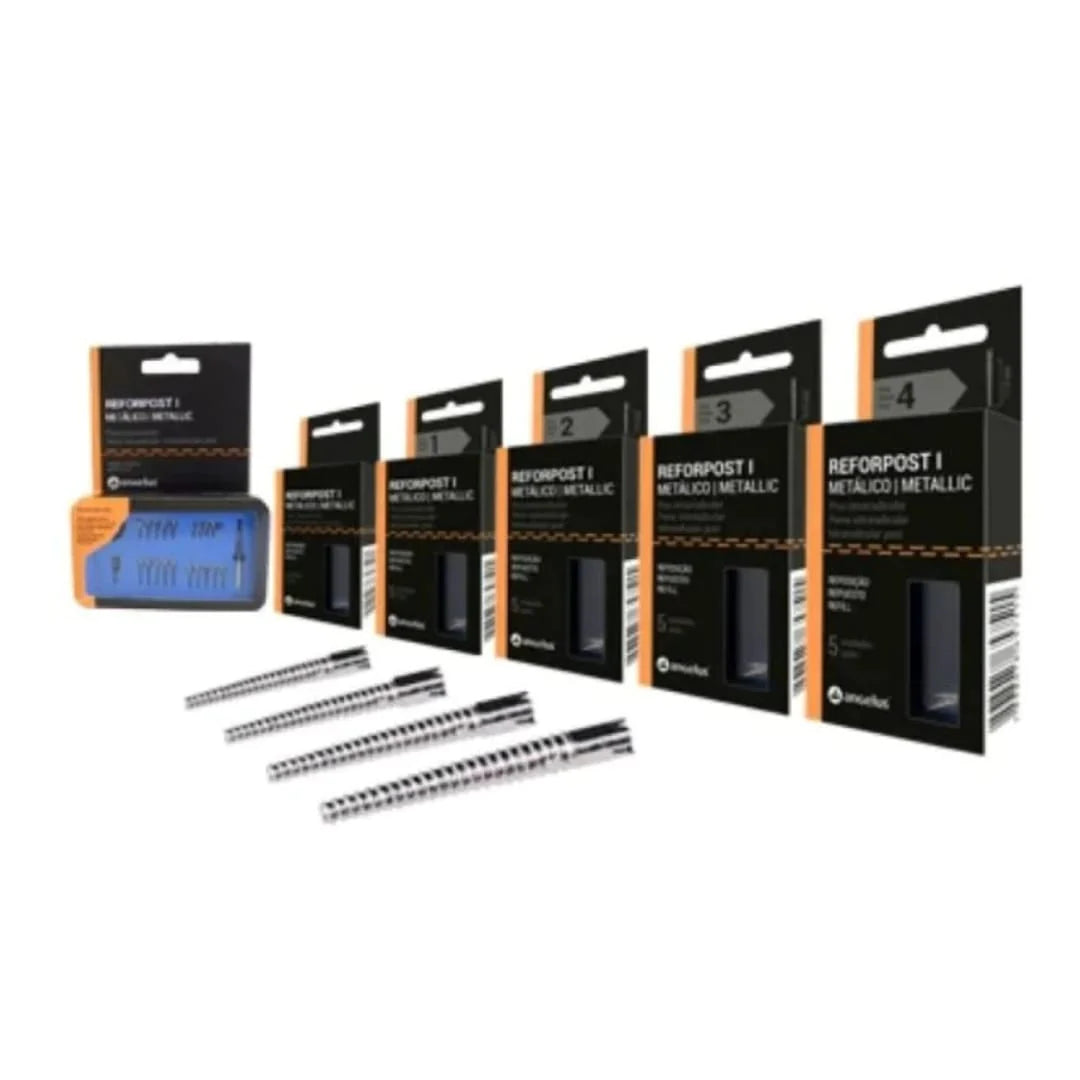
Reforpost Metallic - Passive tapered intraradicular post system
Reforpost Metal - Surface texture
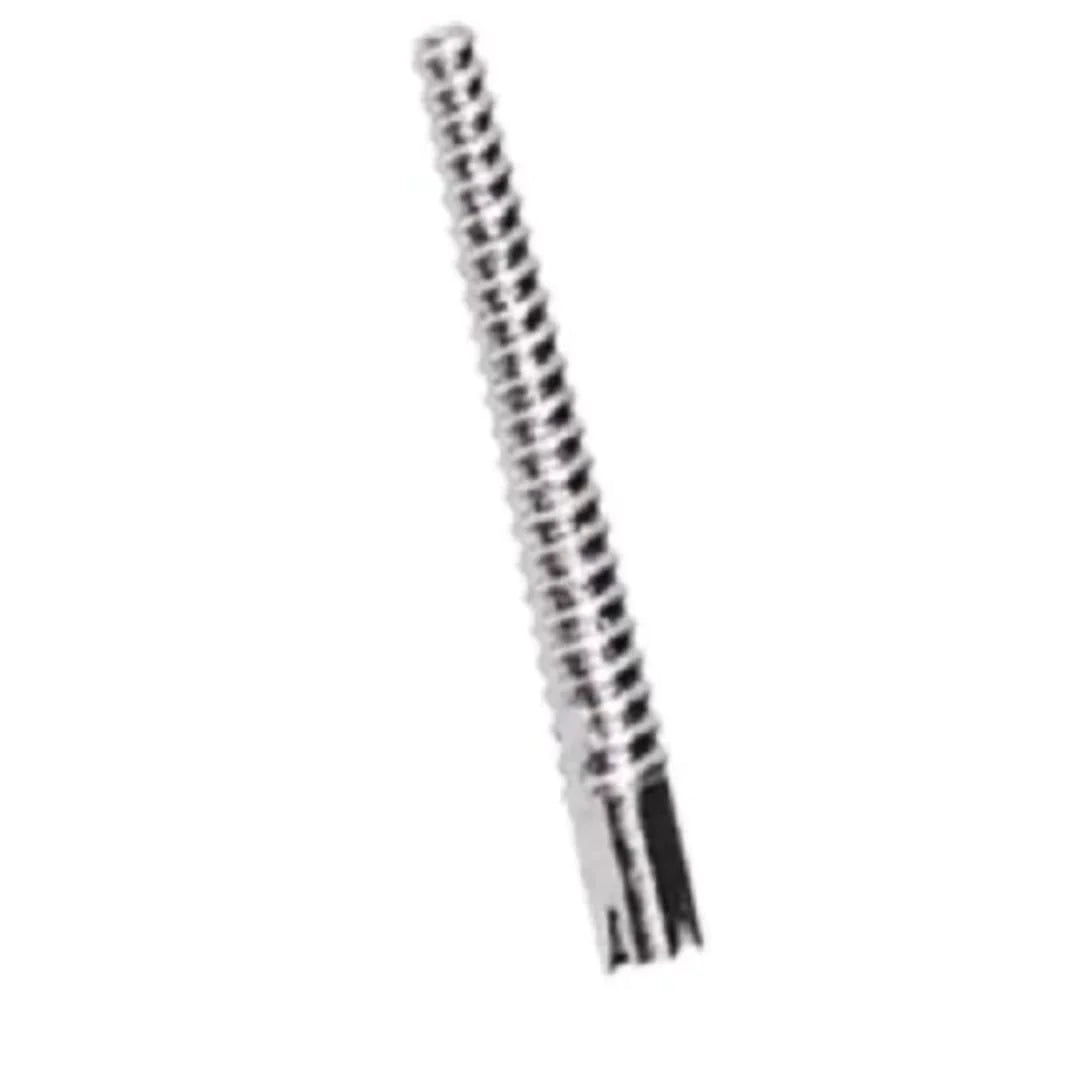
Angelus Metal post serrated or roughened surface is more retentive than a smooth one. Controlled grooving of the post and root canal also increases the retention of the post
Reforpost Metal- Passive post system
It must be cemented passively. Active Screwable posts are harmful to the dental structures
Superior retention is observed in active THREADED POST, but it exerts a greater amount of stress on the remaining tooth structure which increase the potential for root fracture.
Luting agents for post cementation
Currently there are 3 types of cement available for post cementation Resin cements, GIC & zinc phosphate.
Self cure resin cement is the material of choice for post cementation as it has highest compressive strength along with negligible solubility. GIC bonds chemically with the dentin and is not technique sensitive. The most traditional of all cements is zinc phosphate, which has adequate physical properties, economic and easy to use as of which it remains as choice of material for post cementation for around decades.
Factors affecting retention of post
- Post space preparation
- Luting Agent
- Post surface Texture
- Post Diameter
- Post Length
Benefits
- Saves clinical time and decreases lab costs
- Easy to use
- Easy to adapt
- No generation of stresses
- Excellent retention for the cement
Time and cost saving
The technique of making prosthesis with pre-fabricated Fiber/Metal posts allows for creation of the post/core in a single session, eliminating steps and laboratory costs
Avue A+ Calcium Hydroxide Based Root Canal Sealer Characteristics
Root canal sealers are the binding agents used with gutta-percha for obturation, usually radiopaque. They fill the anatomic space where primary filling materials fail to reach and possess great anti-microbial properties.
- Induce mineralization
- Induce apical closure via cementogenesis
- Inhibit root resorption subsequent to trauma
- Inhibit osteoclast activity via an alkaline pH
- Seal and prevent leakage
COMPOSITION
- Base
- Calcium Oxide
- Zinc oxide
- n-ethyl-o/p-toluene sulfonamide
- Plasticizers and Thickeners
- Catalyst
- Isobutyl Salicylate
- Methyl Salicylate
- Bismuth Trioxide
- Titanium Dioxide
- Thickeners and Plasticizers
Anti-microbial action and Tissue Repair/Regeneration
Calcium hydroxide sealers exhibit antimicrobial activity and have osteogenic-cementogenic potential. Calcium hydroxide is antimicrobial depending on the availability of free hydroxyl ions. It has a very high pH (hydroxyl group) that encourages repair and active calcification. There is an initial degenerative response in the immediate vicinity followed rapidly by a mineralization and ossification response.
Biocompatibility
Root canal sealers and filling materials may be exposed to the periradicular tissue at the apical and lateral foramina so superior tissue tolerance to sealer is required to minimize local and systemic side effects. Calcium-containing sealer exhibited less toxicity and exhibited therapeutic effects on the surrounding tissue.
Storage
Calcium hydroxide sealers should be stored in a cool, dry, well- ventilated area in tightly sealed containers that are labeled in accordance with OSHA's hazard communication standard. Following proper storage guidelines is essential as separation can be observed if the material is stored at a very high temperature.
Anti-microbial action
The anti-microbial action of Calcium Hydroxide sealers prevents persistent residual infection and micro-organisms from re-entering through the oral cavity.
Hydrophilicity
The hydrophilic nature of Calcium Hydroxide sealer reduces the xontact angles of the sealer and increases sealer penetration into the dentinal tubes.
Bio-mineralization
Calcium Hydroxide sealers induce hard tissue formation in both Periodontal Ligament (PDL) and bone.
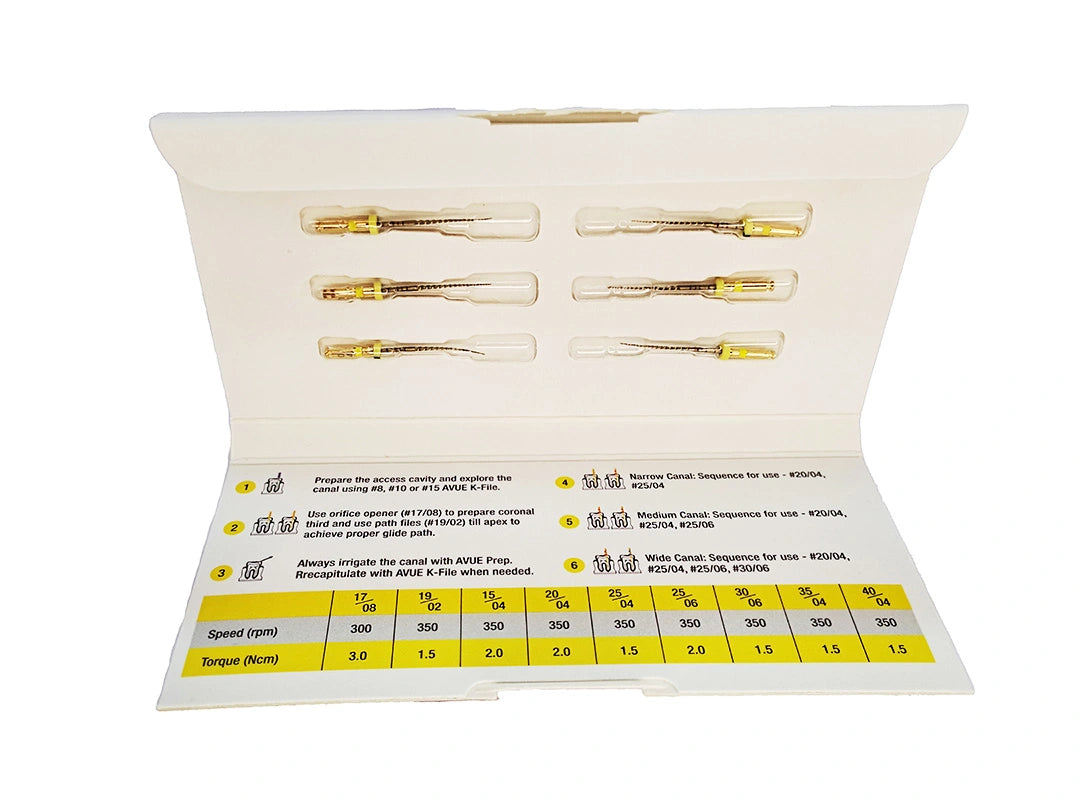
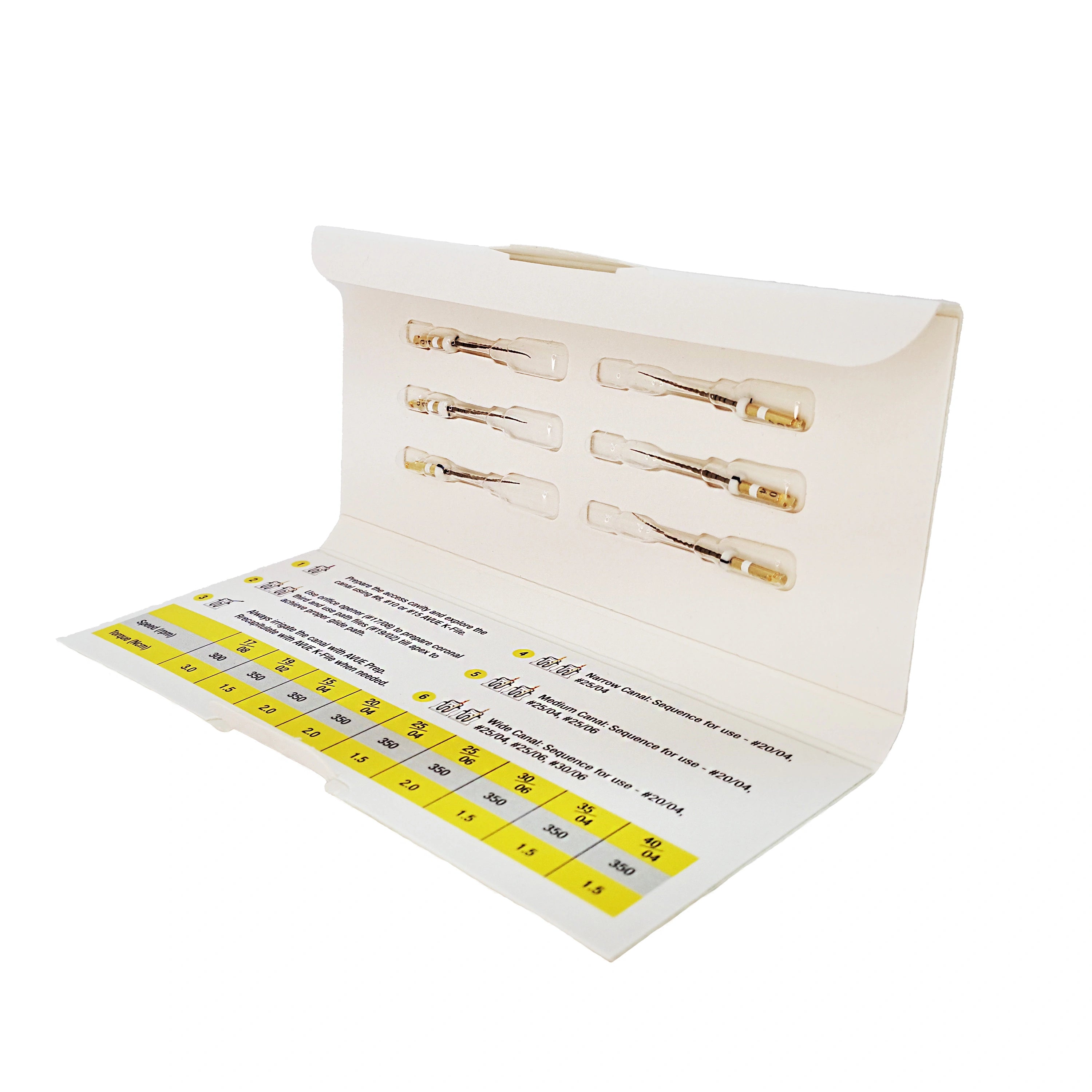
Avue Aurum - Gold Heat Treated Endo Rotary File System
Enhanced Cuttability
Convex Triangular Cross Section with 3 Cutting Edges reduce rotation friction between blade and dentine to improve cutting action. The decrease in torsional load helps to improve safety.
Improved Efficacy Due To Ease of Debris Removal
Progressive pitch makes more space for the debris which in turn push them upwards.
The higher the pitch or fewer turns the instrument has, the more flexible it will be, but in turn, the helical angle will decrease, and the file will have less cutting capacity, so, it will need more rotations to be effective.
Safe-Higher Fracture Resistance & Longer Service Life
Post machining gold heat treatment produces a better arrangement of the crystal structure which strengthen the files.
Eliminate Procedural Errors
The non-cutting tip design helps eliminate procedural error such as ledge formation transportation and perforations particularly in curved canals. One of the benefits of a progressively tapered shaping file is that each instrument engages a smaller zone of dentin, which reduces torsional loads, file fatigue and the potential for breakage
Flexible-Excellent Resistance to Cyclic Fatigue
Cyclic fatigue occurs when the instrument does not bind in the canal but rotates freely in a curvature whilst being subjected to repeated cycles of tension and compression, which disintegrates its structure and consequently leads to fracture.
Our Advanced design makes the file 200% more flexible. This allows superior resistance to cyclic fatigue which is the most common cause of file separation.
Better Adaption to Root Canal Curvatures
Controlled Memory Nickel Titanium wires offer remarkable memory-free property which allows the instrument to adapt to root canal curvatures and minimizes undesirable lateral. The Super elasticity of Niti rotary instruments provides improved access to curved root canals during the chemomechanical preparation, leading to their successful and extensive application in the clinical practice
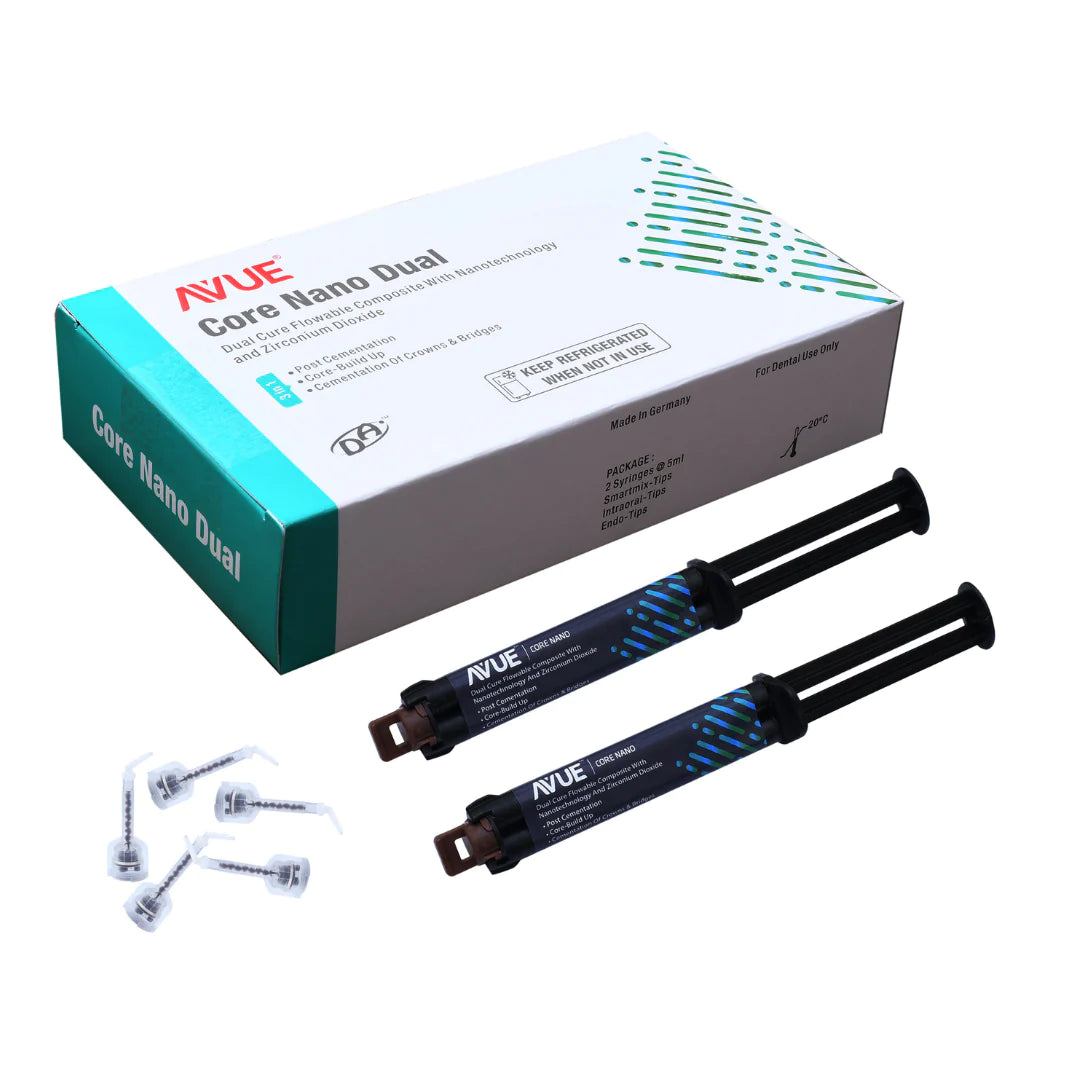
Dual cure flowable composite with nano zirconium dioxide & calcium fluoride
If the remaining tooth structure is inadequate for permanent retention of a direct core build-up material, a root post must be used for retaining the core. Retention & support must be derived from within the root canal because little coronal dentin remains
Ensures a monoblock restoration
This material can be used as 3 in 1 for post, core & crown cementation, leading to less interfaces between the restoration which ultimately unify the tooth directing all the occlusal forces perpendicular to the tooth surface
Benefits of Nano-zirconium dioxide, nano-calcium Flouride Particles
AvueCore Nano is a dual cure high radiopaque flowable composite material with nano particles for core-build-up and cementation of posts.it Improves the composite’s physical properties and flow characteristics making AvueCore Nano more strong and durable.
Zirconia particles acts as binder which results in fewer microcracks and increases the fracture toughness
Ferrule-Only the rule to follow in core build up
Crown preparations exhibiting parallel walls with proper taper and height, coupled with adequate ferrule 1 mm to 2 mm beyond the core material itself without violation of biological width, have historically proven to be clinically successful regardless of the material chosen for the definitive crown
Excellent mechanical properties
Due to its excellent mechanical properties final crown preparation can be carried out more precisely. AvueCore Nano is also suitable for cementing of crowns and bridges, inlays and onlays if there are no high esthetic requirements.
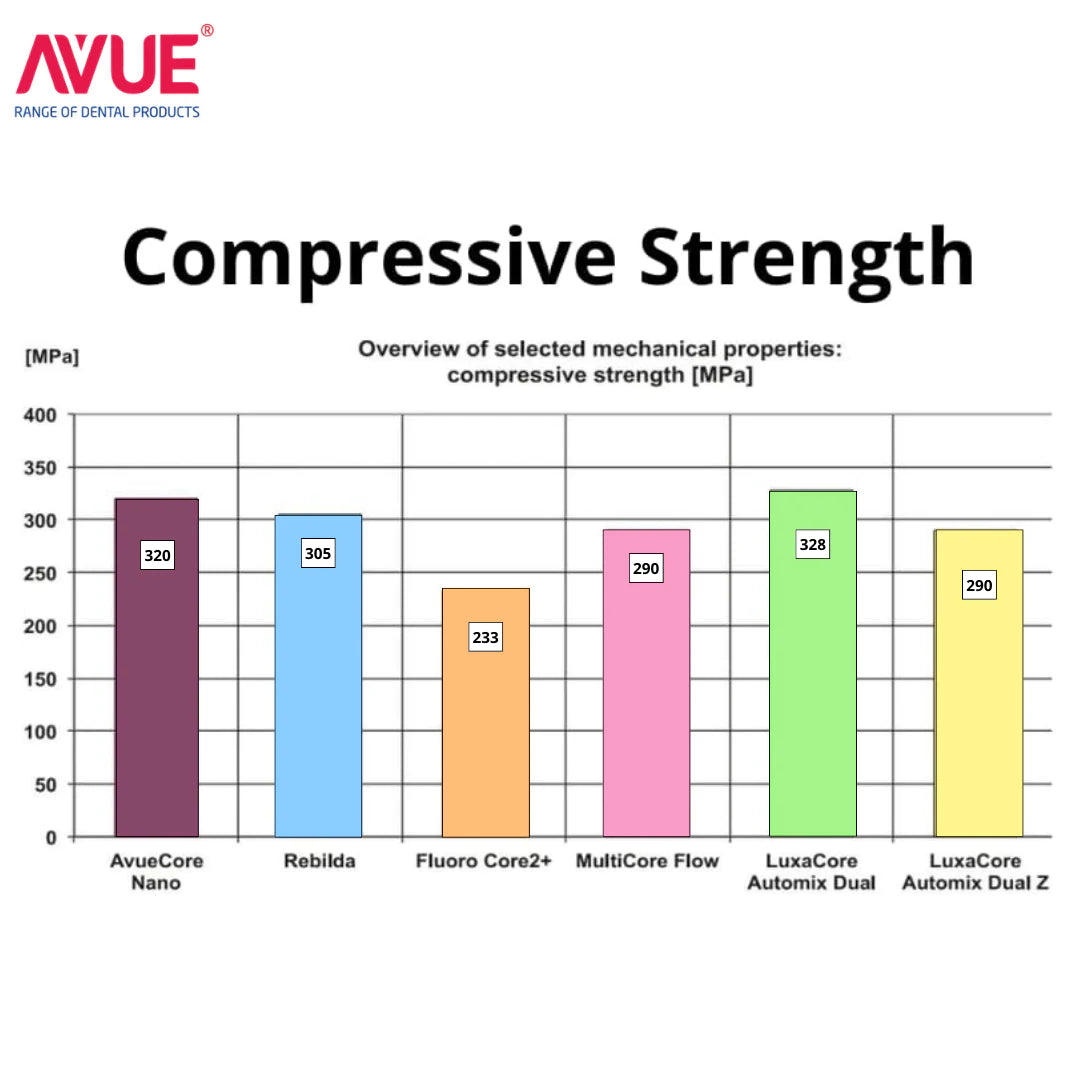
Delivered in 1:1 Smartmix – syringes AvueCore Nano can be easily dispensed and applied directly into the root cana;. AvueCore Nano exhibits a short setting time without high heat generation. The dual cure properties enables the dentist, also to carry out cementations and core build-ups in cases where a light cure cannot be guaranteed to be sufficient.Compressive strength of AvueCore Nano is 320MPa-Flexural strength-145MPa and Diametral Tensile strength-40MPa
Low film thickness
Film thickness of Avuecore Nano is less then 25 microns which ensures proper luting of the post and of crowns &bridges
Dentin like cutability
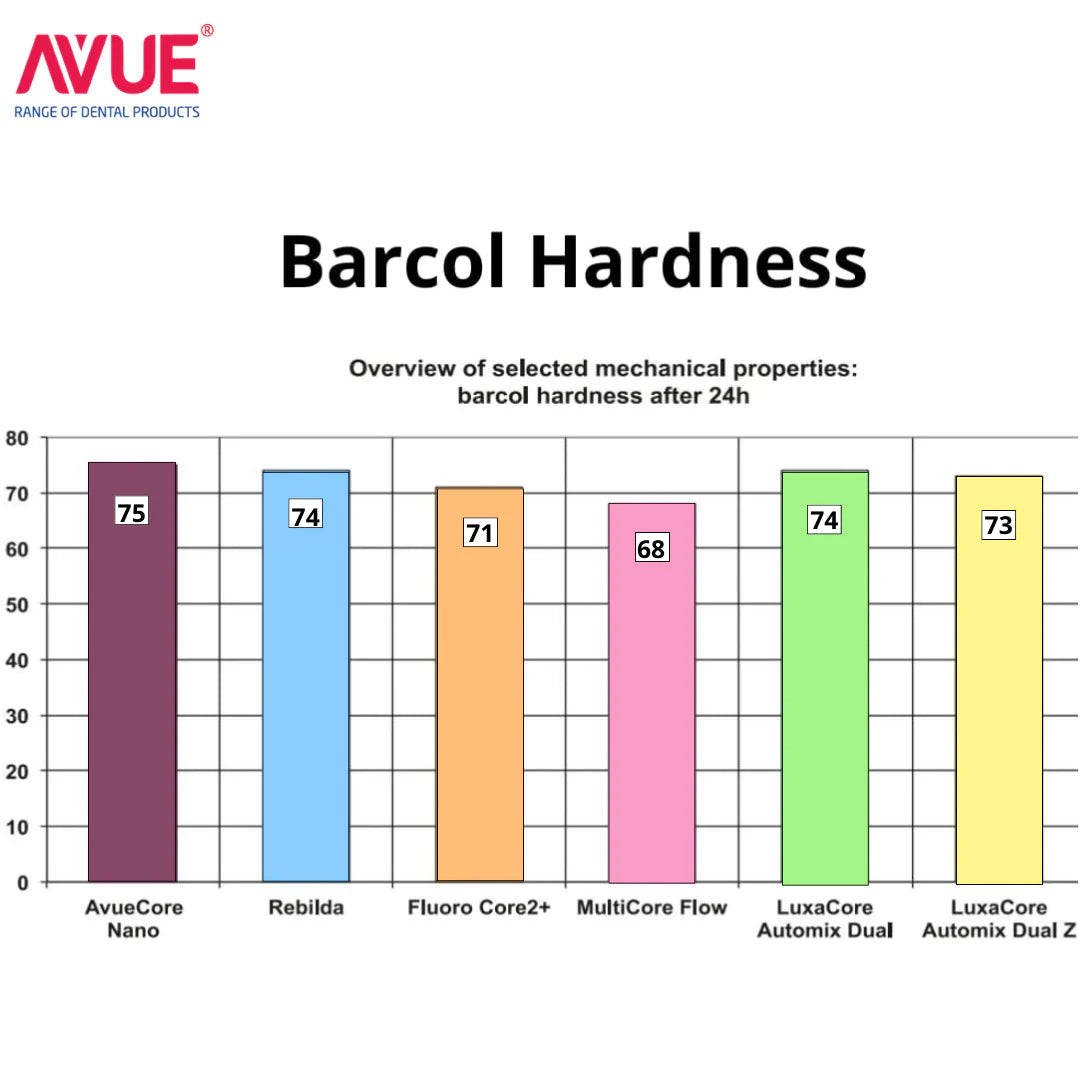
This features helps while preparing the tooth , the clinician will get smooth notch-free surface and finishing margins due to its hardness is equal to dentin Compressive strength-320MPa
Benefits
- Excellent compressive strength via incorporating Nano zirconia Dioxide & Nano calcium Fluoride.
- Reinforces the tooth structures when there is insufficient tooth to withstand occlusion laod.
- Dual cure options to be used in Post cementation insures complete polymerization in areas where curing lights is unable to reach.
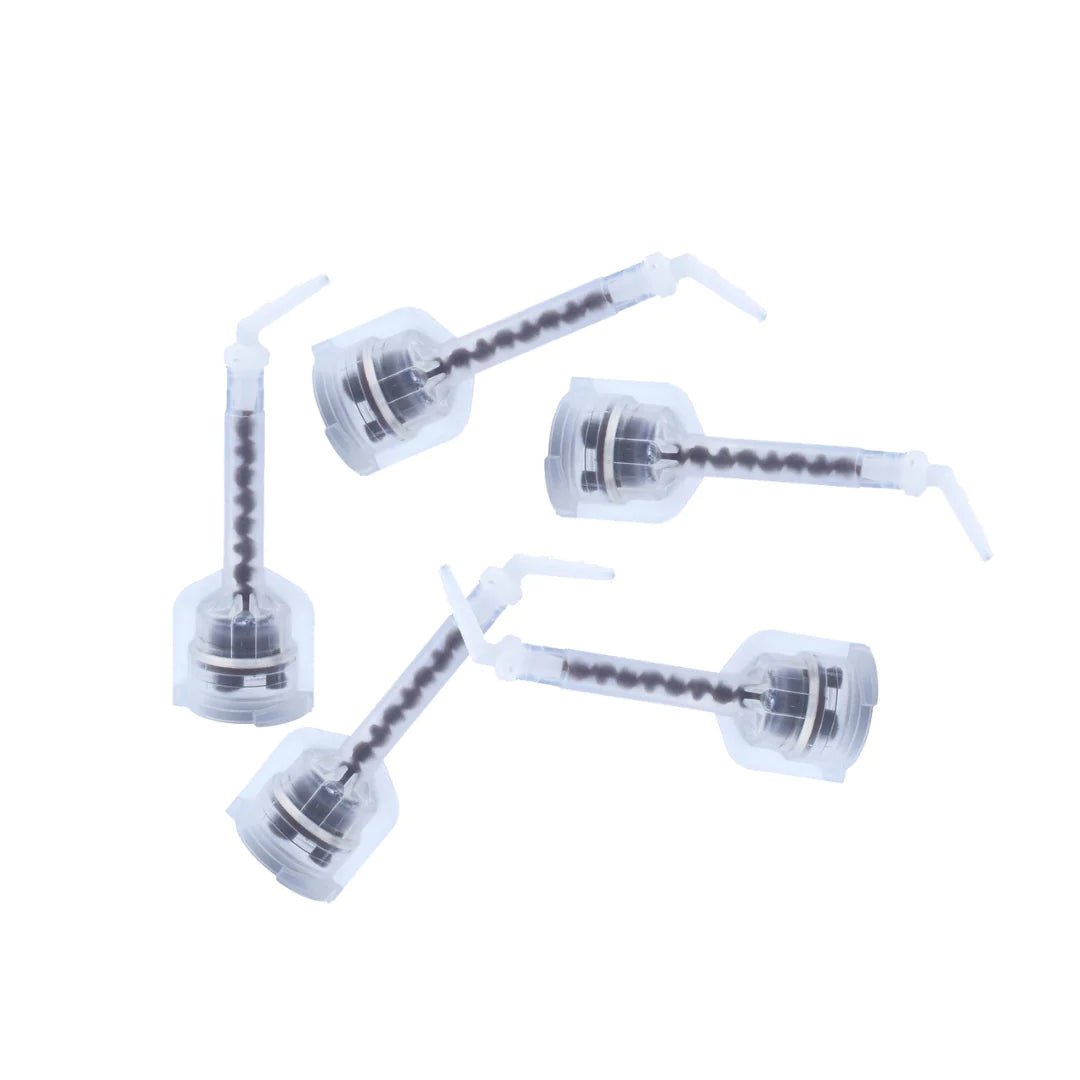
- Optimum flowability – Easy to use with Intraoral tips & Endo tips for completely
- Dentin like cutability.
- Adequate film thickness and flexural strength.
- Reinforces the tooth
- Ease of excess removal
- Superior Handling properties
- Compressive strength-320MPa
- Flexural strength-145MPa
- Diametral Tensile strength-40MPa
- Film thickness-</=25µ
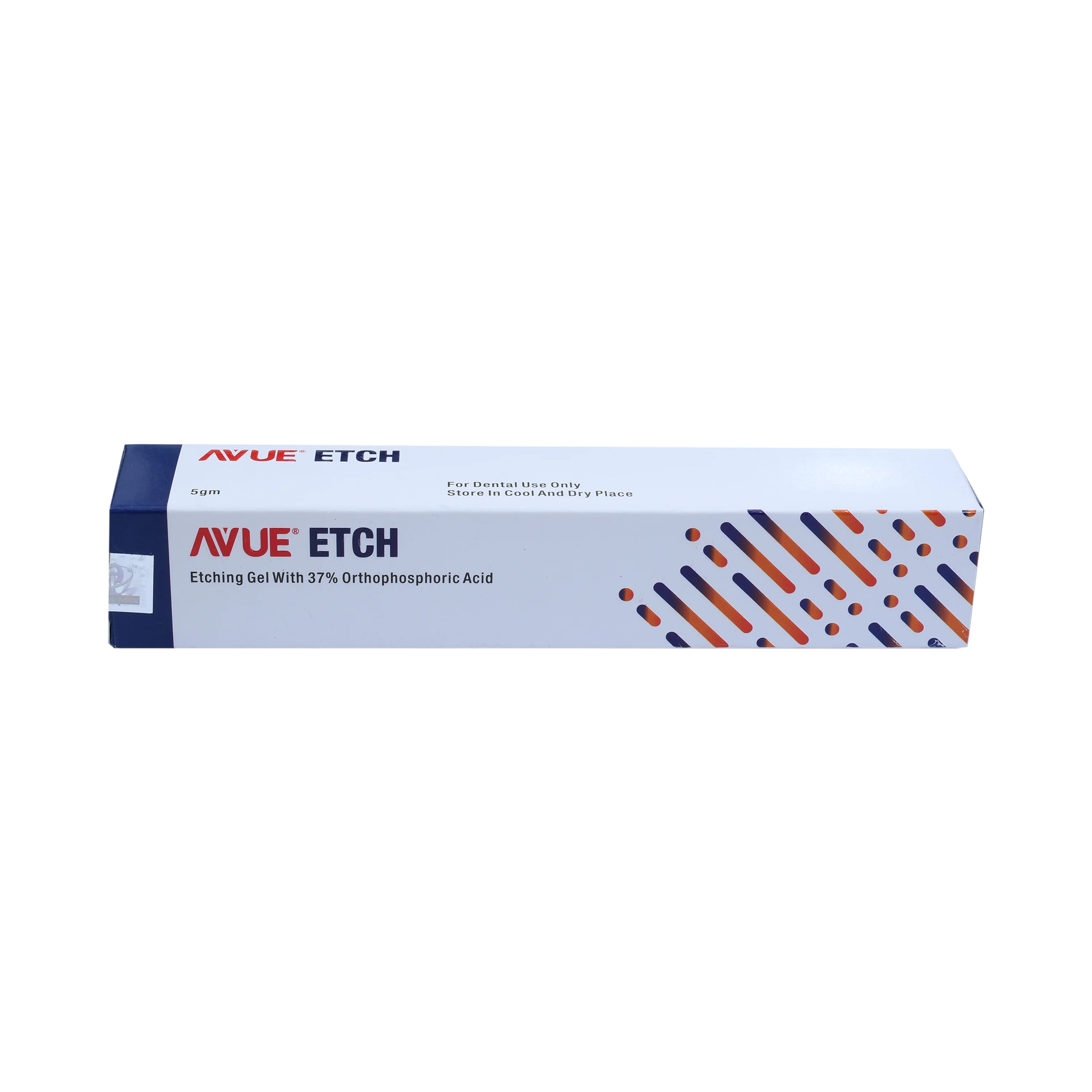
AvueEtch
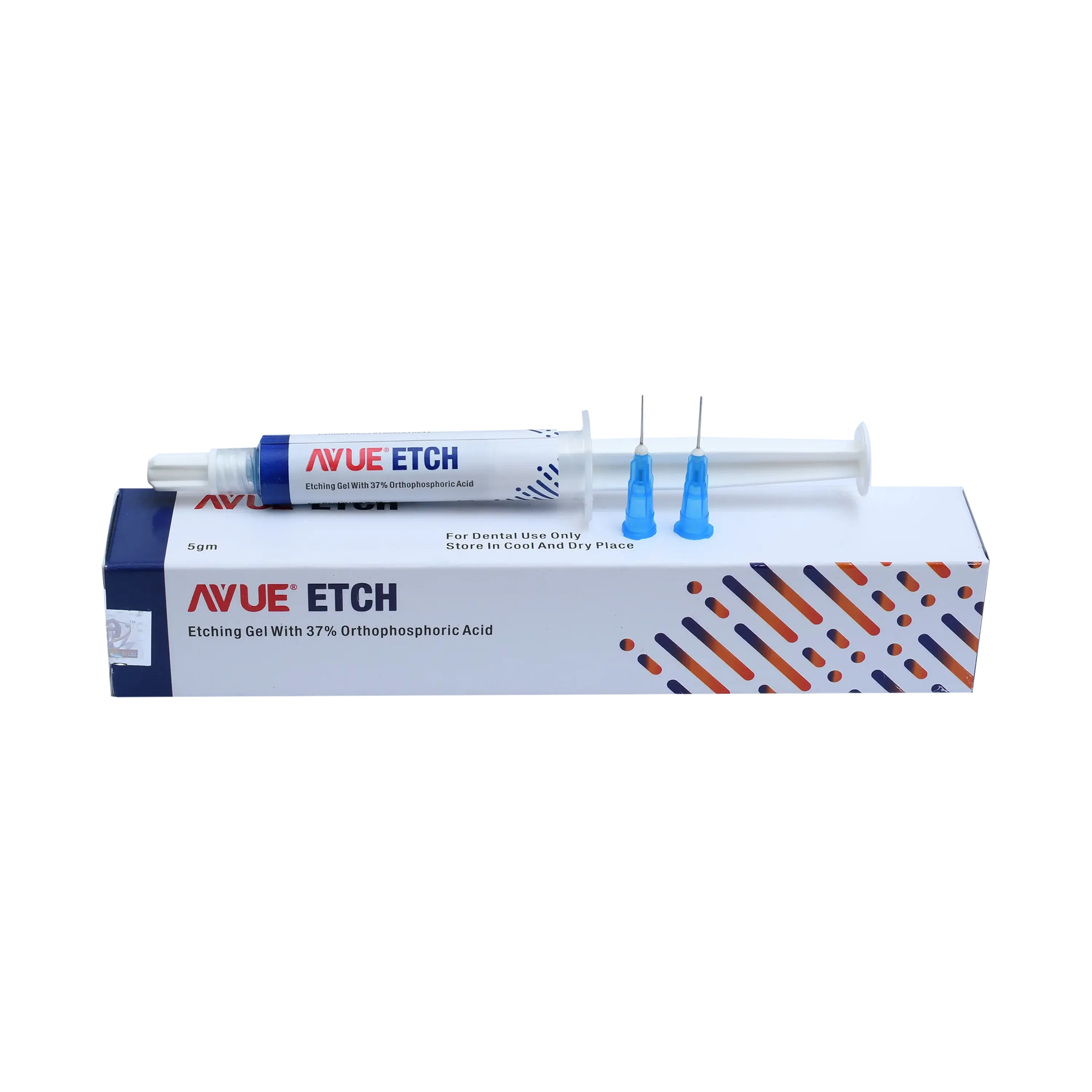
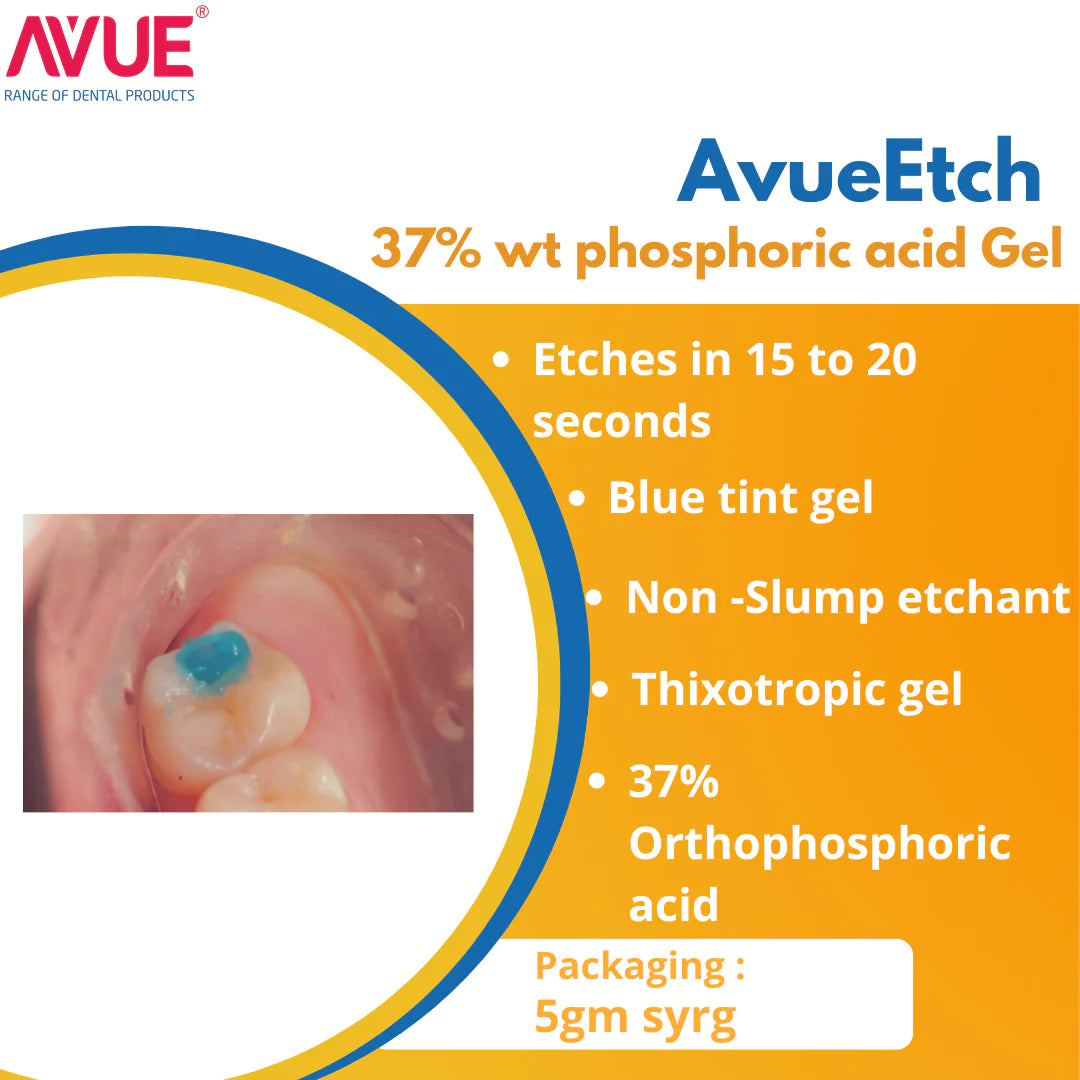
Blue tinted viscous gel/ liquid of 37% phosphoric for etching techniques.
Applications:
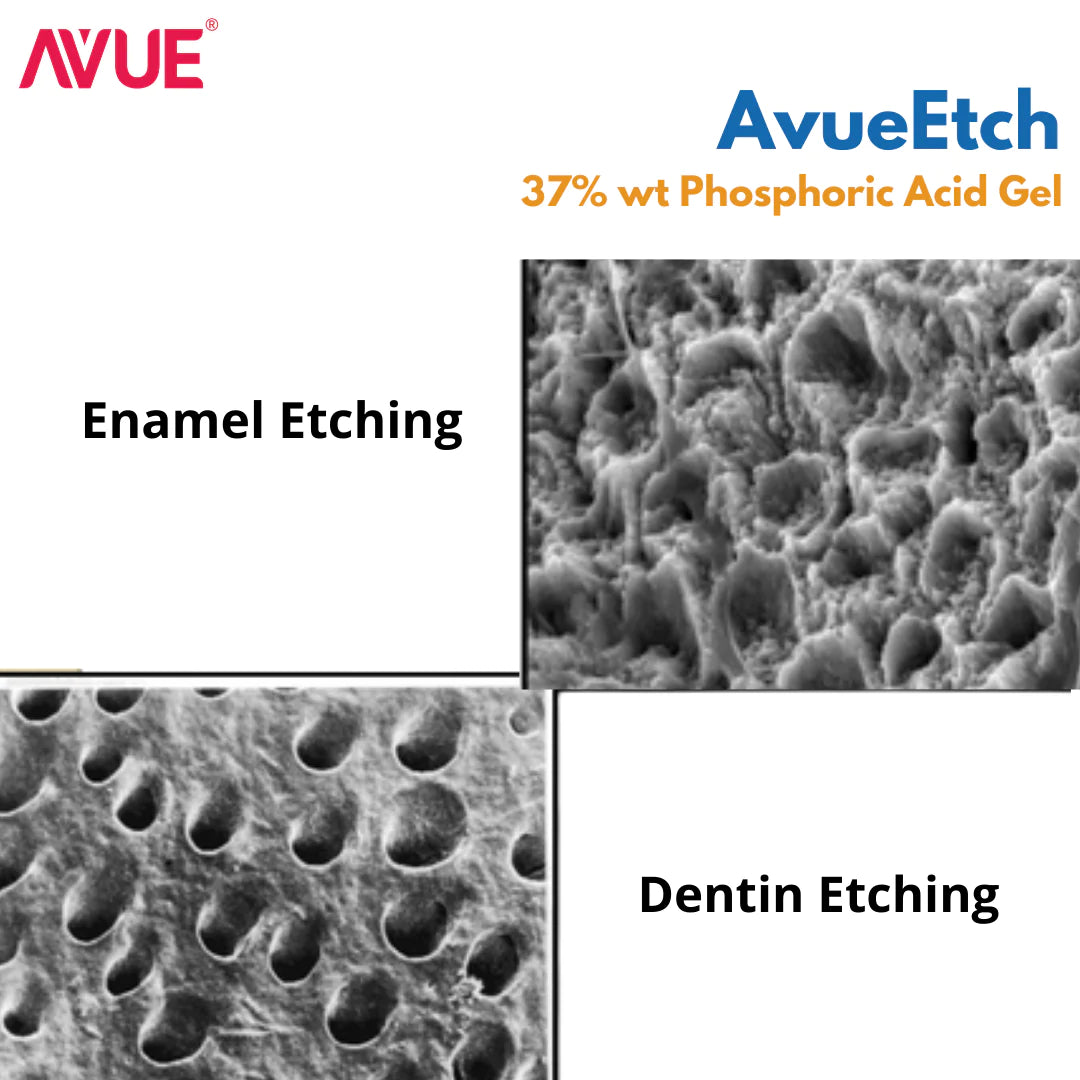
- Used for conditioning both dental enamel and dentin surfaces prior to the placement of an adhesive restoration
- After any cutting of the tooth surface a smear layer is formed. This layer contains the basic components of the enamel, inter- and peritubular dentin, including dentin tubules’ content, mixed with water, microorganisms, toxins, enzymes, saliva. This layer may vary in composition, thickness, density and degree of binding to the underlying tooth structure, depending on the location of the preparation . When a preparation of the dentin surface is performed, the dentin tubules are cut and therefore obscured by small plugs of this layer, which will lead to reduction of dentin permeability .
- The smear layer can‘t be removed by washing with water, but it is subject to dissolution in a total etching
- The etching of the dentin lead to significant changes in the dentin structure.The rate of adhesives infiltration in the demineralized dentin gradually reduces in the direction towards the base of the hybrid layer
Dissolution of the smear layer
The etching of the dentin surface even for a short time can lead to significant changes in the dentin structure. It must be efficient, not extensive . In extensive demineralization of the intertubular dentin the collagen fibers will collapse and the calcium phosphate crystals will precipitate and therefore a protective layer that may not be completely impregnated by the adhesive primer and monomer could be formed.
37% promotes strong bonding
37% wt phosphoric acid etchant for enamel and dentin. Easily controlled gel flows under direction, not under gravity.
37% wt phosphoric acid
30 to 40% wt phosphoric acid optimally etches in 15 to 20 seconds. Lower concentrations require longer contact time, unnecessarily delaying procedures.
Thixotropic gel-Nonslump consistency
Non-slump gel offers precise placement around the specific area where we need to do the light cure restoration
Blue tint gel
High visibility for precise placement, even in the inaccessible areas of the oral cavity like distal surfaces of maxillary tooth
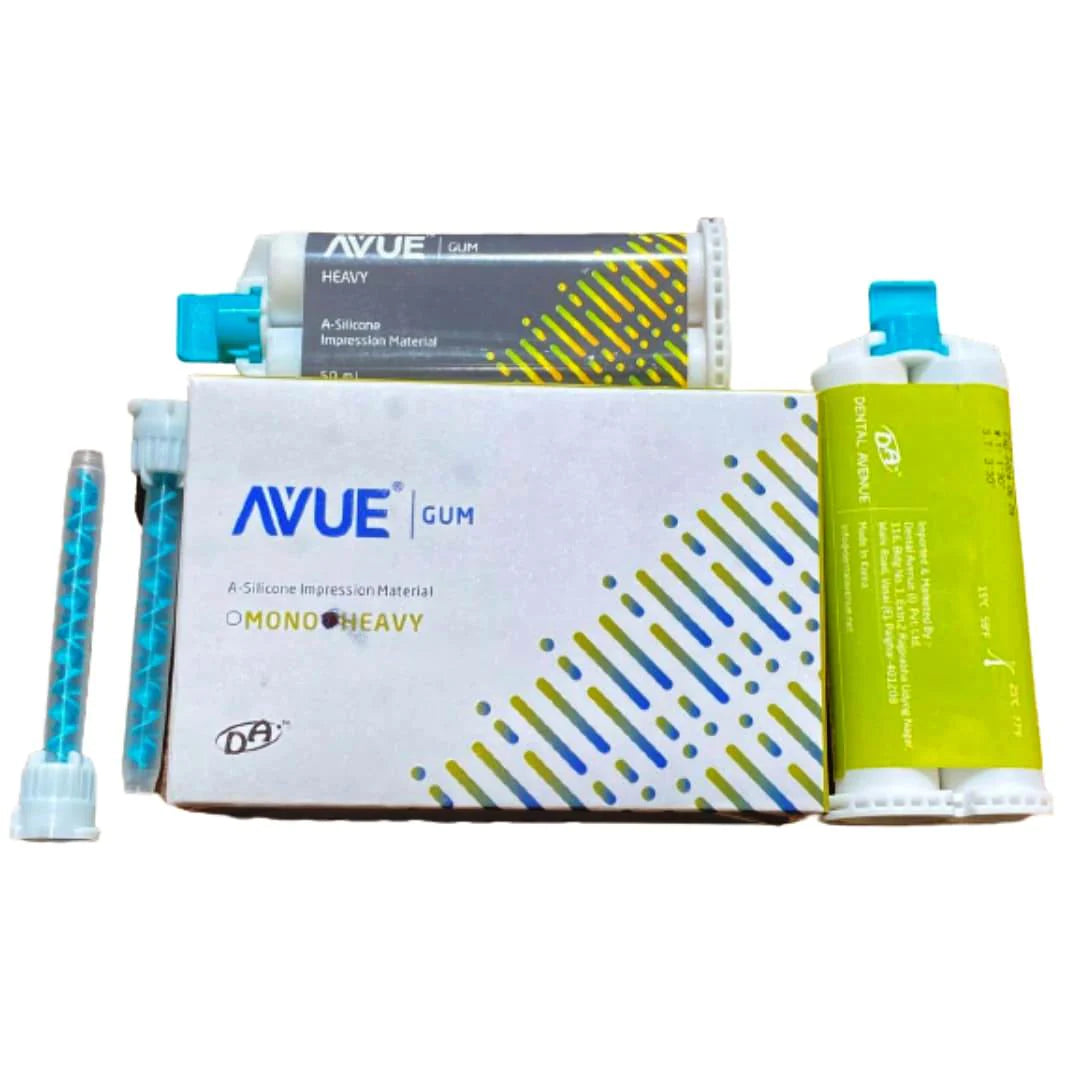
Heavy body Addition Silicone Impression Material
The heavy body has a higher viscosity and is generally placed in the impression tray to support the light body material for crown and bridge impressions.
The accuracy of these final restorations is highly dependent on the impression materials and techniques utilized.
AvueGum Heavy offers high elastic recovery and acceptable flexibility
This property is very important while removing the impression from the mouth or after pouring the gypsum stone models.
AvueGum Heavy has optimal setting time.
It is easy to use and offers ample working time and adequate setting time enhancing patient comfort
AvueGum Heavy is great for impressions involving one or multiple units and for using quadrant, double-bite and full arch trays. Sulfur contamination from latex gloves retard the setting of Putty and its viscosity is low compared to heavy body.So it is better to use AvueGum LIGHT BODY [Wash impression material]along with AvueGum HEAVY BODY[Tray material] for single or double-step impression taking.
AvueGum Heavy exhibits high hardness
AvueGum Heavy exhibits easy cutting characteristics for providing pressure relief channels in corrective treatments.
These are necessary in order to obtain an optimal detail reproduction with the secondary impression. Especially for implant impressions.
AvueGum Heavy exhibits good fixation and torsion-preventing characteristics
For combined treatments with implants and prepared teeth double mixing impressions with Avuegum-Light are recommended.
Offers Good resistance
With the double mixing impressions AvueGum Heavy exhibits a good stability in the tray and optimal resistance when positioned. The light-bodied material Avuegum-Light thus penetrates into the subgingival areas.
Whether correction impressions or double mixing technique: Impressions with Avuegum-Heavy result in fitting restorations
Advantages
- High hardness
- Very good fixation characteristics
- Good insertion resistance
- Outstanding stability
- Homogeneous & bubble free material
- High tear resistance and easy separation.
- Sulfur contamination from latex gloves retard the setting of silicones, vinyl gloves should be used, there is no by product.
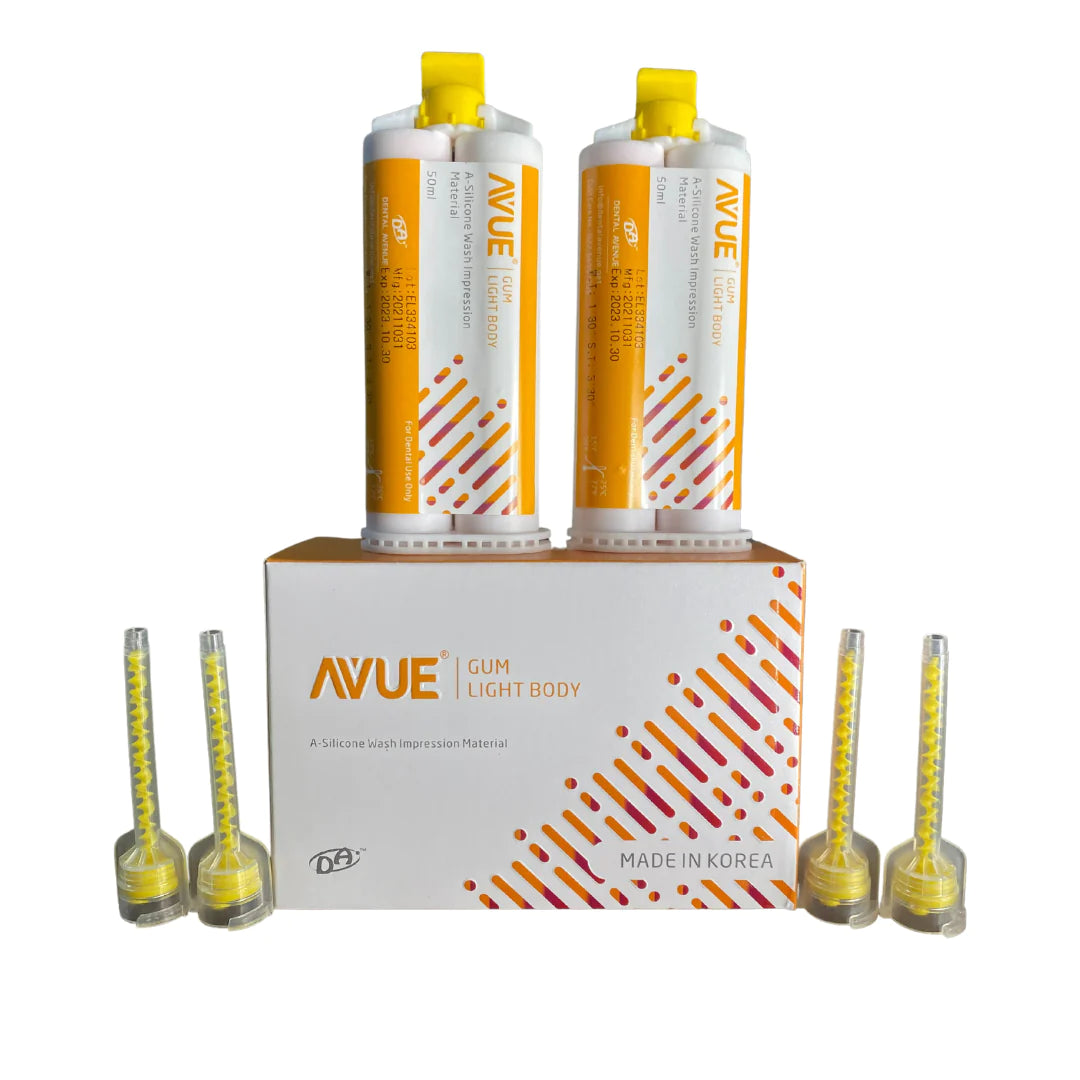
A-silicone wash impression material
An impression material which gives detailed accuracy & excellent margins.
Clinically, improved hydrophilicity of AvueGum Light body results in better wettability of the tooth surfaces, and performance in a moist environment.
The impressive flowability and self-levelling of AvueGum wash materials not only lead to highly precise capture of details, but also avoid air voids, flashes and imperfections.
High tear strength of Avuegum reduces the risk that the impression material tears off upon mouth removal. Another essential aspect for clinical success: The impression material has to withstand all the forces it is exposed to upon removal from the mouth. Avuegum impressions are rigid enough to withstand all the compression forces
Otherwise the impression will experience a permanent deformation, a so called distortion. Distortions can be the reason for poorly fitting resorations. They usually are not known until the final restoration is ready for seating.AvueGum is dimensionally stable showing a minimum amount of shrinkage.
Features:
- Optimized flow guarantees precise detail reproduction in every clinical condition.
- Stays where you want and flows on your demand.
- Thixotrophic – non slumpy. Stable as well as flowable.
- Excellent recovery after deformation from undercuts.
- Can be poured long after taking impression without loss of accuracy.
- High tear resistance.
- The light body has the lowest viscosity and is placed on hard and soft tissues to record accurate surface details of tooth preparations even in presence of moisture because of it Superior Hydrophilicity.
Medium Body Addition Silicone Impression Material for single step impression.
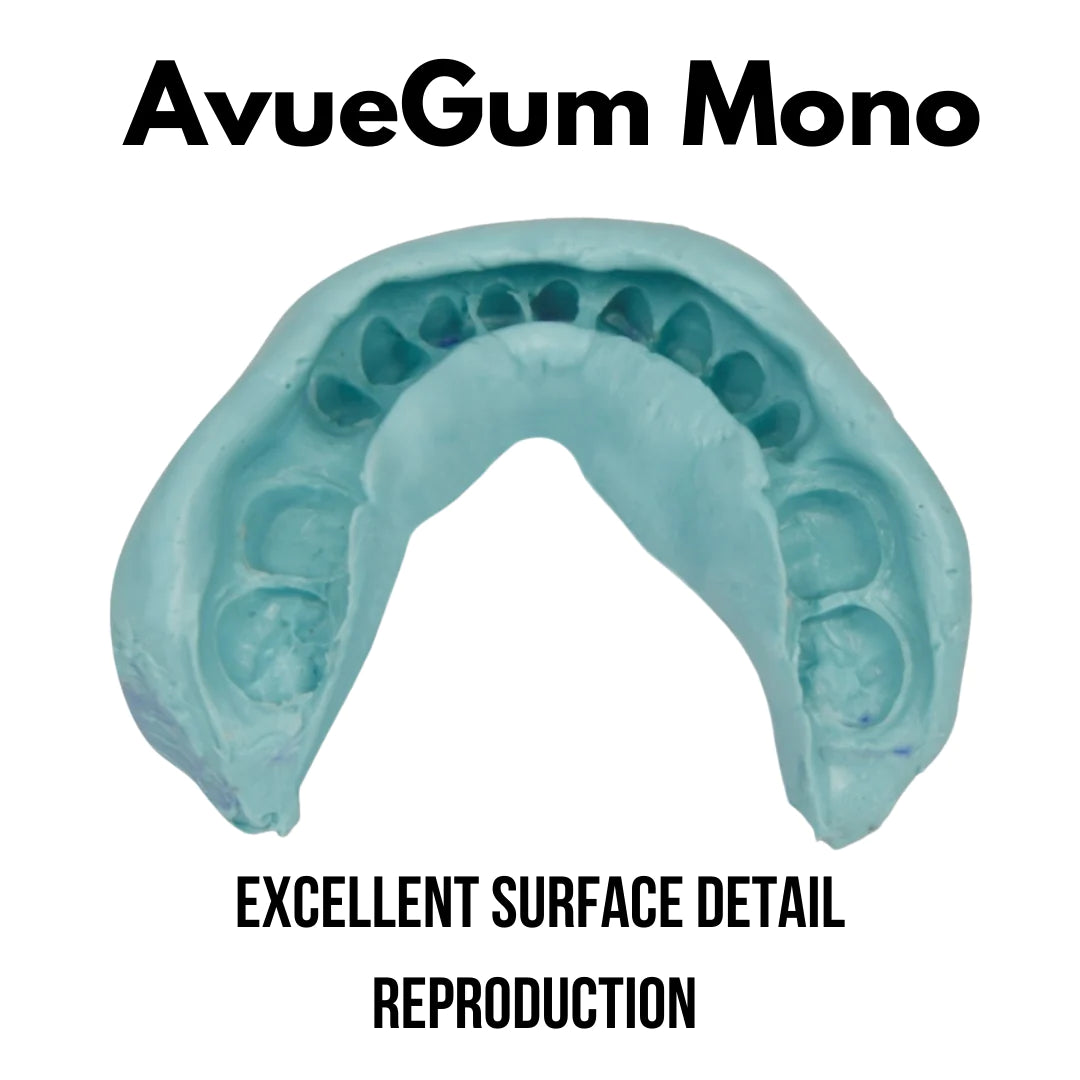
Avuegum Monophase: Hydrophilic vinyl polysiloxane impression material used as one step impression material for implant impressions, edentulous, Crown & bridge impressions.
AvueGum Mono acts both as tray material & wash impression material
The flow or viscosity of an impression material is dependent on the filler content. There are four basic categories: low (syringe or wash material), medium (one-step monophasic material), high (tray material), and very high (putty material)
AvueGum Mono has Excellent flow properties
AvueGum Medium body captures fine details for precise impressions it is stable as tray material and once prssure is applied will turned in low viscisity material.
Better initial hydrophilicity among all viscosities
It allows for accurate, void-free impressions even in moist conditions.AvueGum low contact angle along with tooth surface helps ensure an accurate impression in the presence of Saliva/GCF
Excellent hydrophilicity and outstanding thixotropy during processing and high final hardness after setting, the medium-viscosity material satisfies the requirements for perfect monophase impressions.
Helps get an accurate impression in a single step
This helps in reducing the need for costly adjustments, remakes and retakes.
Avuegum Monophase Impression material improves both, wettability on the tooth surface and model detail reproduction.
AvueGum Light body/Medium body shows thixotropic characteristics
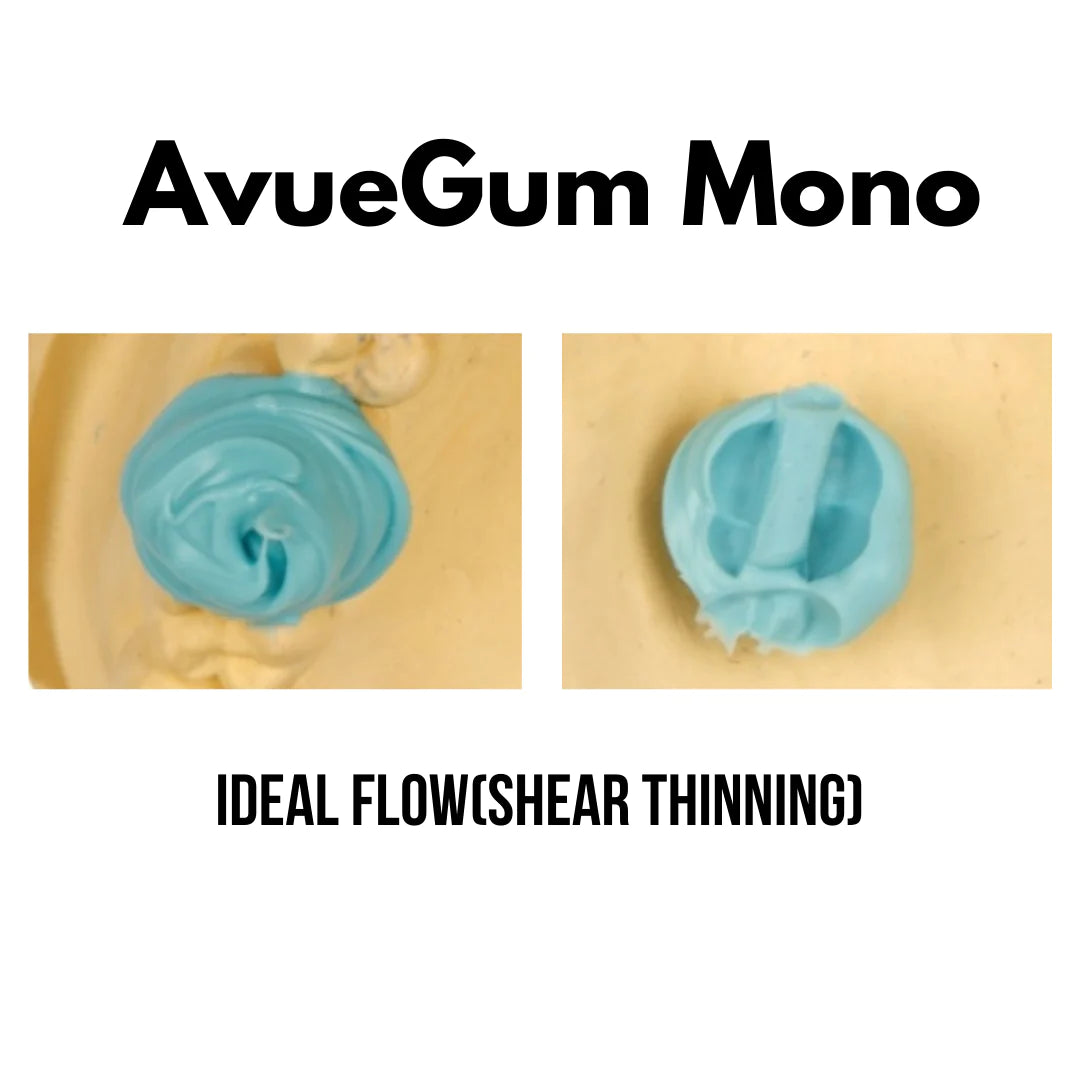
Rheological characteristics making single step/putty wash impression more accurate. As AvueGum material shows shear thinning while applying pressure making it stable at first and flowable under pressure which is very important for a medium body impression material
The ability to record the tooth preparation accurately during the impression stage is critical for producing well-fitting crowns and bridges.
Shows Shear thinning characteristics
Viscosity is important when subgingival margins are to be captured. The ability of the impression material to reach the base of the sulcus is not only dependent on the viscosity but also the width of the sulcus. A wide sulcus allows for greater flow and thickness, which increases tear strength. Whichever method of sulcus preparation (mechanical, chemical, or surgical) is employed, it is critical that sufficient space is provided.Its shear thining property helps to incease its flow
Impression exhibits good dimensional stability
Stability and accuracy are necessary to record the fine details of hard and tissues and obtain biologically, mechanically, functionally, and esthetically acceptable restorations.
Addition polyvinyl siloxane impression materials have four types of viscosity to suit different needs.The medium body is commonly used as a monophase material or single-viscosity technique during crown and bridge work or for dentures.
Features
- Thixotropic characterstics and high tear strength.
- Uncompromised physical properties to capture accurate impressions.
- Excellent surface detail reproduction.
- Dimensionally stable VPS chemistry to have distortion-free impression.
- Decrease in Viscosity with Increasing Shear-thinning
- Exceptional Hydrophilicity for its superb performance in the presence of moisture
Interactions
- Avoid contact between the impression material and latex gloves, Skin secretion because these inhibit the setting process.
- Avoid contact with retraction solutions, as residues of retraction solutions can delay the setting time.
- Do not mix Avuegum MONO with condensation silicone or polyether impression materials.
Addition Silicone impression material
Rheological characteristics making single step/putty wash impression more accurate.
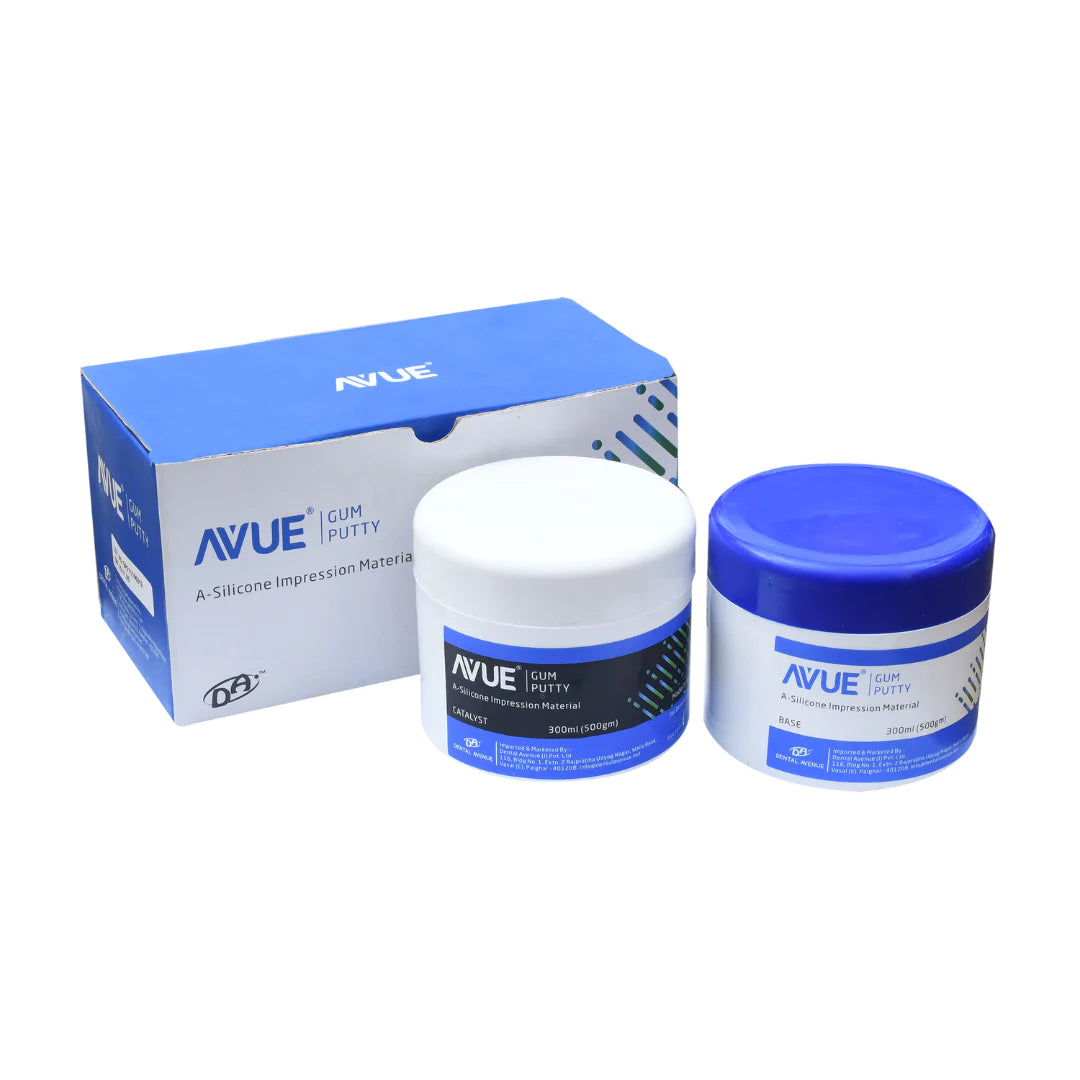
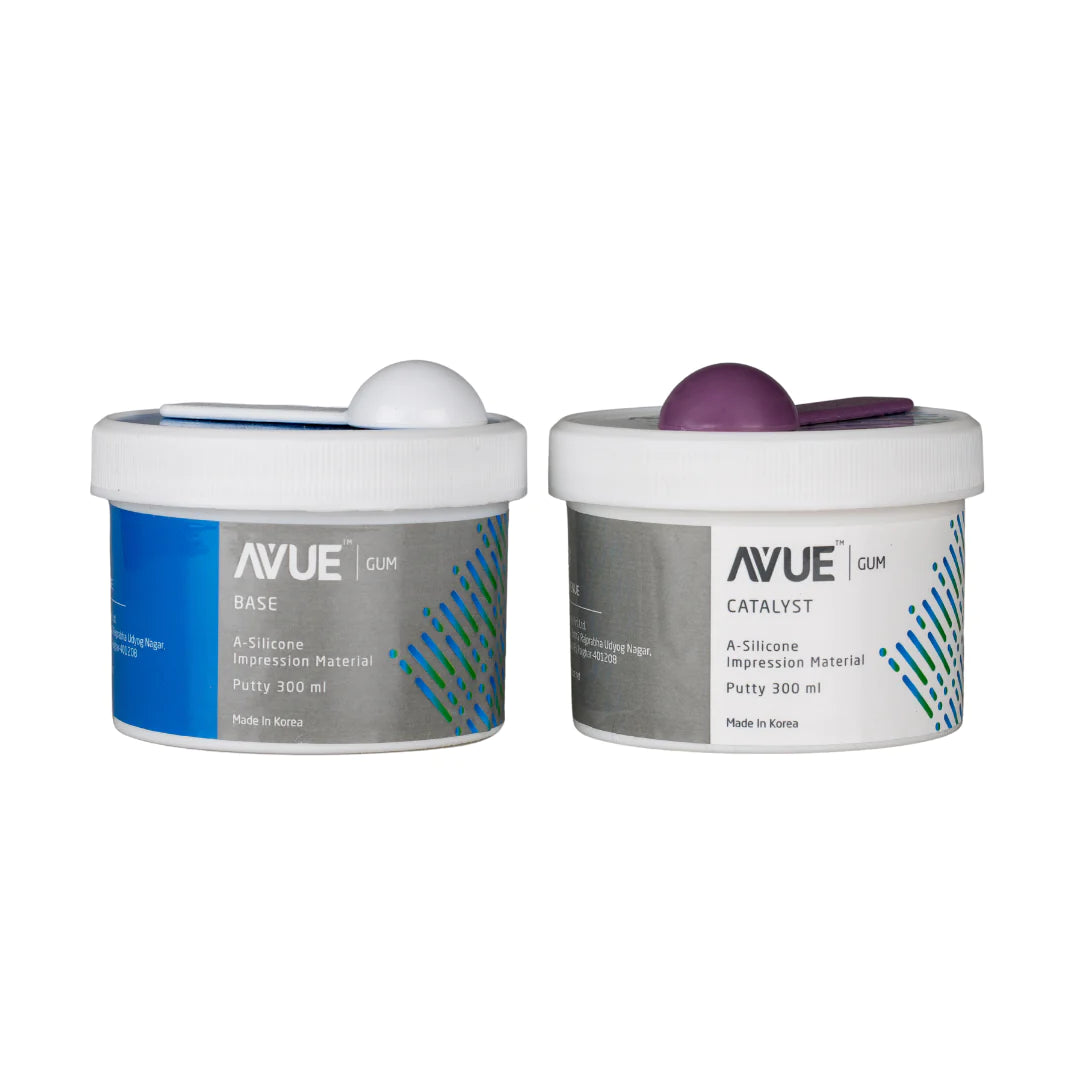
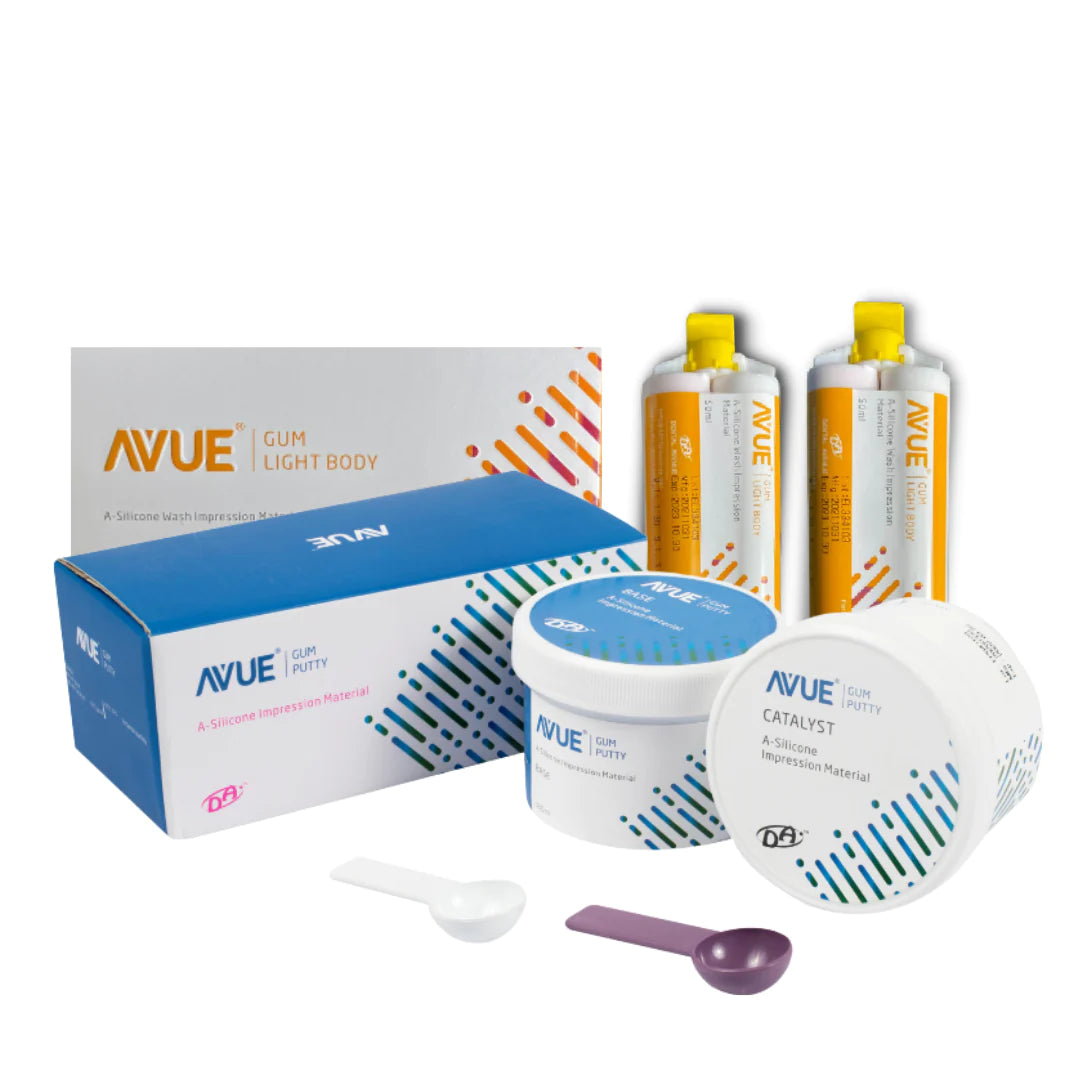
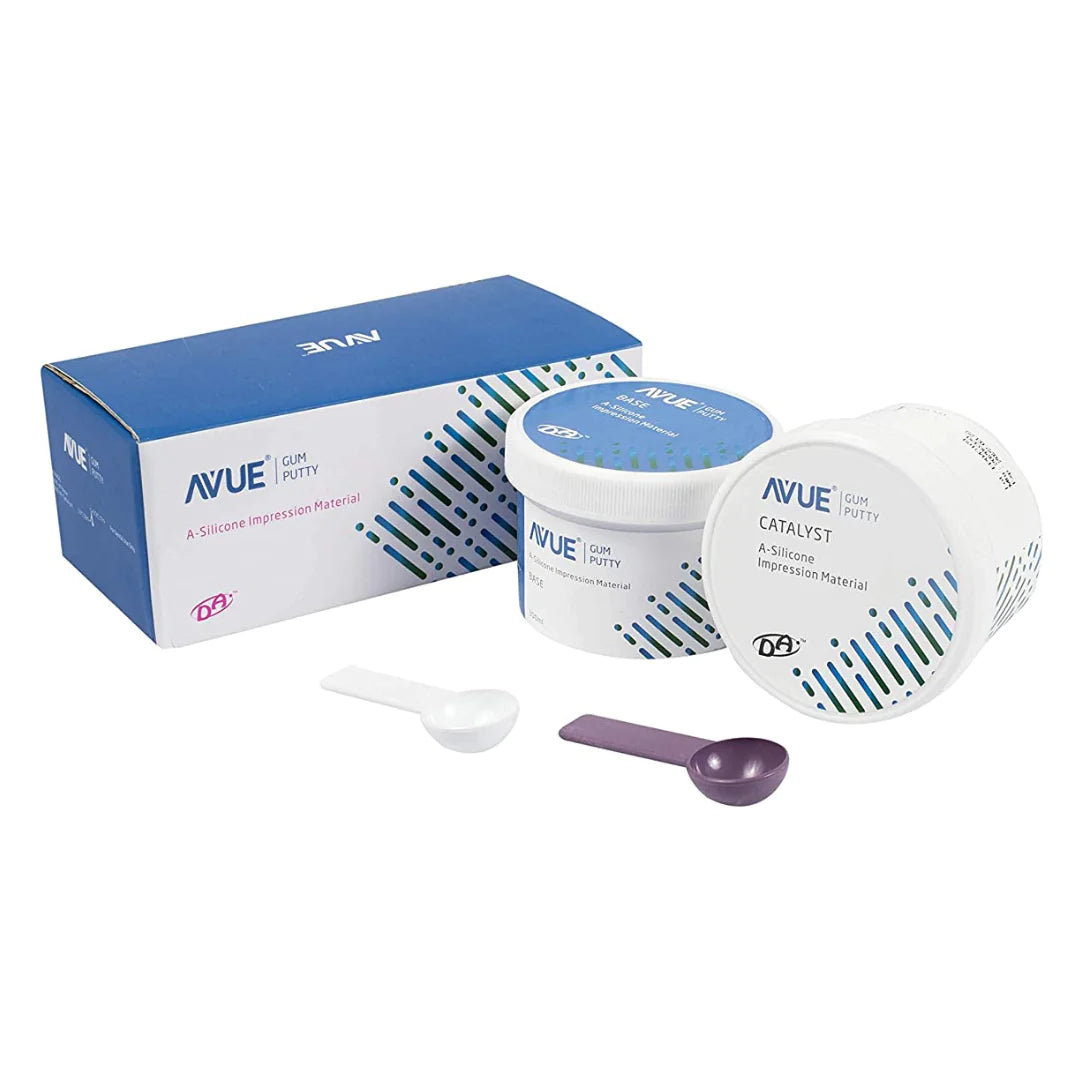
Avue Gum Putty has high filler loading. It is often combined with a AvueGum Light body during the impression procedure, known as the putty-wash technique, and is commonly used for dental impressions.
Impressions of AvueGum are Dimensionally stable
Distortions can be the reason for poorly fitting resorations. They usually are not known until the final restoration is ready for seating.AvueGum is dimensionally stable showing a minimum amount of shrinkage
AvueGum shows thixotropic characteristics
Rheological characteristics making single step/putty wash impression more accurate. As AvueGum material shows shear thinning while applying pressure making it stable at first and flowable under pressure which is very important for a medium body
The impression is stable and can be cast even after one month
AvueGum impression can be poured multiple times without jeopardising the accuracy accuracy of impression material
AvueGum Putty has high filler loading.
It is often combined with a AvueGum Light body during the impression procedure, known as the putty-wash technique, and is commonly used for dental impressions.
Impression techniques for Putty/Lightbody
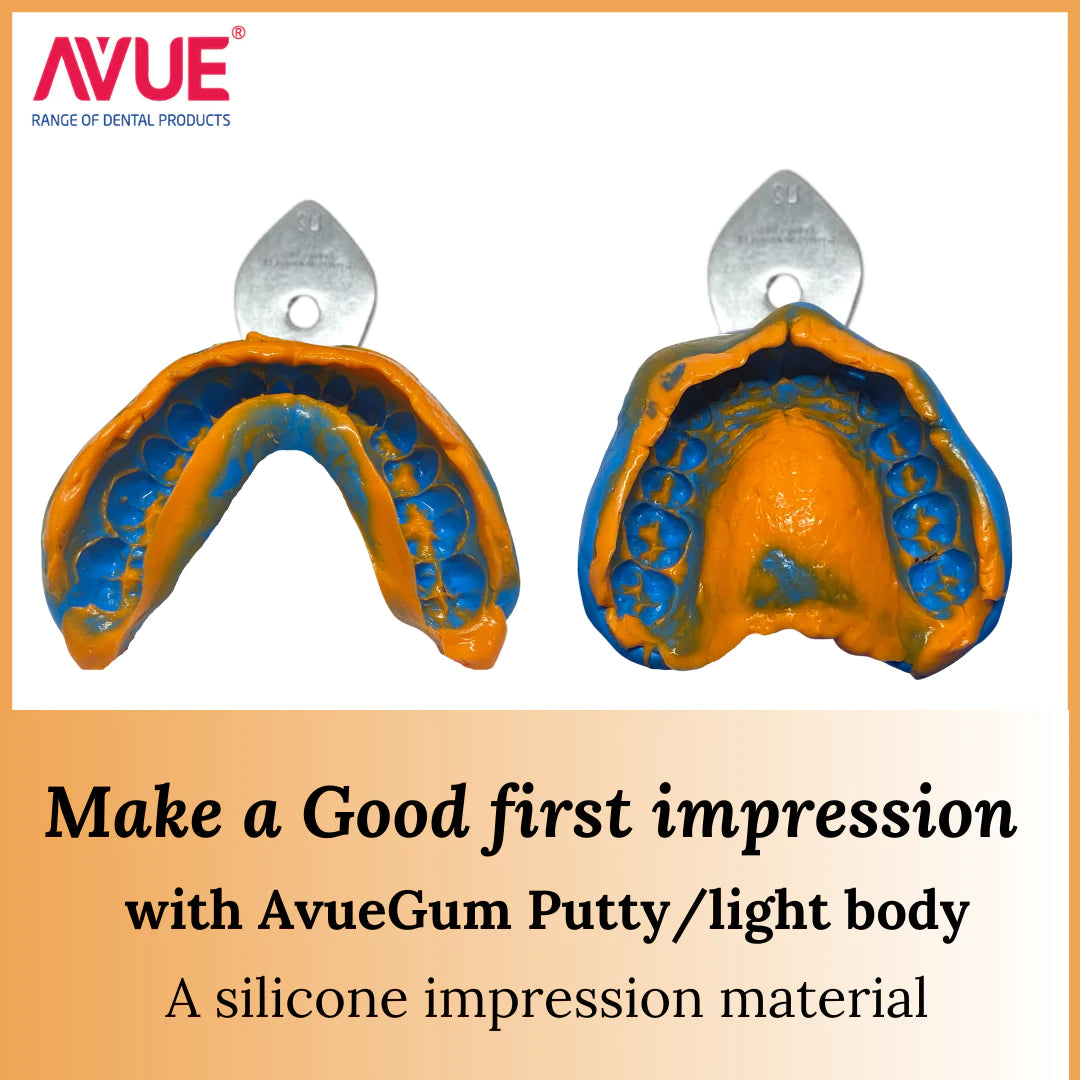
Two techniques—one-stage or two-stage procedures—can be used when taking impressions with AvueGum light body and putty. For one-stage procedures, the wash material is syringed on the prepared tooth, and then the unset putty is seated over the light body material. AvueGum Putty is very soft making it possible to capture margins in wash material as it is not pushed by its very heavy body consistency
For two-stage procedures, the initial putty impression is made and allowed to set, and then it is subsequently relined with wash materials,As per certain studies, two step impressions are better as all the details are captured in light body
Features
- A firmly fixed material to allow tray support, yet flexible enough for easy removal.
- Easily mixed to Homogenous & Bubble free consistency
- Optimized flow guarantees precise detail reproduction in every clinical condition.
- Stays where you want and flows on your demand.
- Thixotrophic – non slumpy. Stable as well as Flowable.
- Excellent recovery after deformation from undercuts.
- Can be poured long after taking impression without loss of accuracy.
- High tear resistance
For two-stage procedures, the initial putty impression is made and allowed to set, and then it is subsequently relined with wash materials
Addition Silicone impression material
Light Body Impression Materials are also known as hydrophilic vinyl polysiloxane impression materials. They are mainly used for the fabrication of crowns and bridges, denture impressions, and precise detailing of duplication of models. AvueGum Putty/Light Body is an impression material which gives detailed accuracy & excellent margins which the most important requirement of any restoration or prosthesis.
Clinically, Improved hydrophilicity of AvueGum
Results in better wettability of the tooth surfaces, and performance in a moist environment offer better-than-ever precision.
Hydrophilicity, or contact angle, is most important when the material is being dispensed intraorally. AvueGum low contact angle along with tooth surface helps ensure an accurate impression in the presence of Saliva/GCF
High tear strength of AvueGum
Help to reduce the risk that the impression material tears off upon mouth removal. Another essential aspect for clinical success: The impression material has to withstand all the forces it is exposed to upon removal from the mouth. AvueGum impressions are rigid enough to withstand all the compression forces
Impressions of AvueGum are Dimensionally stable
Distortions can be the reason for poorly fitting resorations. They usually are not known until the final restoration is ready for seating.AvueGum is dimensionally stable showing a minimum amount of shrinkage
AvueGum Light body/Medium body shows thixotropic characteristics
Rheological characteristics making single step/putty wash impression more accurate. As AvueGum material shows shear thinning while applying pressure making it stable at first and flowable under pressure which is very important for a medium body
The impression is stable and can be cast even after one month
AvueGum impression can be poured multiple times without jeopardising the accuracy accuracy of impression material
AvueGum Putty Impression Material has high filler loading.
It is often combined with a AvueGum Light body during the impression procedure, known as the putty-wash technique, and is commonly used for dental impressions.
Impression techniques for Putty/Lightbody
Two techniques—one-stage or two-stage procedures—can be used when taking impressions with AvueGum light body and putty. For one-stage procedures, the wash material is syringed on the prepared tooth, and then the unset putty is seated over the light body material. AvueGum Putty Impression Material is very soft making it possible to capture margins in wash material as it is not pushed by its very heavy body consistency
For two-stage procedures, the initial putty impression is made and allowed to set, and then it is subsequently relined with wash materials,As per certain studies, two step impressions are better as all the details are captured in light body
Features of AvueGum Putty/Light body
- A firmly fixed material to allow tray support, yet flexible enough for easy removal.
- Easily mixed to Homogenous & Bubble free consistency Optimized flow guarantees precise detail reproduction in every clinical condition.
- Stays where you want and flows on your demand.
- Thixotrophic – non slumpy. Stable as well as flowable.
- Excellent recovery after deformation from undercuts.
- Can be poured long after taking impression without loss of accuracy.
- High tear resistance
The light body has the lowest viscosity and is placed on hard and soft tissues to record accurate surface details of tooth preparations even in presence of moisture because of its Superior Hydrophilicity.
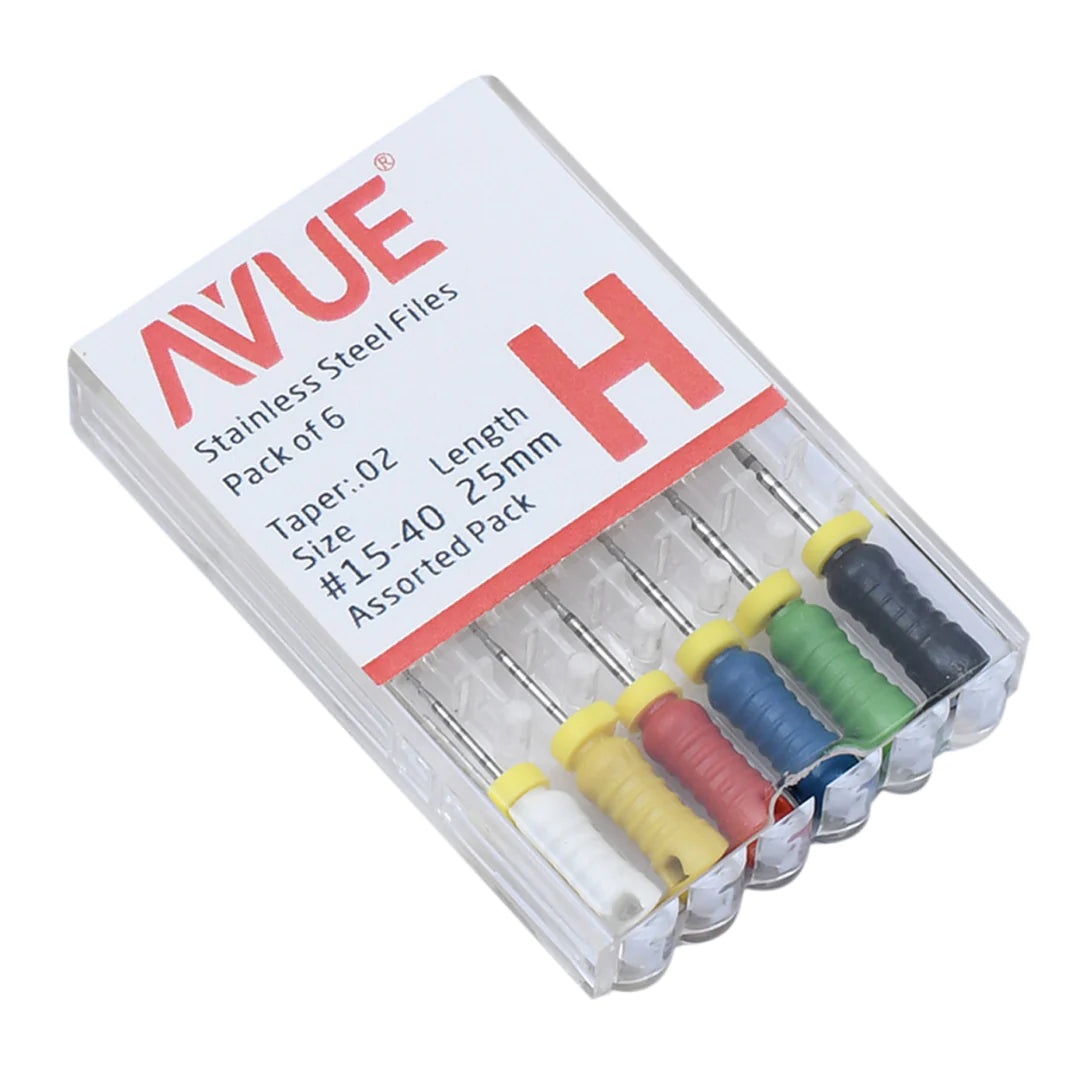
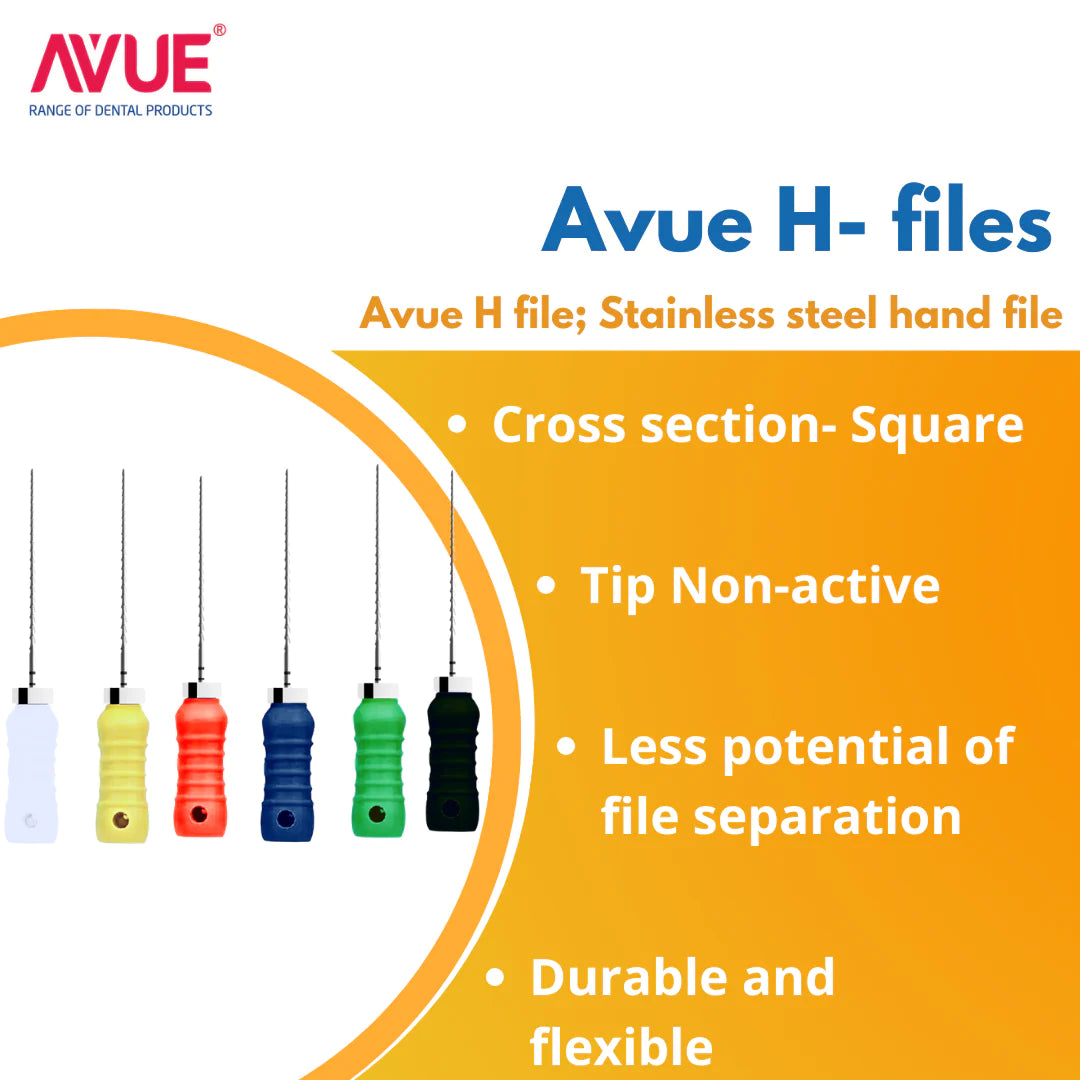
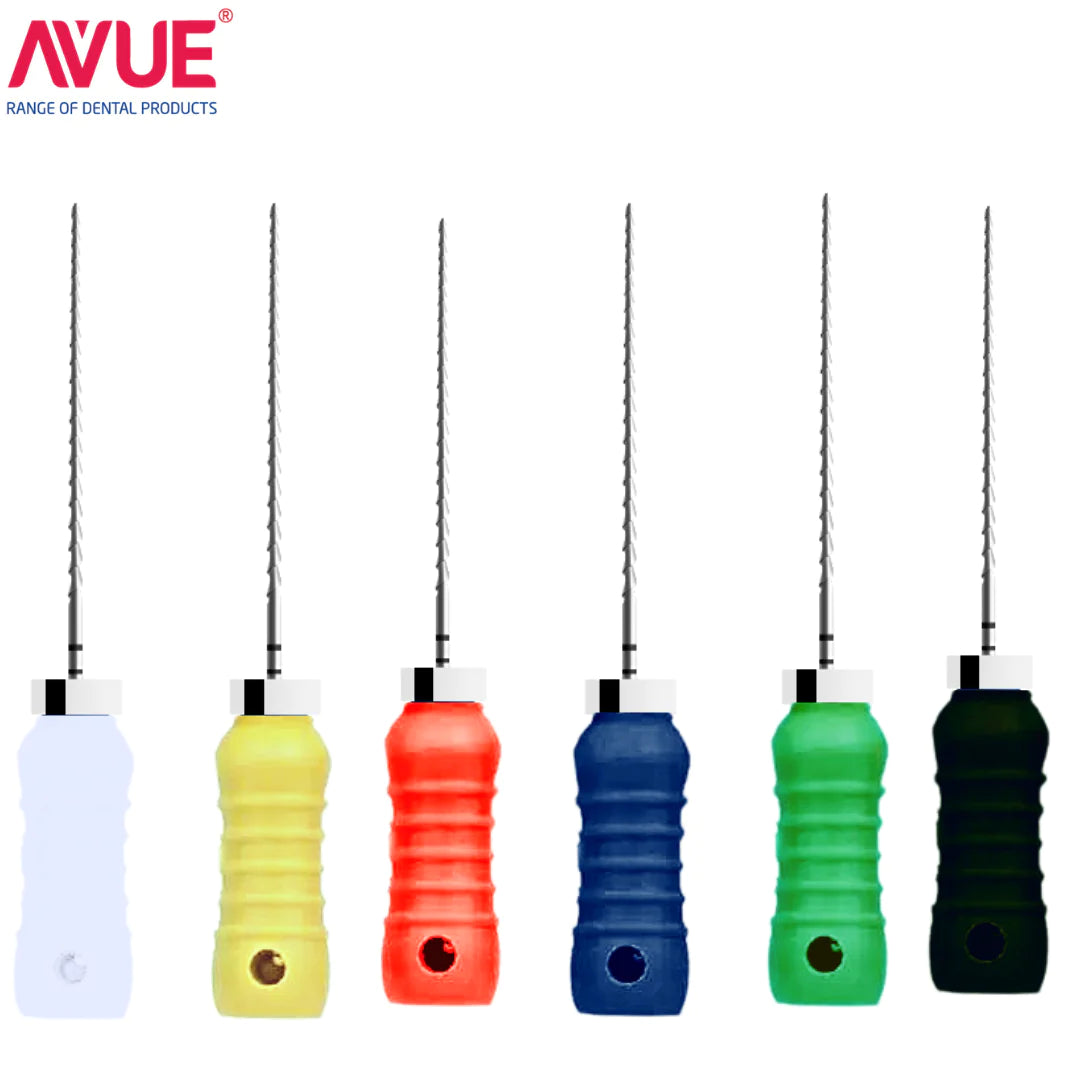
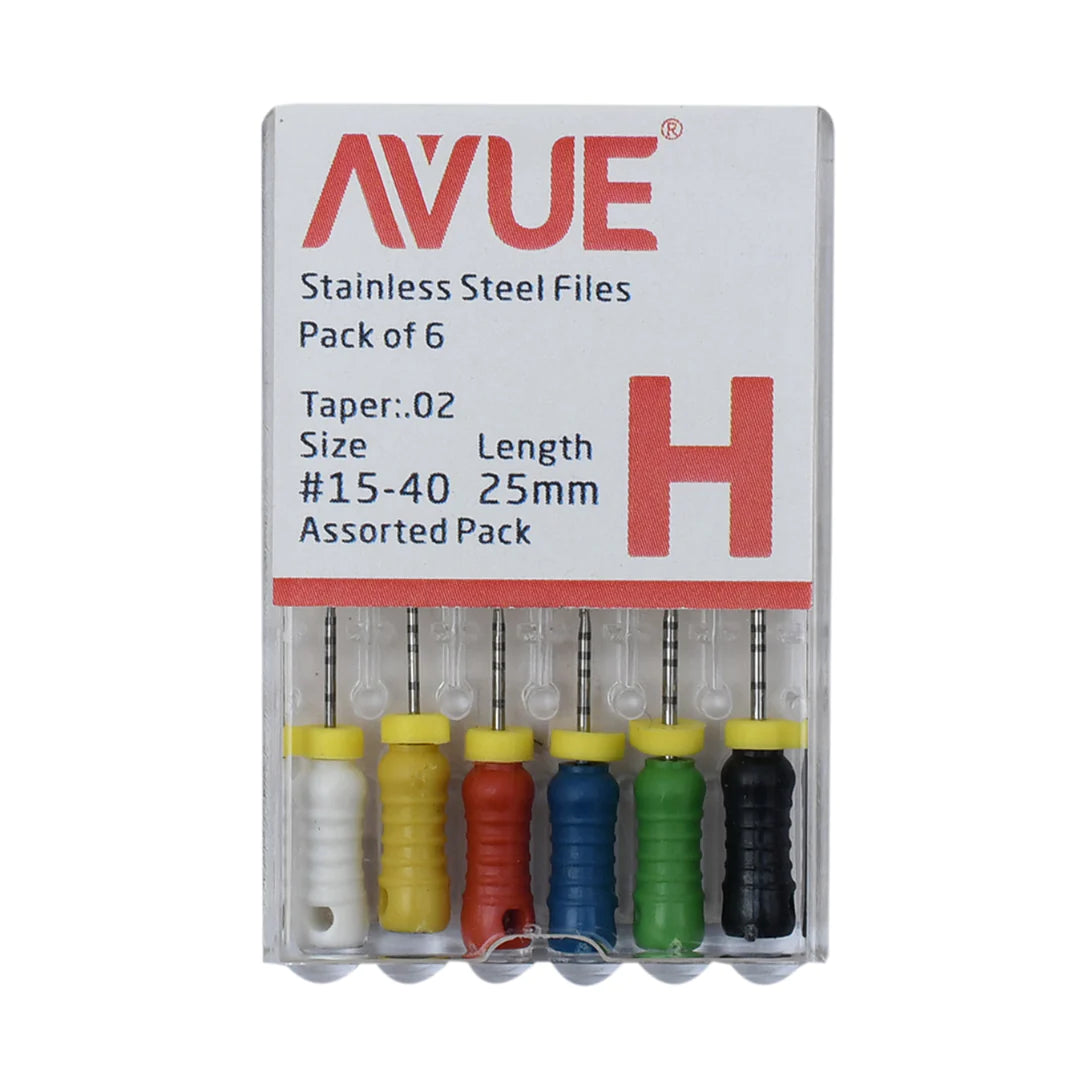
Avue H-Files - Stainless Steel Hand Files
Endodontic hand files are instruments used during endodontic treatment to mechanically prepare root canals.
Avue Hand files are made of first rate quality stainless steel.
Avue H files are used to grasp canal obstructions and deliver them coronally through application of an upward force.The Angle between the cutting groove and the long axis of the Avue H file is generally in the range of 60-65 degrees.
These files are fracture resistant
This property helps in making them safe while working with canals having steep curvatures.
Flexible and durable files
H-files are specially designed for shaping canals after they are previously cleaned and enlarged with K-files in root canal treatment. The H file can effectively enlarge the canal during filling motion
The Angle between the cutting groove and the long axis of the K file is generally in the range of 25-40 degrees.
Features
- COMPOSITION: Main materials:- Cutting part: Stainless steel (including nickel and chromium) Shank: Polybutylene terephthalate (PBT)
- Specially designed for curved root canals with flexibility, durability, and cutting ability.
- Extraordinarily sharp and mirror-like finished edges with high ductility make for excellent working characteristics.
- With precise processing technology, products in good flexibility, high quality cutting efficiency and fracture resistance.
- Progressive taper design improves flexibility and cutting efficiency, especially in tighter or more curved canals.
- High-temperature sterilization is allowable
- Sharp-edged, H-Files are used for probing, permeabilization, or extraction of debris.
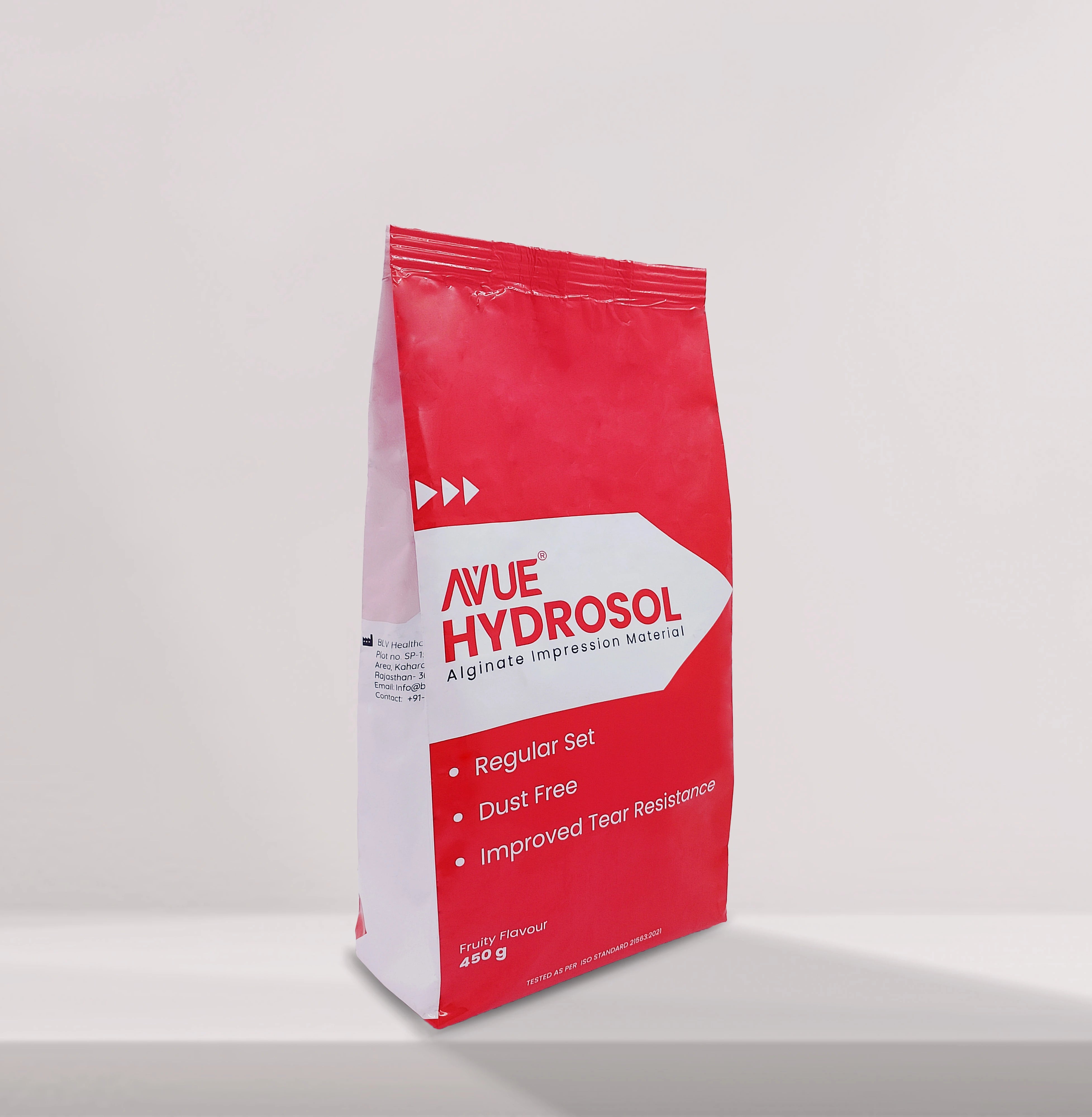
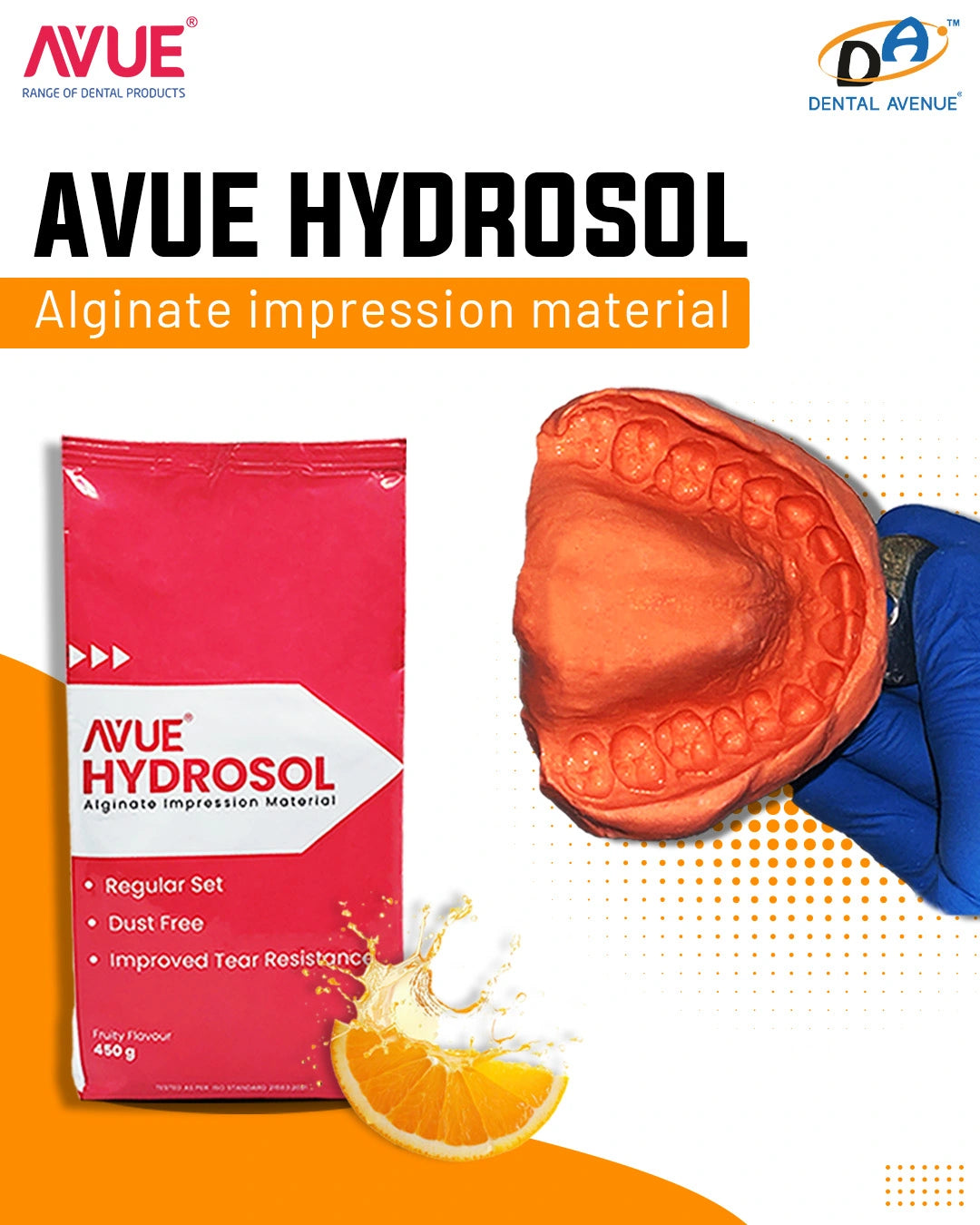
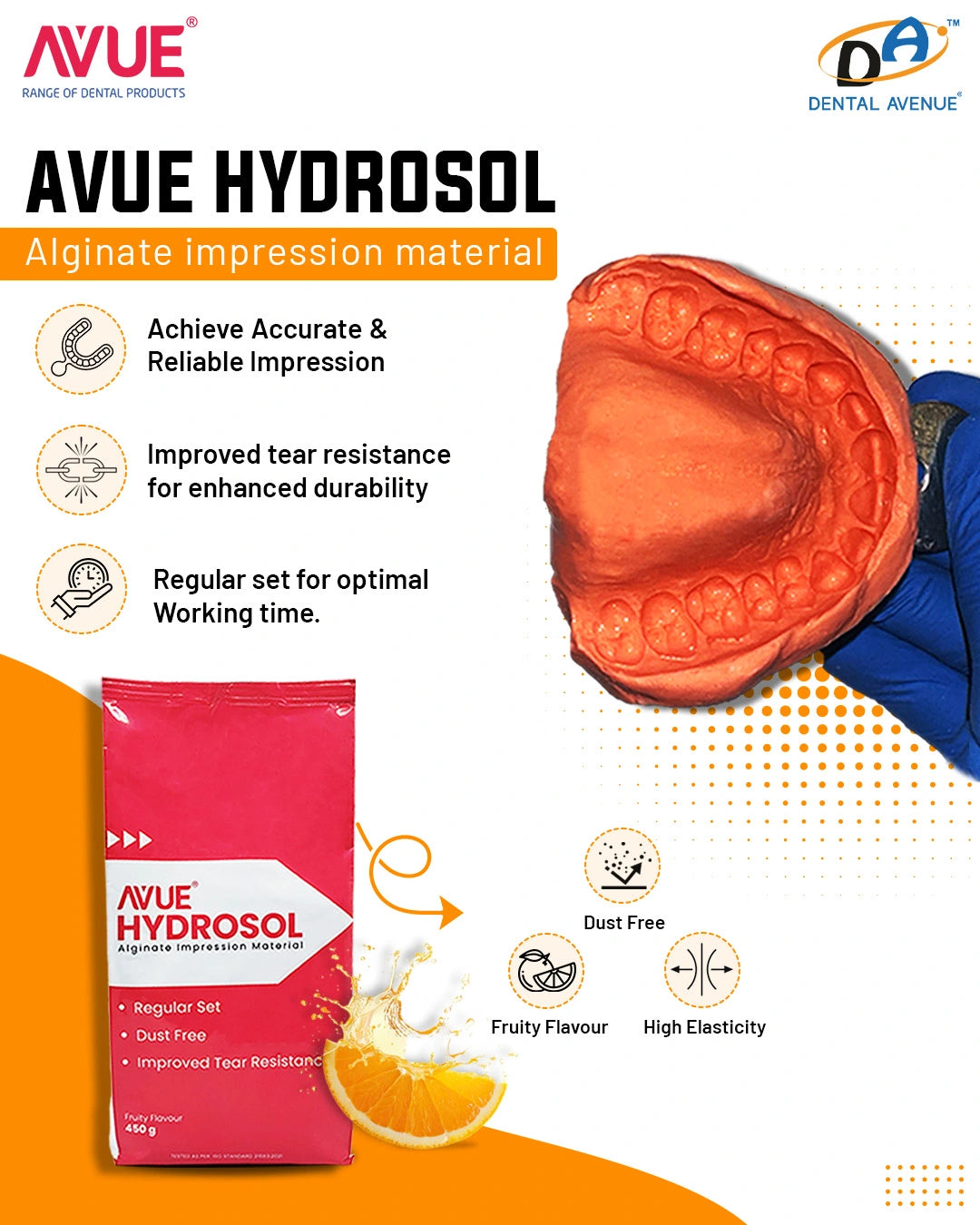
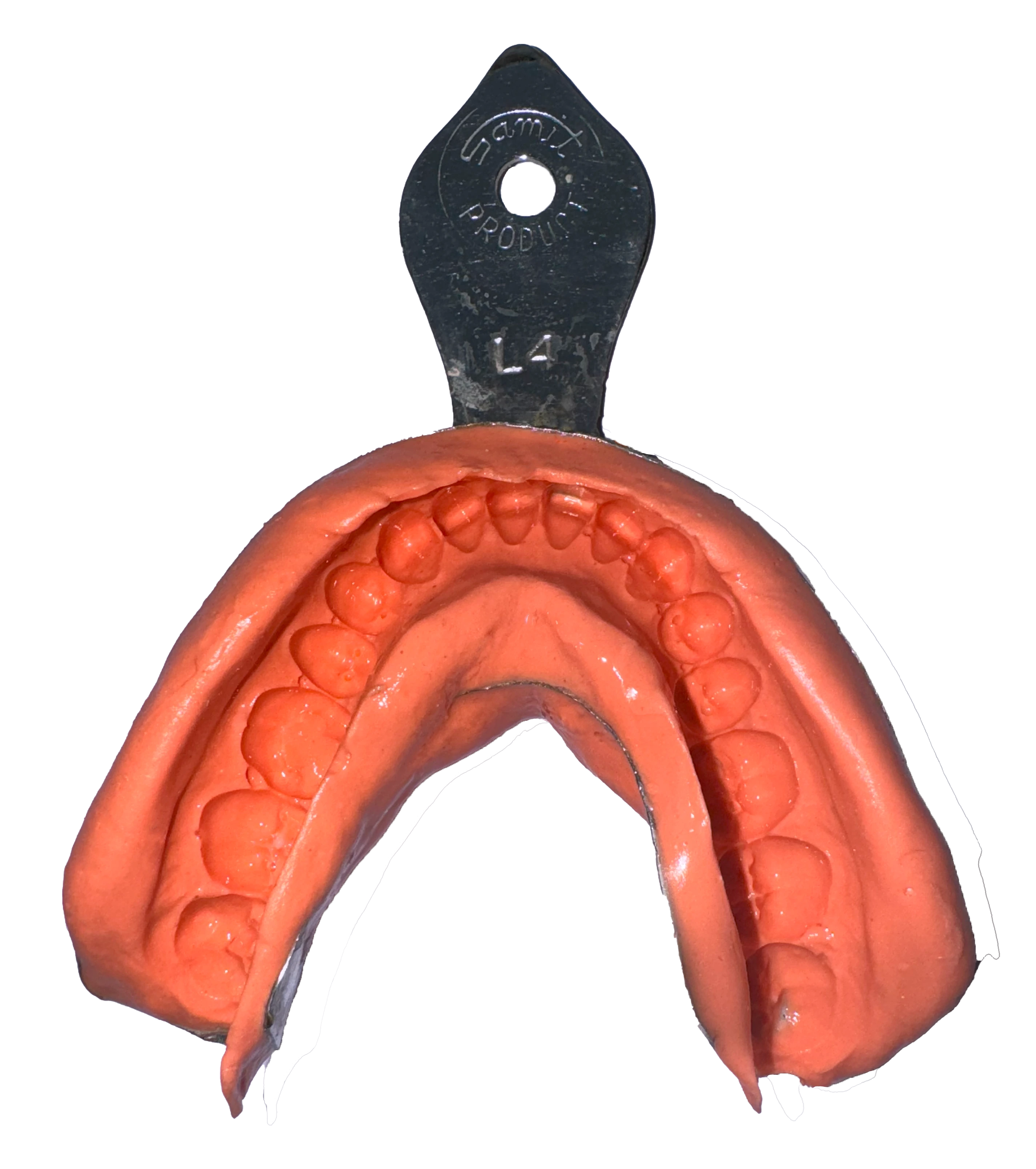
Hydrosol Alginate is a regular-set, dust-free hydrocolloid impression material designed for reliable dimensional stability, excellent tear strength, and accurate reproduction of clinical details. Its handling characteristics support smooth mixing, controlled working time, and consistent performance in professional dental environments.
Key Characteristics
Enhanced Tear Resistance
Formulated to minimize distortion during removal, maintaining integrity in areas with mechanical retention and preserving fine margins and surface detail.
High Elastic Recovery
Returns to its original form after deformation with minimal permanent change, supporting precision in subsequent restorative or laboratory steps.
Balanced Working and Setting Time
Regular-set formulation allows adequate time for preparation, placement, and positioning prior to final set, supporting predictable workflow efficiency.
Fine Detail Reproduction
Captures anatomical form and surface texture accurately, ensuring suitability for diagnostic models, provisional work, orthodontic study models, and other laboratory applications.
Dust-Free Formula
Reduces airborne particles during mixing and supports a cleaner operatory environment.
Smooth Mixing Consistency
Creamy texture aids spatulation and tray loading with minimal bubbles.
Biocompatible Composition
Formulated for safe intraoral use in professional dental practice settings.
Practical and Cost-Effective
Delivers dependable performance and value for clinics requiring consistent results across routine procedures.
✅ Directions for Use
-
Shake container before dispensing to loosen powder.
-
Use room-temperature distilled water (approx. 25°C). Warmer water shortens working and setting time.
-
Recommended ratio: 16 g powder (2 scoops) to 38 ml water.
-
Add powder to water gradually and spatulate for approximately 20 seconds until smooth and uniform.
-
Load material into the tray promptly.
-
Maintain in position for the recommended setting time.
-
Remove after set and allow impression to dry before pouring.
-
For best dimensional accuracy, pour immediately after impression making.
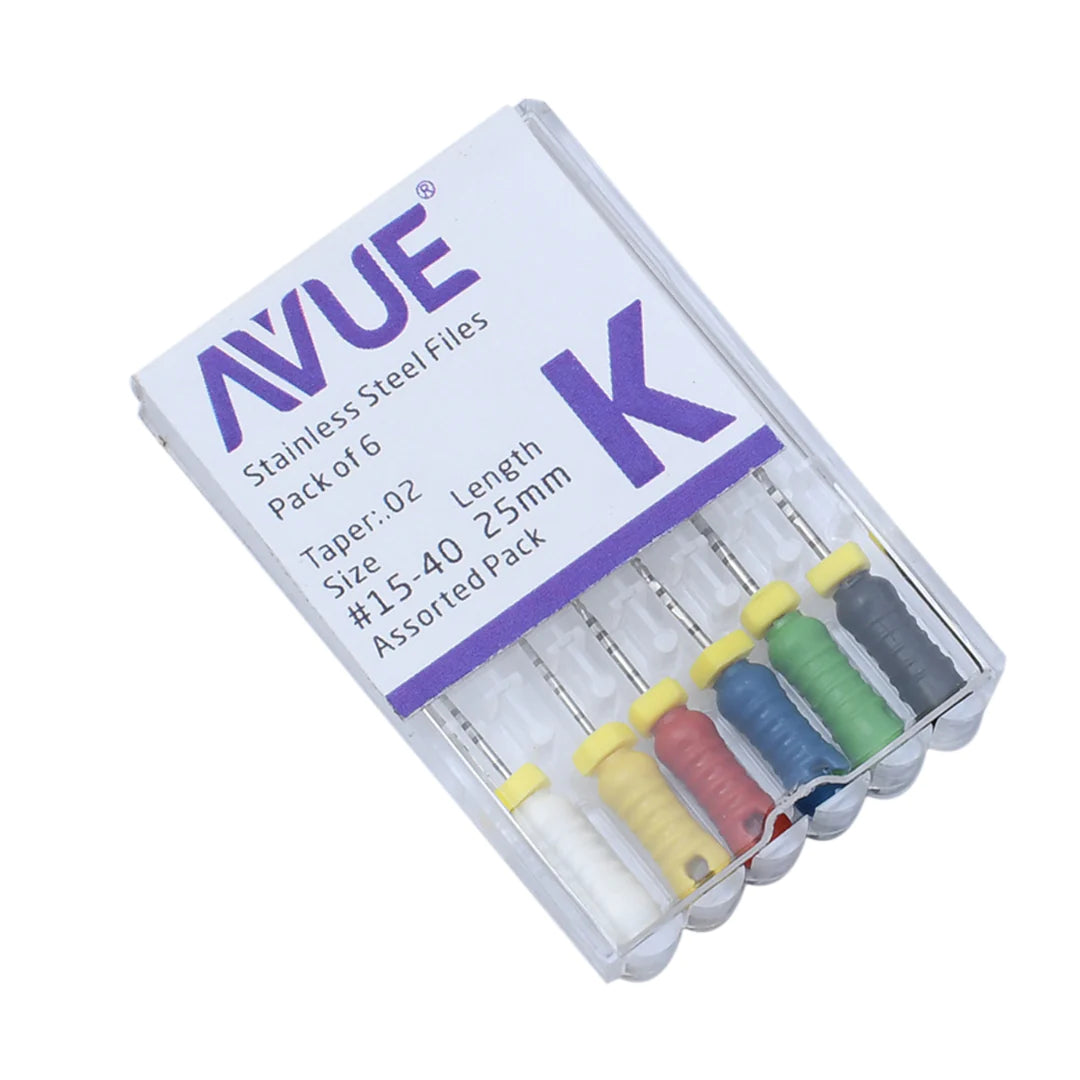
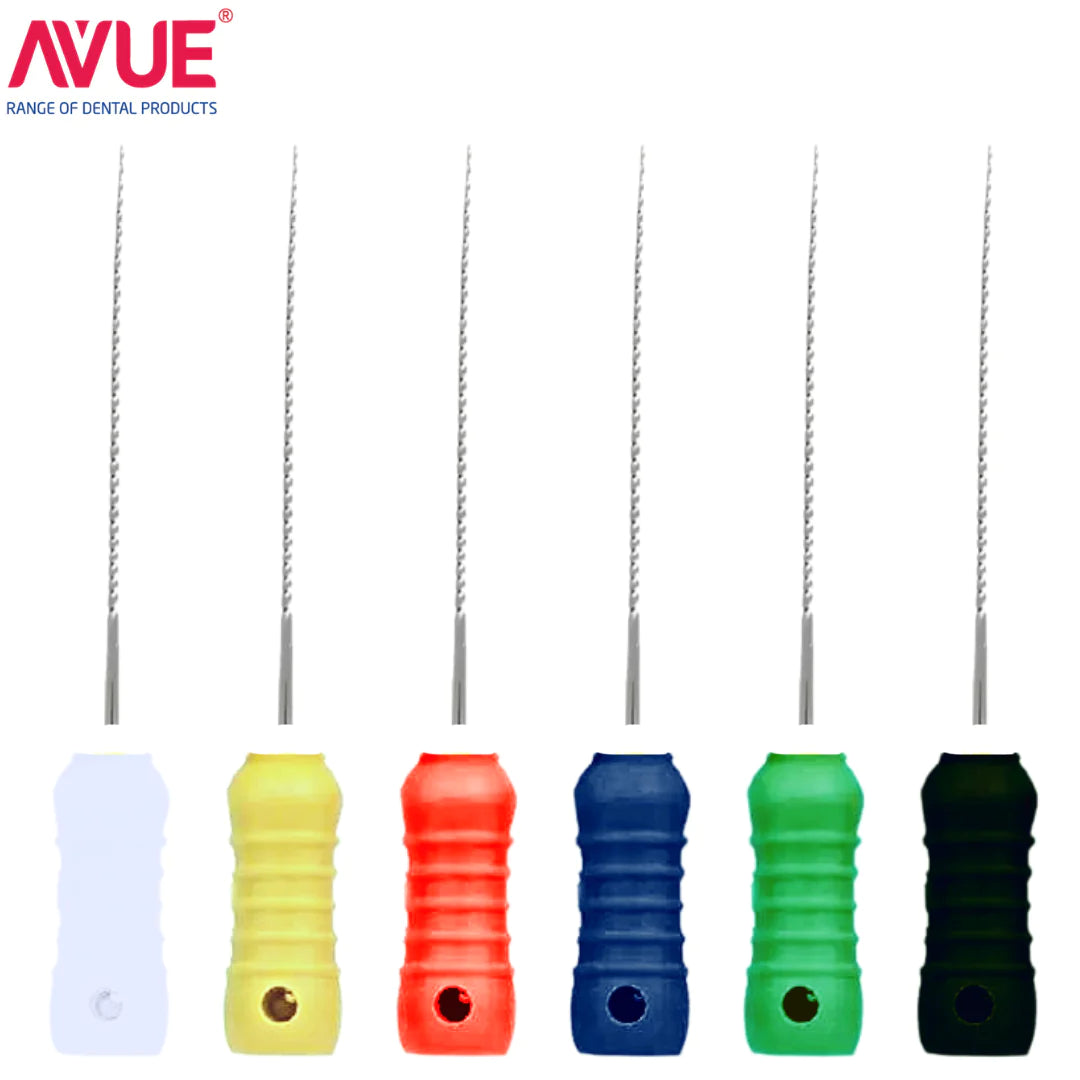
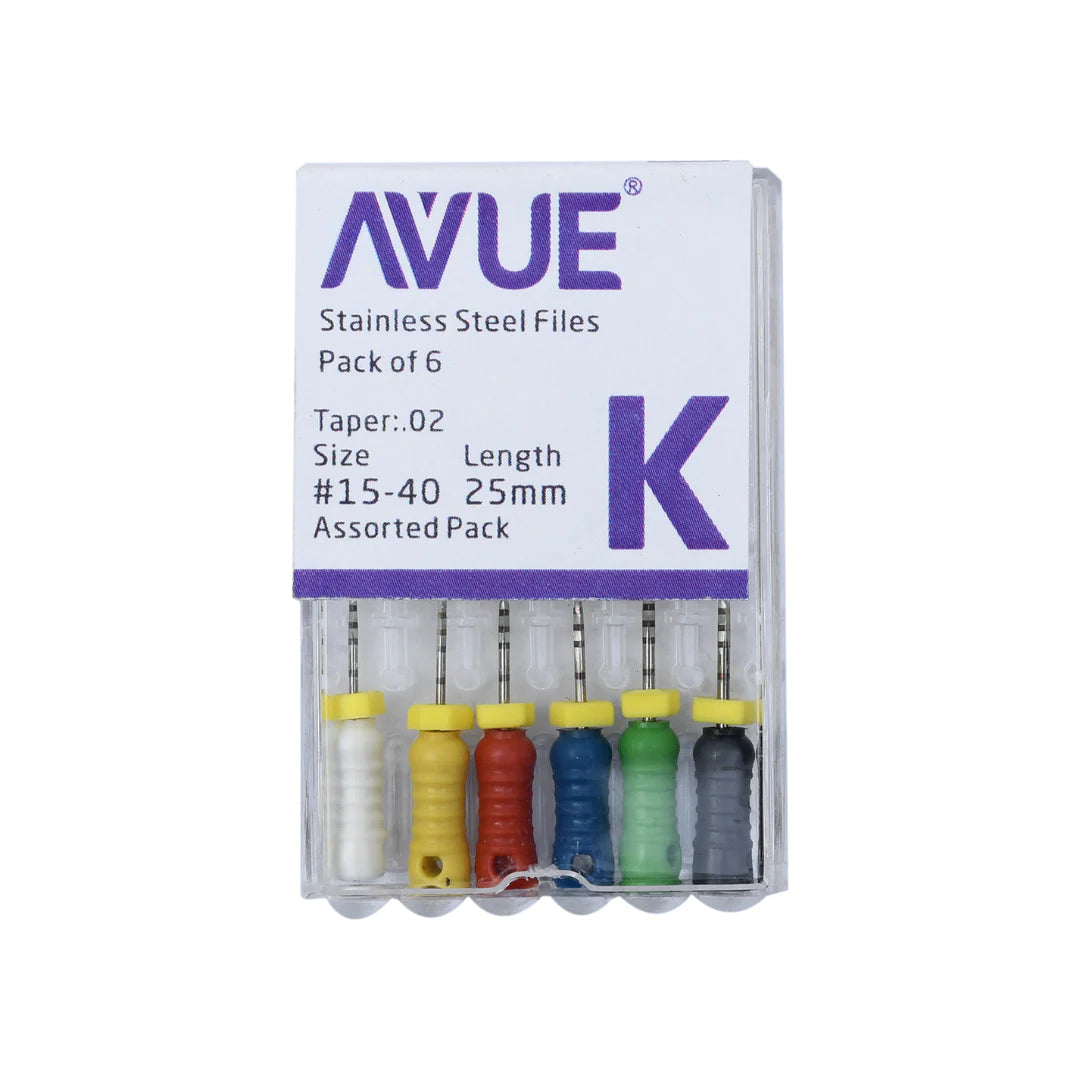
Endodontic hand files are instruments used during endodontic treatment to mechanically prepare root canals.
Superior cutting efficiency
Avue K-files for endodontics are produced to give the operator a smooth tactile sense inside the canal during instrumentation.
High resistance to cyclic fatigue.
This will help the clinician to work without worrying about file separation
Avue Hand files are made of first rate quality stainless steel.
Avue Hand files are made of first rate quality stainless steel. These files are also fracture resistant making them safe while working with canals having steep curvatures.
These files are fracture resistant
This property helps in making them safe while working with canals having steep curvatures.
Flexible and durable files
The Angle between the cutting groove and the long axis of the K file is generally in the range of 25-40 degrees.
Features
- Specially designed for curved root canals with flexibility, durability, and cutting ability.
- Extraordinarily sharp and mirror-like finished edges with high ductility make for excellent working characteristics.
- With precise processing technology, products in good flexibility, high quality cutting efficiency and fracture resistance.
- Progressive taper design improves flexibility and cutting efficiency, especially in tighter or more curved canals.
- High-temperature sterilization is allowable
- Sharp-edged, H-Files are used for probing, permeabilization, or extraction of debris.
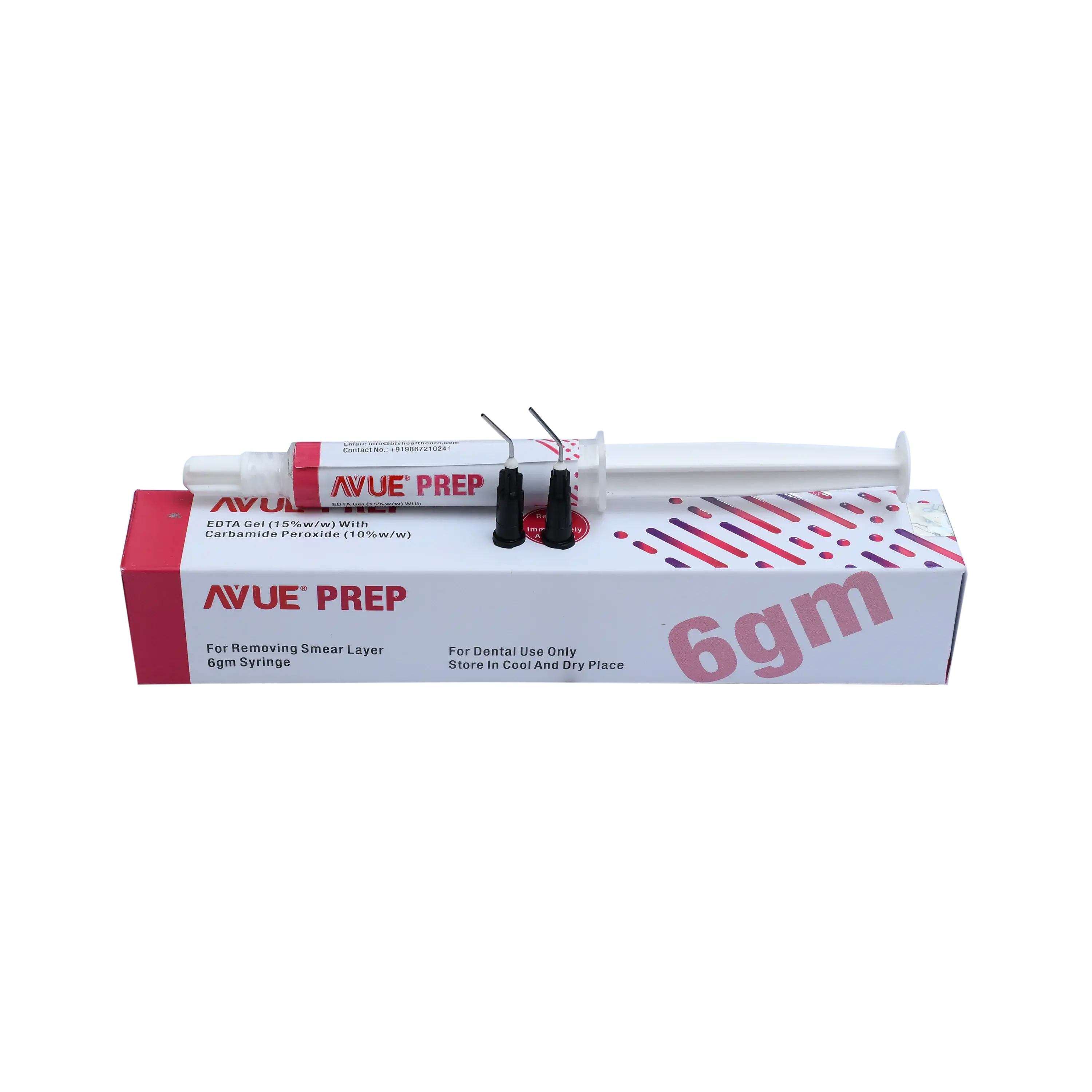
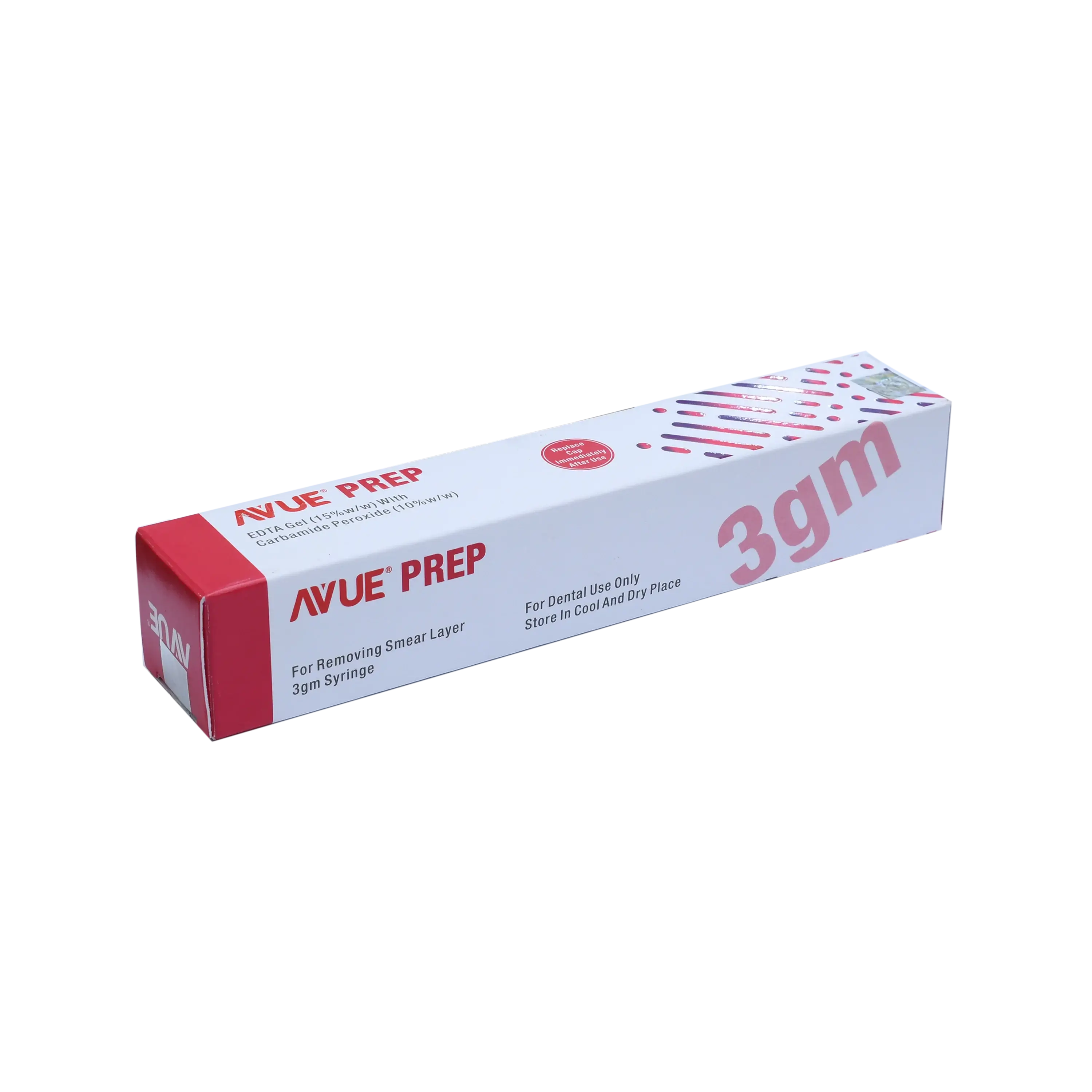
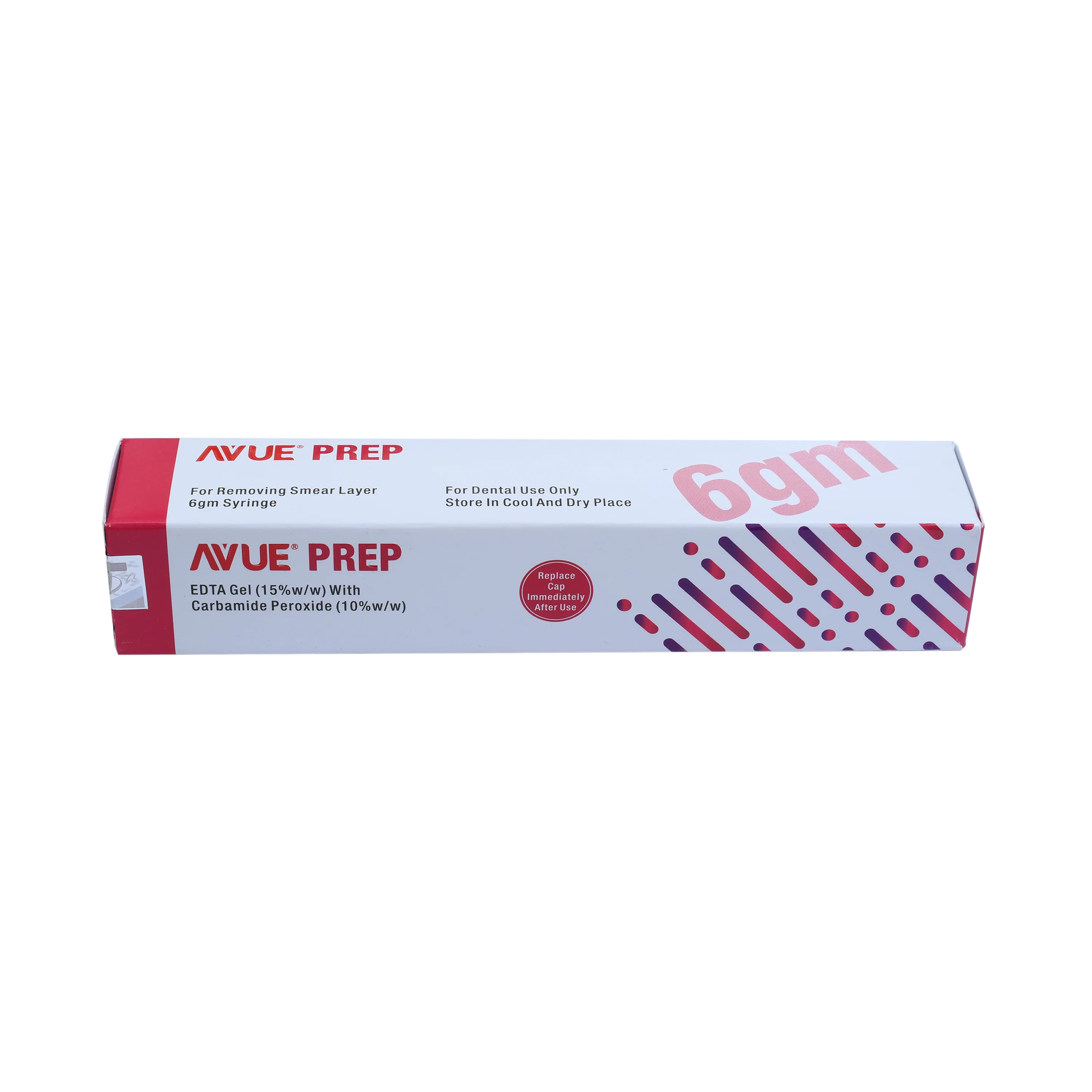
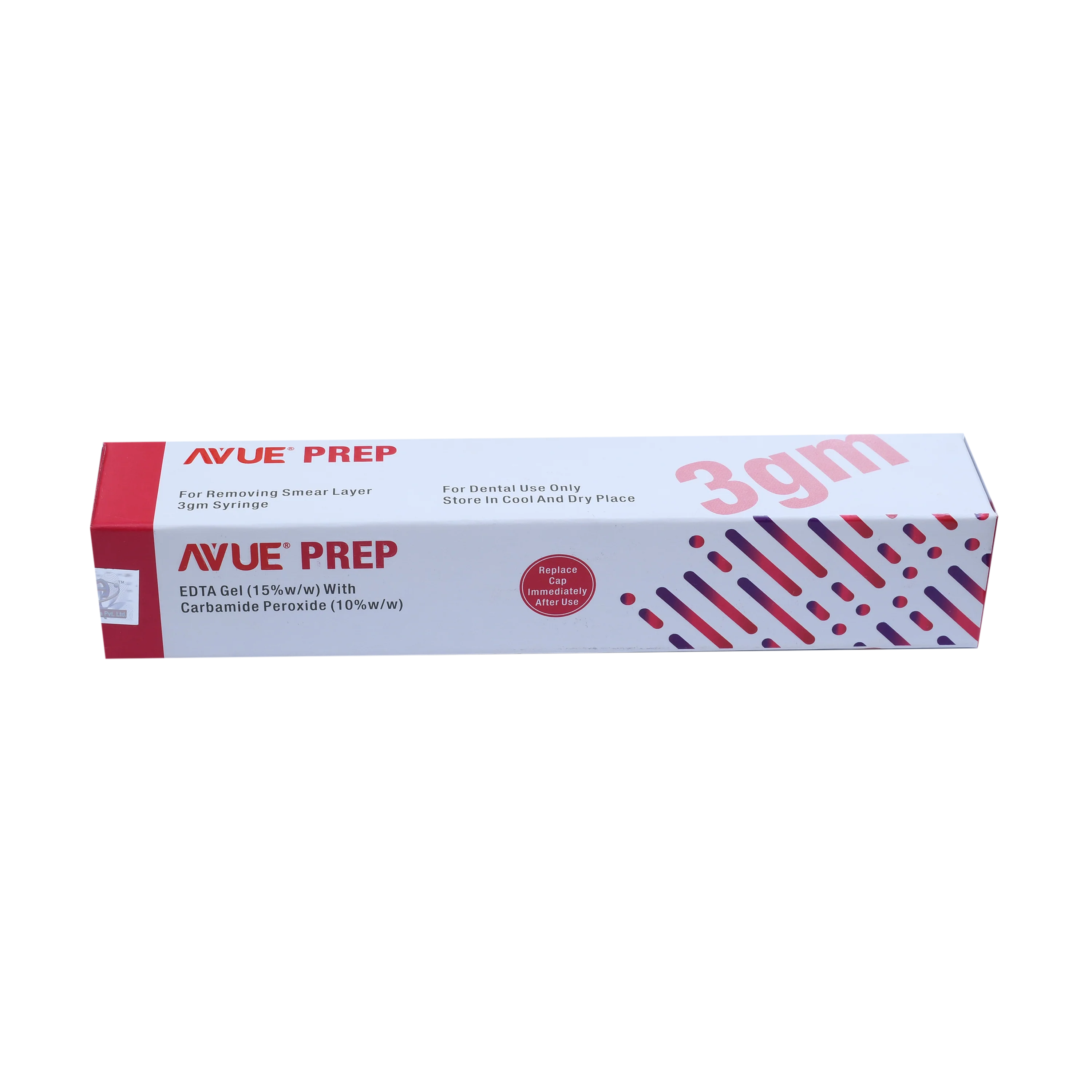
Avue Prep is a water soluble Ethylenediaminetetraacetic acid (EDTA) gel for root canal cleaning
Avueprep works by reacting with the mineral components of the hard tissues of the tooth. The chelating agent Avueprep softens the tissues, decalcifying the canal walls. It facilitates the mechanical preparation of the root canal and further removal of the smear layer, which opens dentin tubules
EDTA is a polyaminocarboxylic acid and a colorless, water-soluble solid. It is widely used to dissolve lime scale. Its usefulness arises because of its role as a hexadentate ligand and chelating agent, i.e. its ability to sequester metal ions such as Ca2+ and Fe3+.
Indications of Avueprep EDTA with carbamide peroxide:
- Chelating (calcium binding) agent react with minerlized component of tooth.
- Removal of the smear layer which is produced during instrumentation.
- For chemical and mechanical cleaning of the root canal.
- Shaping of the root canal via using rotary or hand files.
- To be used with sodium hypochlorite as carbamide peroxide helps to produce nascent oxygen molecules when used with sodium hypochlorite
Smear layer removal:
The use of 15% -17%EDTA resulted in the greatest concentration of calcium ions compared with other chelating agents. Avueprep/Avueprep+ were the most efficient solution for removal of smear layer.
Antimicrobial activity
The antibacterial activity of Avueprep is due to the chelation of cations from the outer membrane of bacteria.
Effects on Dentin microhardness:
it reduce the root dentine microhardness, whereby the greatest differences are to be found in dentine immediately adjacent to the root canal lumen. After 3 min, Avueprep produced a greater reduction in microhardness.
Positively affect adhesion of root canal sealer:
Treating dentine with a combination of NaOCl and EDTA produced stronger adhesion of resin based sealer compared to NaOCl alone.
Avueprep is Biocompatible
It has been proven that even if EDTA is forced through the apical foramen into the periapical tissues, no periapical tissue damage could be detected after 14 months. Furthermore, that placement of EDTA for 28 days after pulpotomy produced no pulpal tissue necrosis. However, changes in macrophage activity can cause the inflammatory reaction to be more easily initiated, but reduced capacity of phagocytosis can result. Furthermore, EDTA improves plasma extravasation and mediator action.
Can remove calcium hydroxide while using Avueprep
It has been revealed that using Avueprep or NaOCl alone as irrigants did not remove calcium hydroxide from the root canal, but combining these two irrigants with hand instrumentation improved the effectiveness of the removal.
Composition of Avueprep
EDTA Disodium Salt – 15% w/w
Carbamide Peroxide – 10% w/w
Lubricants and Excipients
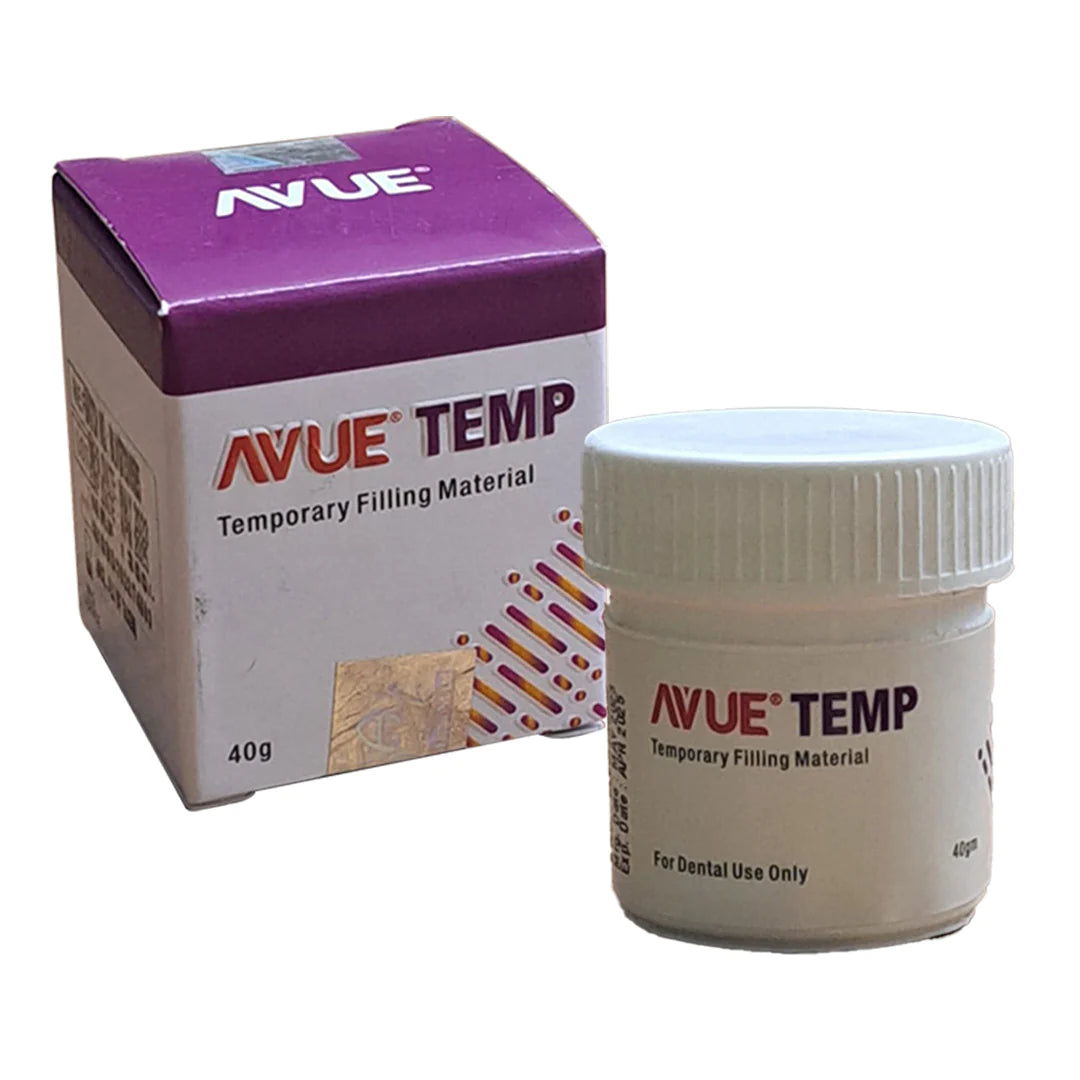
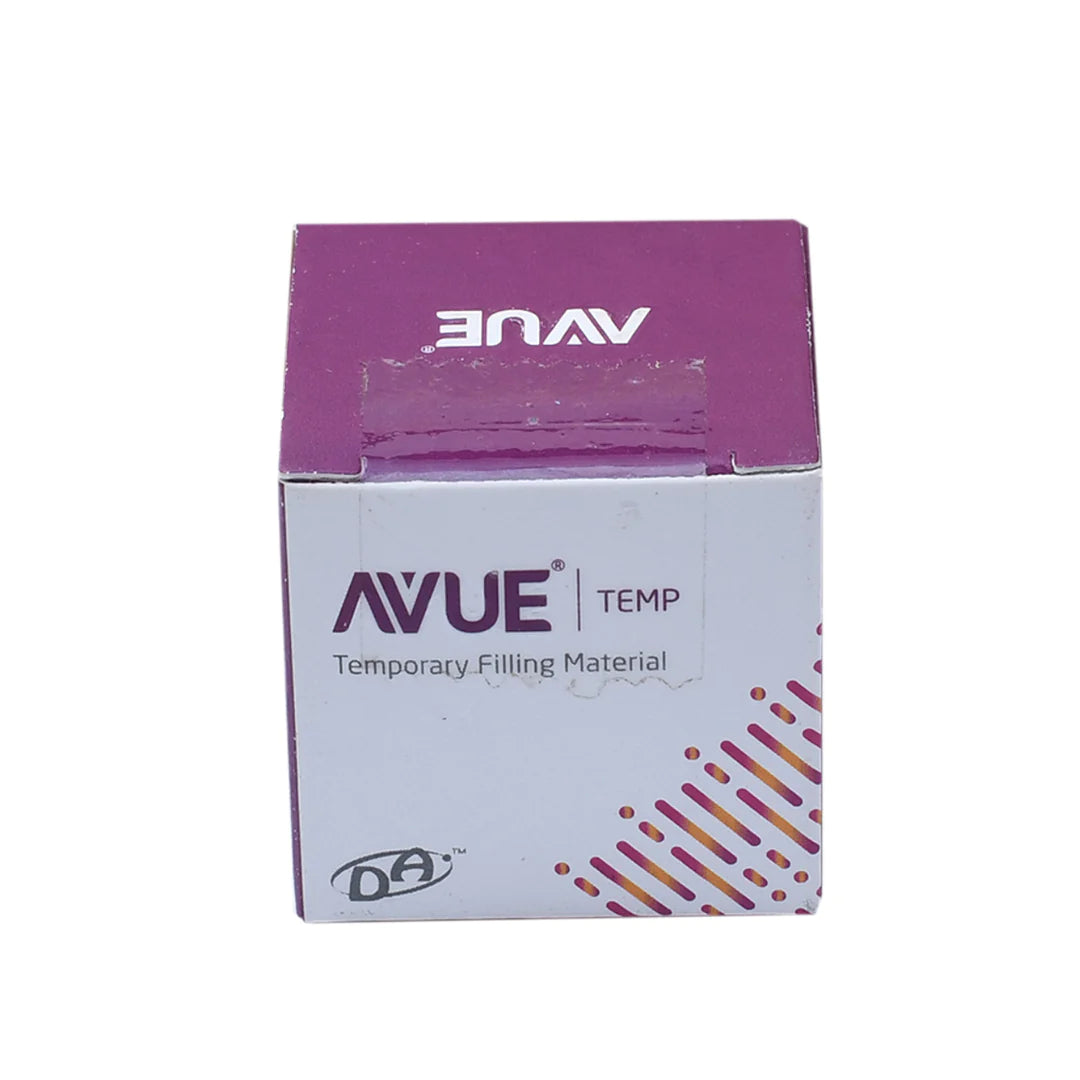
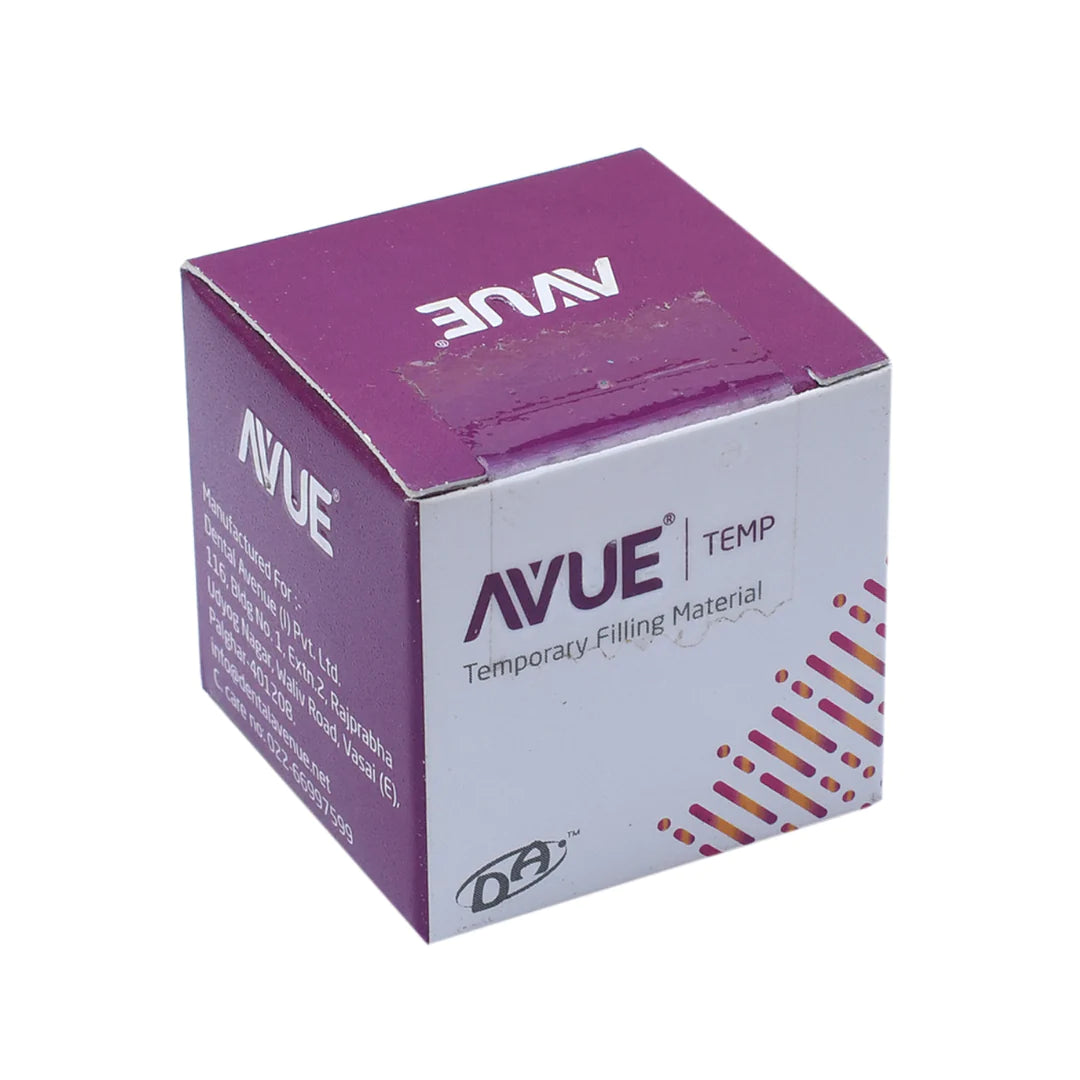
Avue Temp - Temporary Tooth/Dental Filling Material
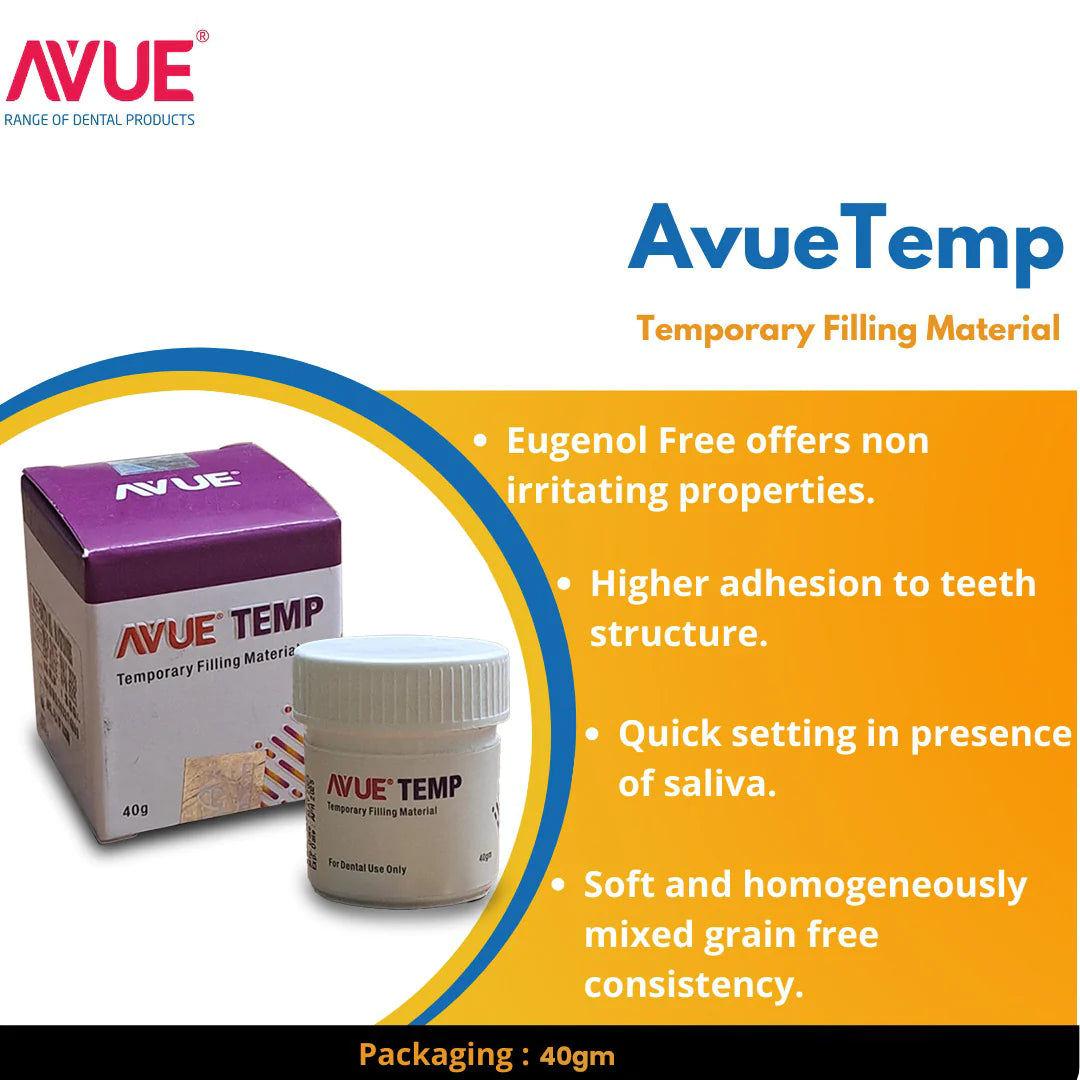
AvueTemp is a paste consistency, radio-opaque temporary filling material. It is moisture activated, set within 20-30 minutes upon contact with oral fluids. It possess high adhesive and sealing properties to ensure three dimensional hermetic seal.
Features:
- Eugenol Free offers non-irritating properties.
- Higher adhesion to teeth structure.
- Soft and homogeneously mixed grain free consistency.
- Quick setting in presence of saliva.
- There is minor but even expansion on setting so no cracks develop, giving best sealing hence Protecting to Pulp.
Ingredients
-
Zinc Oxide, Calcium Sulphate, Zinc Sulphate plasticizers, Resins, Pepper Mint Aroma and excipients.
Advantages:
- Temporary that sets in presence of moisture to provide adequate seal.
- Easily removed from cavity.
- Radiopaque with anti bacterial property.
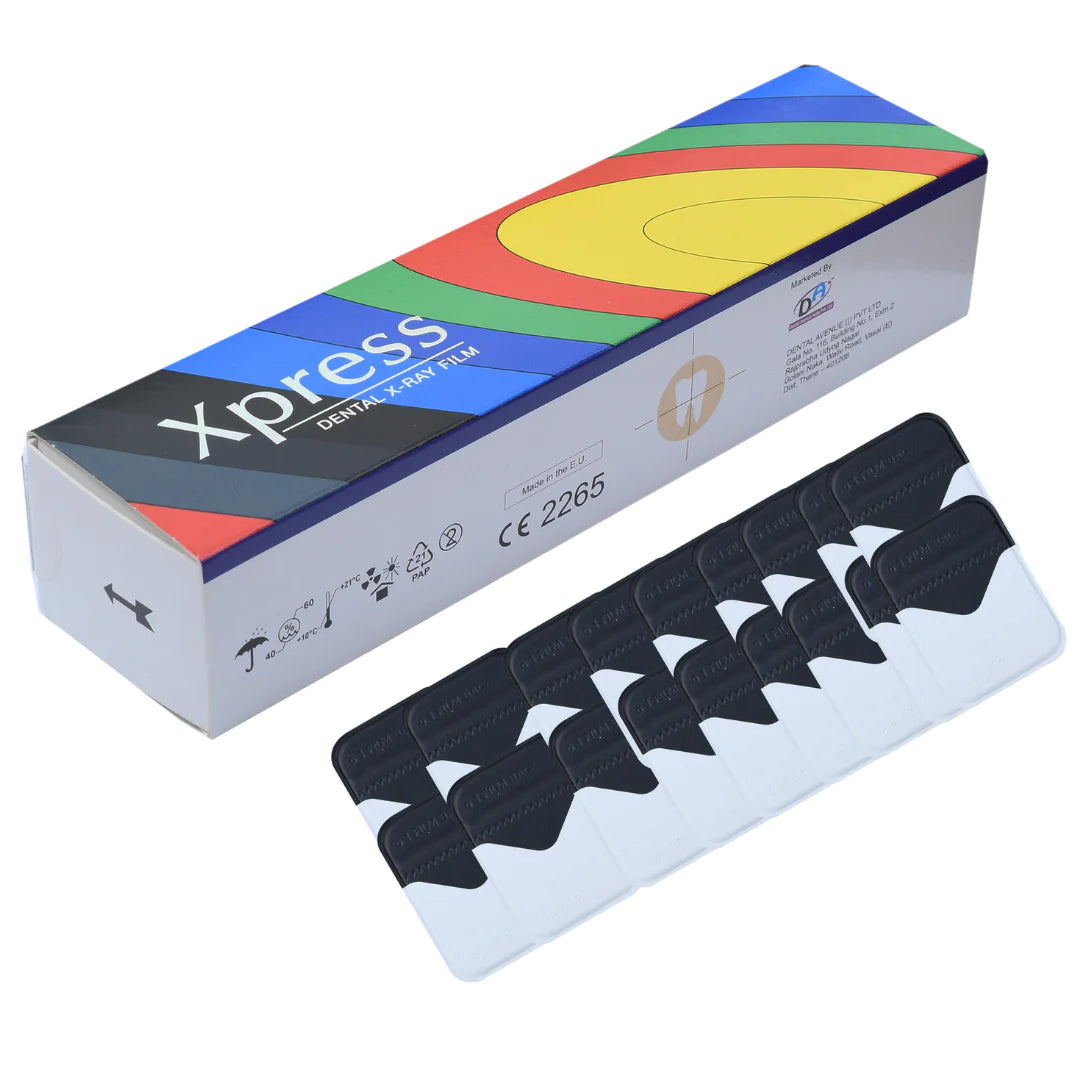
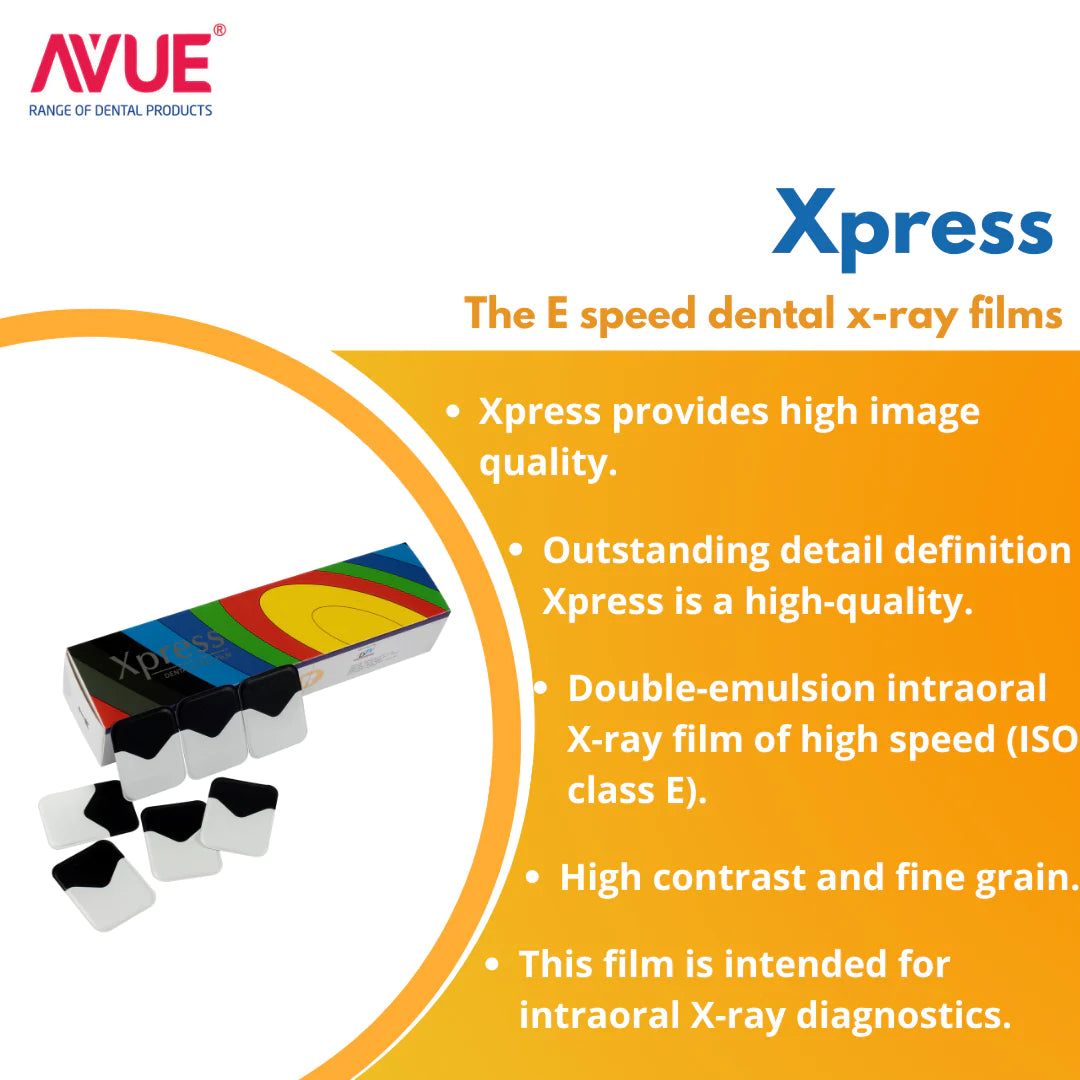
Xpress - X-Ray Films
E Speed Dental X-Ray Films with Extra soft plastic envelope having rounded corners. Envelope is disinfectable with common disinfectants, waterproof and light-tight.
Easy opening and manipulation Sheet of lead foil on the back side of the film (the side is marked as „back“on the packet)
Easy sides recognition provided by embossed dot in the top corner of the packet (its raised portion indicates the side facing the radiation source/front side)
Technical Properties
Speed E Dental Film 30 % – 50 % lower X-ray dose due to shorter exposure times in comparison with D-speed film complies with the worldwide tendency of Radiation Protection of Patients (RPOP) of EAIA.
Processing
The film can be exposed in daylight. Exposed films can be processed either manually or in processors. The manual processing should be carried out in a darkroom under indirect dark-red or olive-green safelight. It is possible to use any liquid good-quality trademarked chemicals for processing. It is NOT recommended using tablet or powder chemicals.
Packaging
To prevent all possible kinds of damage the Xpress Dental Film is packed in a tropical vacuum wrapping and put inside paper boxes. Each packing contains 150 pcs of dental film.
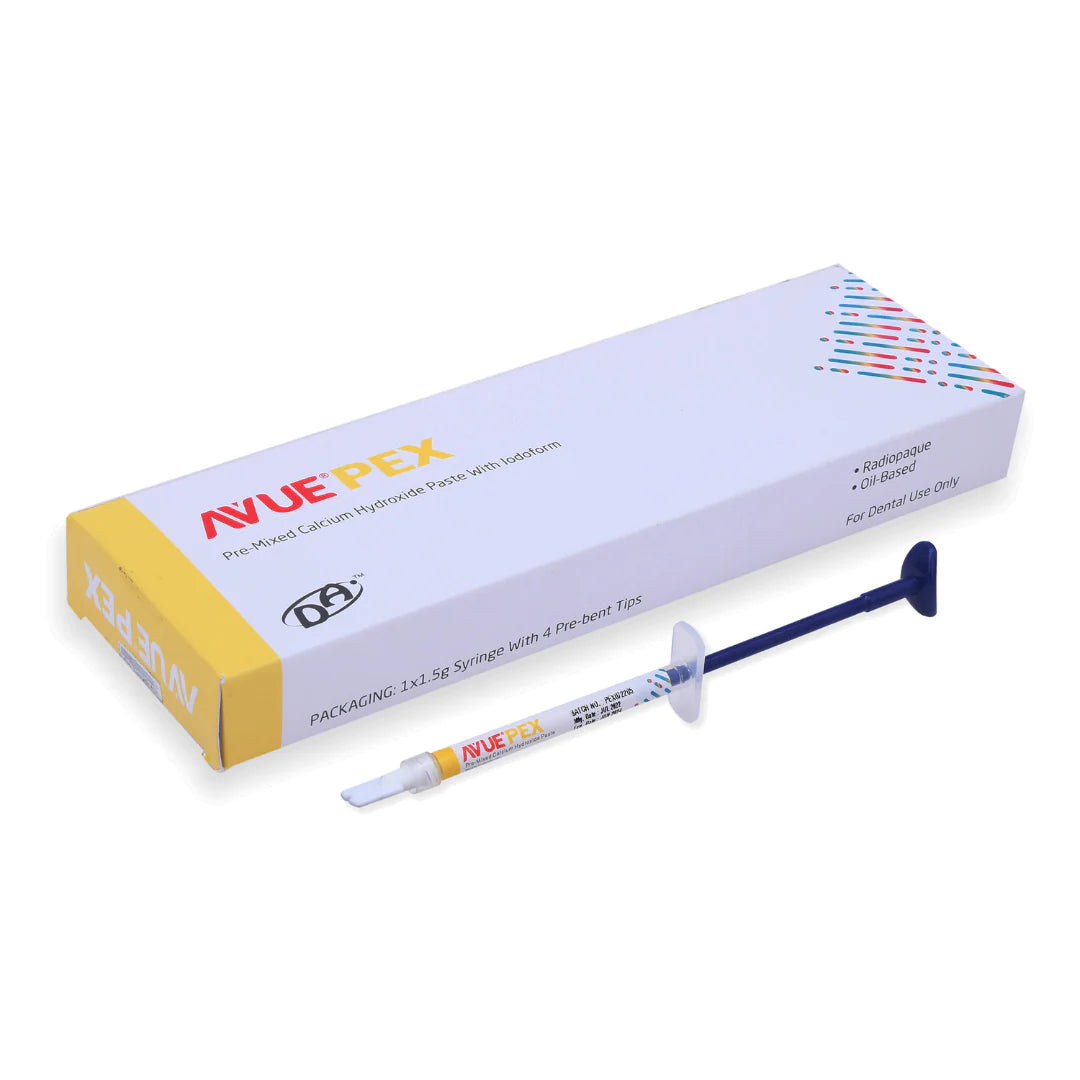
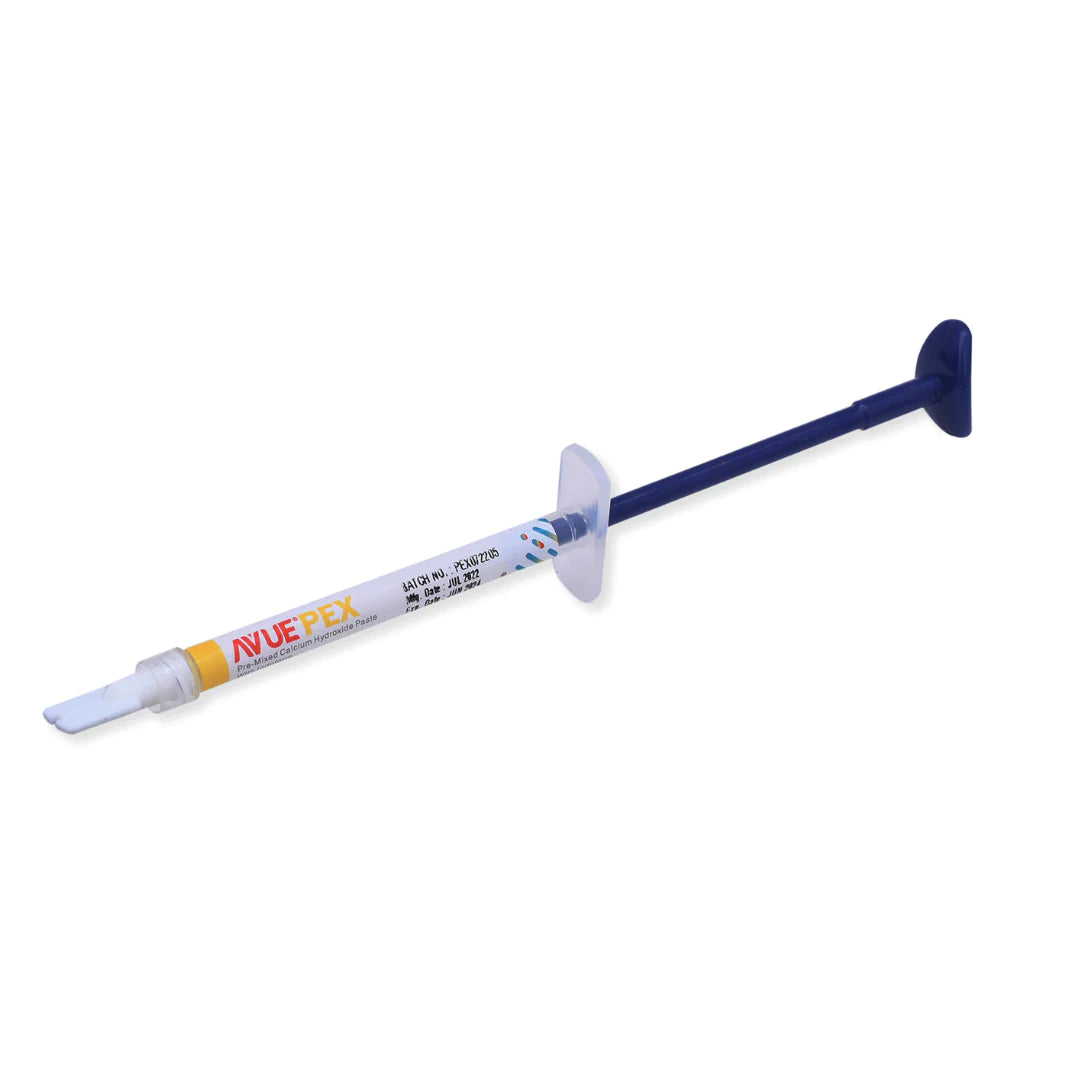
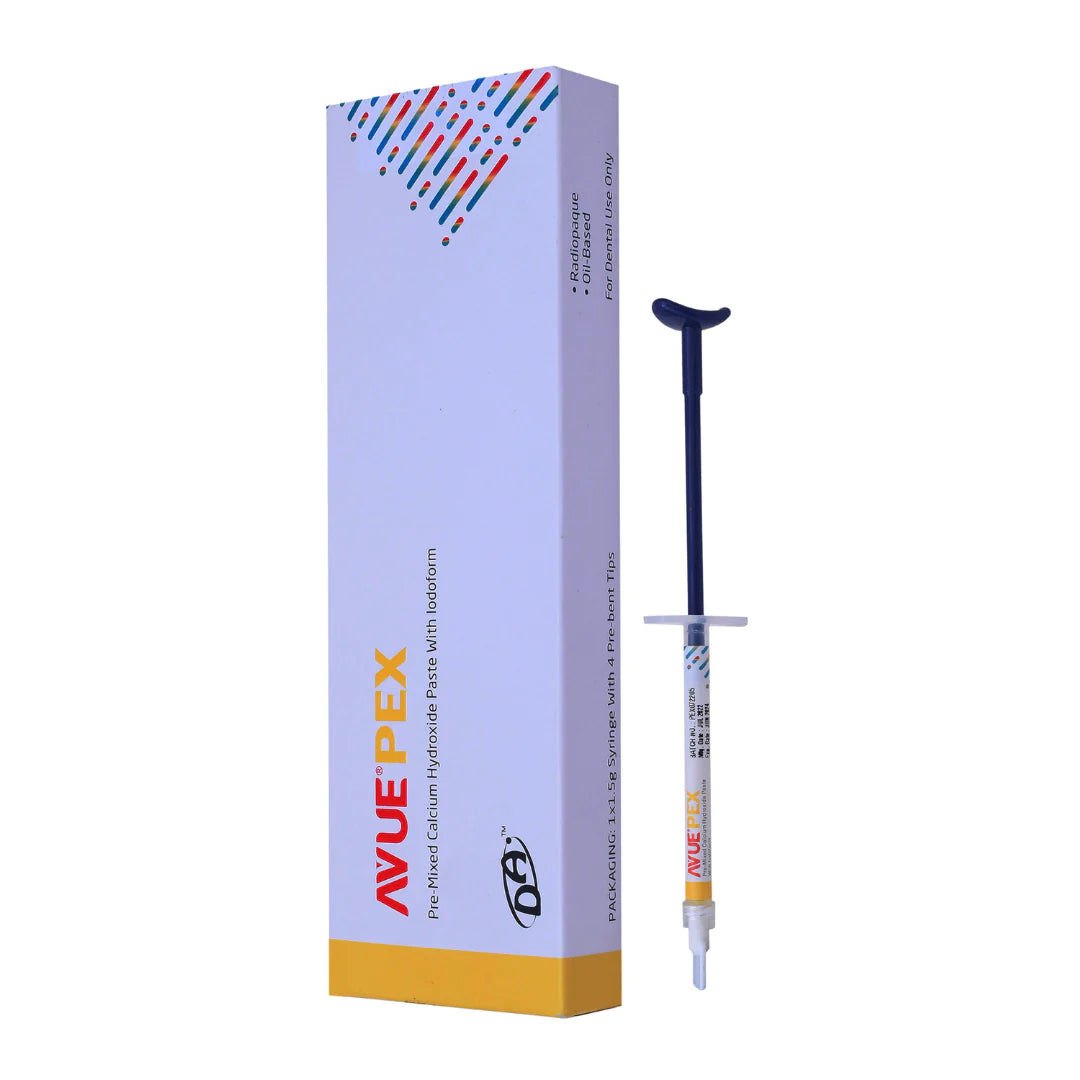
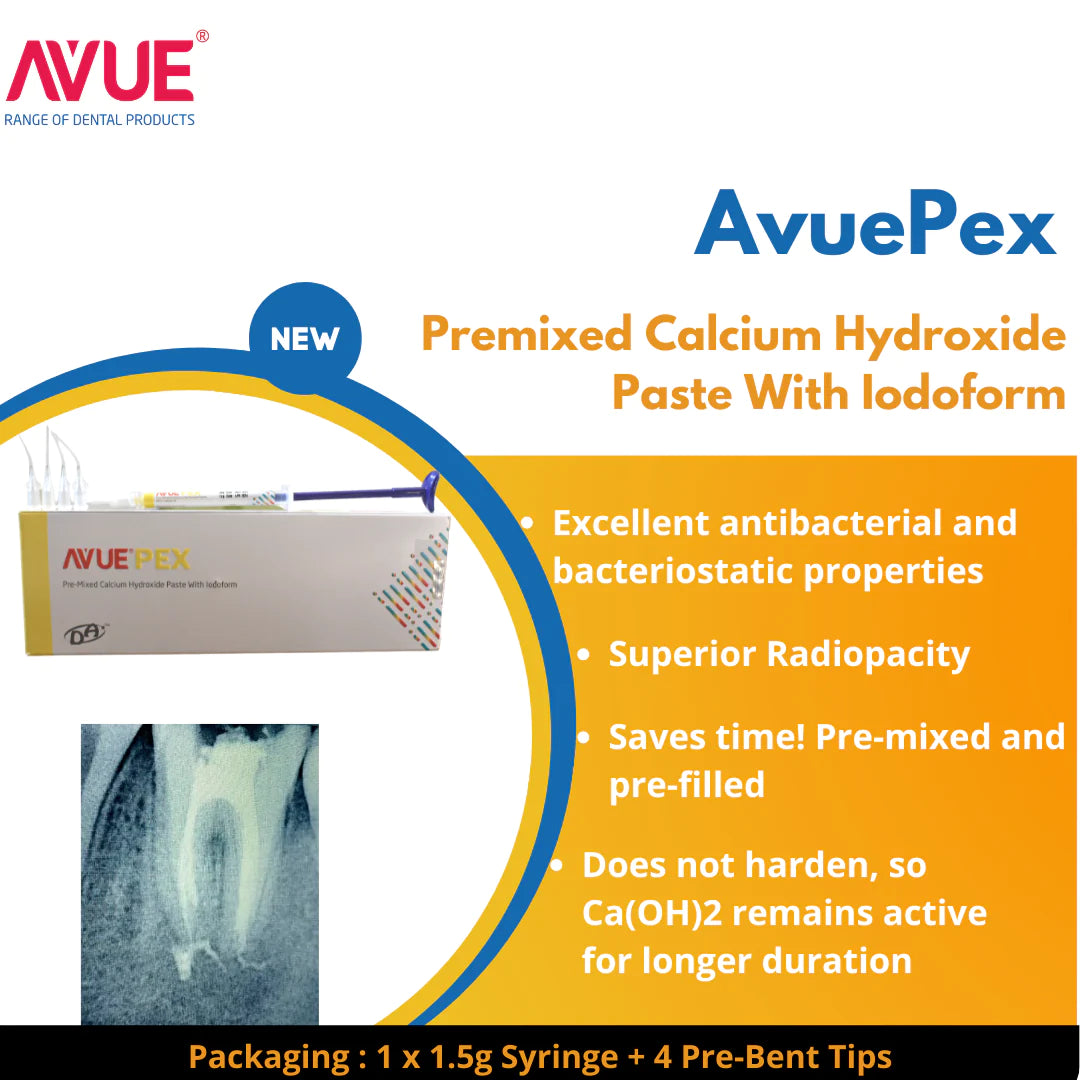
AvuePex - Premixed Calcium Hydroxide with Iodoform
Premixed Calcium Hydroxide with Iodoform. The addition of Iodoform to the Calcium Hydroxide improve it’s radiopacity and adds an antibacterial agent to the paste.
Composition
25-35%-calcium hydroxide -To stimulate hard tissue formation, as well as to exert antimicrobial actions. Released calcium ions play important roles in cell stimulation, migration and proliferation, as well as in mineralization and hard tissue repair
15-25%-Iodoform –Radiopacifier and Bacteristatic agent
30-40%-Silicone Oil-using a more viscous solvent could improve the clinical handling and slow the rate of hydroxyl ion release, allowing for less frequent re-dressing of the root canal system
Ideal for temporay filling of root canal
Calcium hydroxide has ionic effect observed by chemical dissociation into calcium and hydroxyl ions. Calcium and hydroxyl ions have antimicrobial effects and induce mineralization. Calcium hydroxide stimulates “blast” cells aiding apexogenesis and its high pH neutralizes endotoxins produced by anaerobic bacteria.
Iodoform has bacteriostatic property by releasing free iodine. Thereby, iodine eliminates the infection of root canal and periapical tissue by precipitating protein and oxidizes essential enzymes. Iodoform also enhances radiopacity for better visualization.
Root canal filling material after pulpectomy in deciduous/ primary teeth
The primary advantage is that it resorbs from periapical tissue in one to two months, is apparently harmless to permanent tooth germ, is radioopaque, does not set to hard mass, and is easily inserted and removed.
Avuepex has osteoinductive action
Hydroxyl ions act on the cytoplasmic membrane of bacteria and it enhances tissue enzymes activity such as alkaline phosphatase which plays a role of extending roots and apical closure.
Regenerate bone around the roots of avulsed tooth posttrauma.
Healing of periapical lesion within 2 months with mild to moderate pain indication is crucial properties when comparing AVUEPEX to conventional treatment.
Advantages of AvuePex
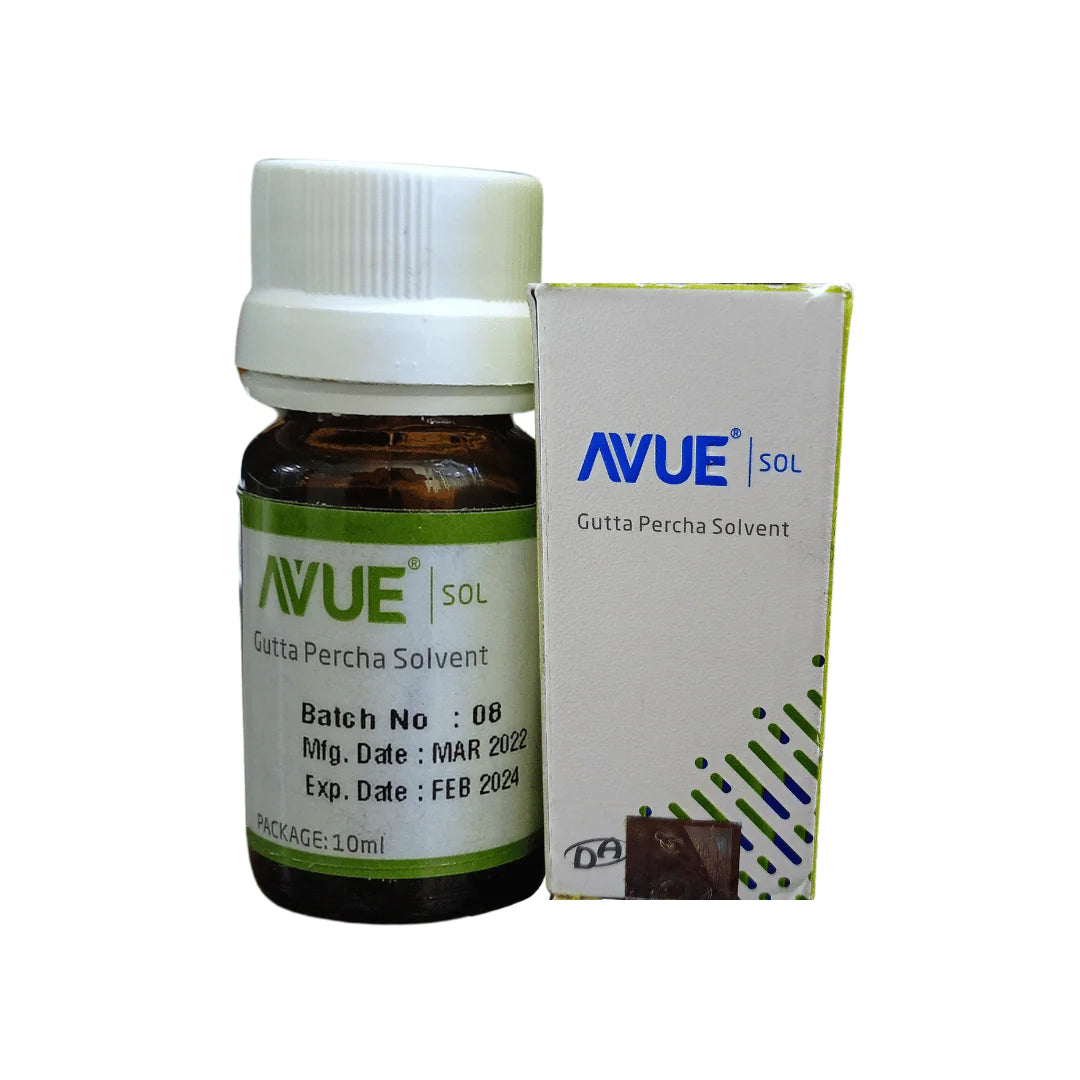
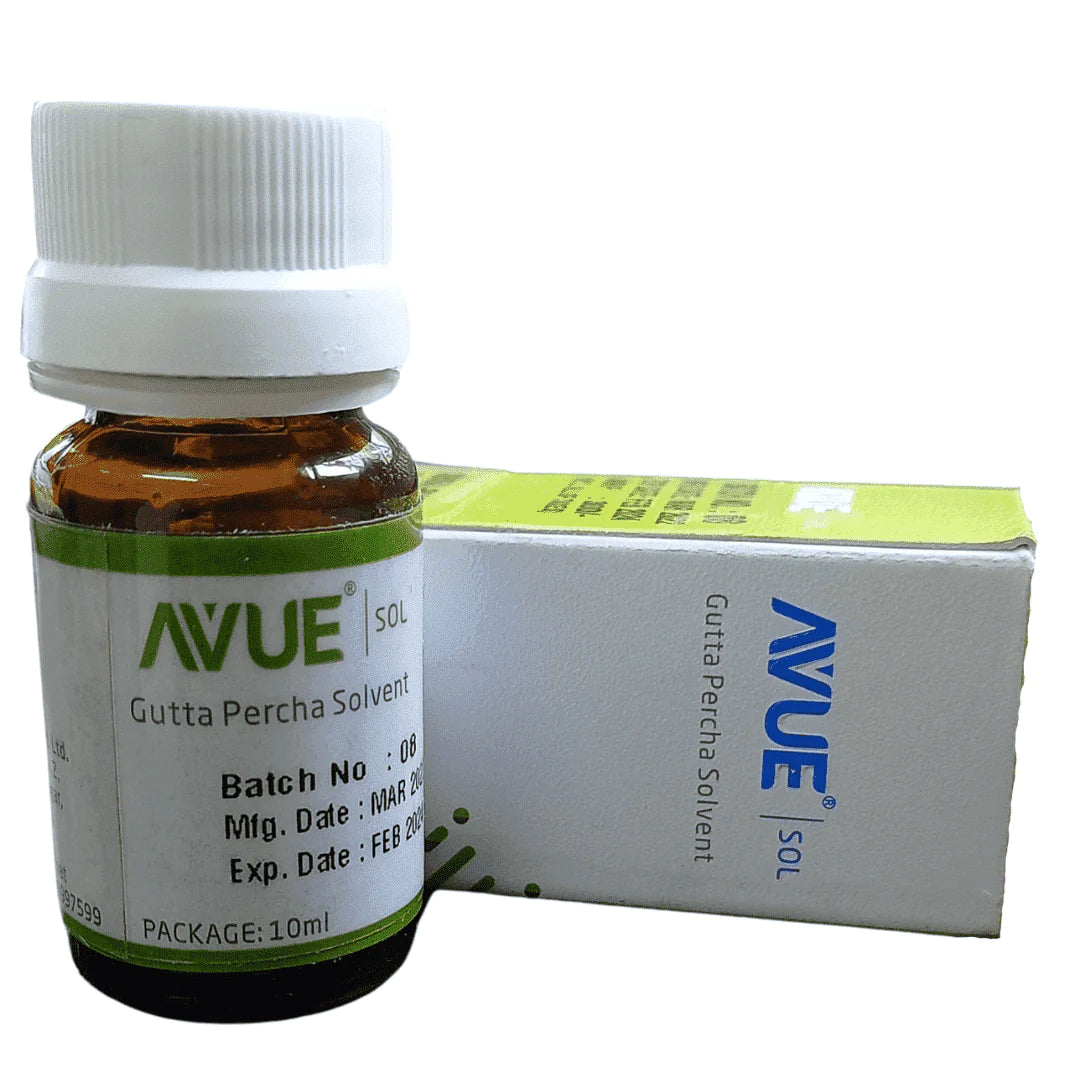
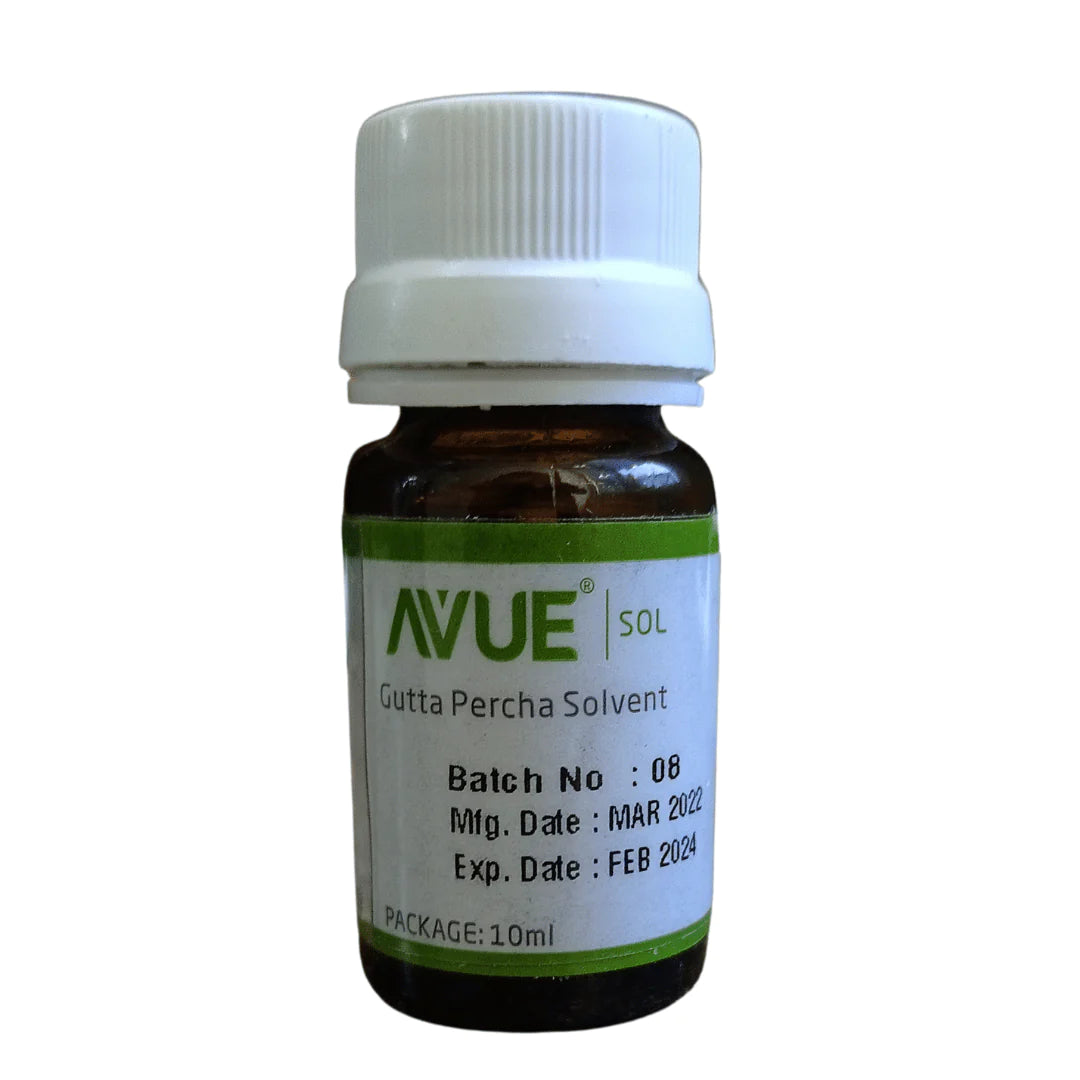
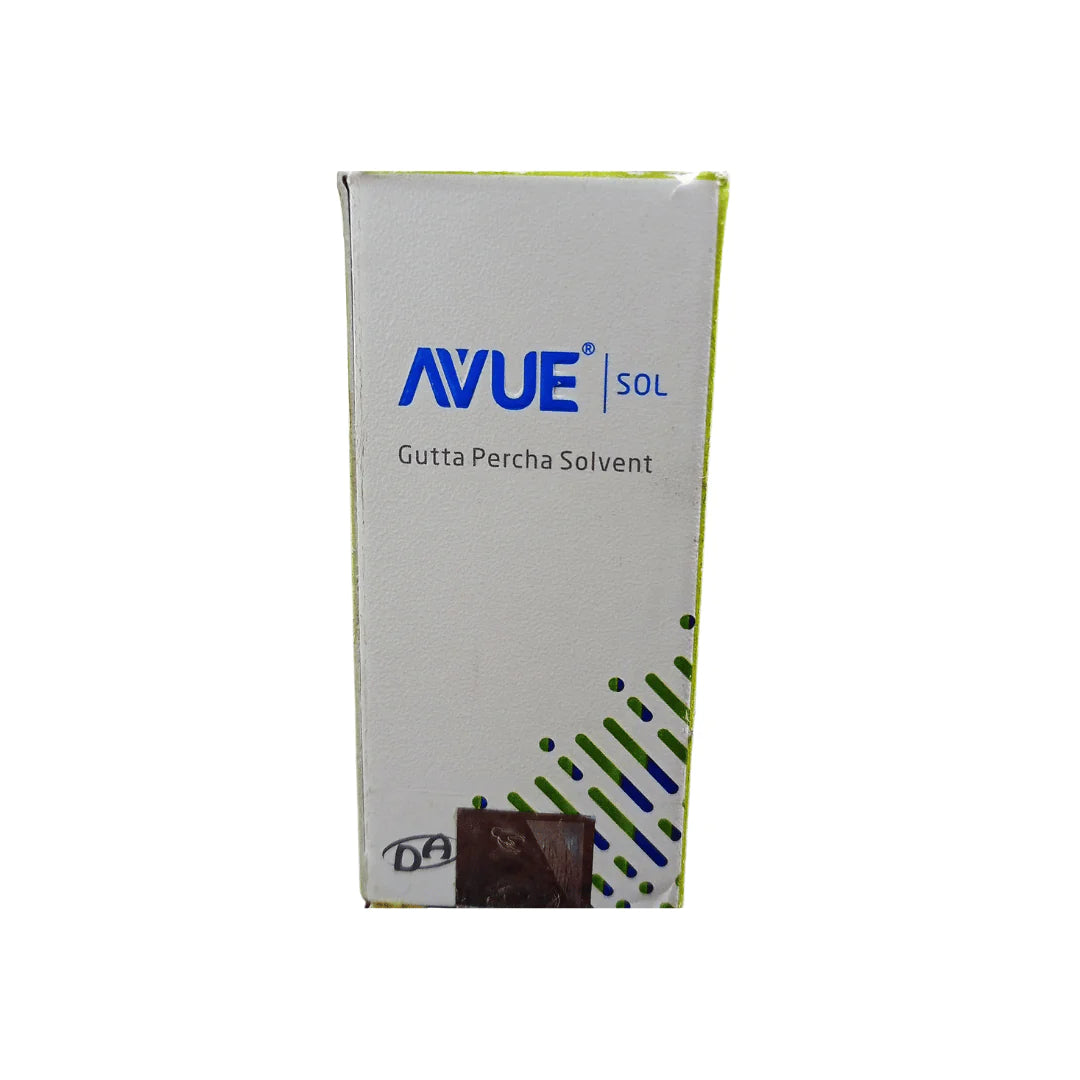
Avue Sol - Gutta Percha Solvent for Re-Root canal treatment
d-Limonene based gutta percha solvent for removing gutta percha at the time of root canal retreatment.
ADVANTAGES:
- Main ingredient d-Limonene is a natural substance extracted from orange oil.
- It does not cause any irritation to oral mucosa & periapical tissues.
- High softening potency saves chair side time
- Tactile sense reduces risk of perforations
- Reduces risks associated with the use of power-driven instruments during mechanical de-obturation
- Evaporation of solvent is less due to low volatility
- Non-carcinogenic unlike chloroform
- Biocompatible:100% natural and non-toxic
Related collections
- Choosing a selection results in a full page refresh.
- Opens in a new window.